La Contessa

I love The Negroni (https://blog.musingsonthevine.com/2011/10/02/the-negroni/) – As I wrote, it is perhaps one of a few perfect cocktails… In my humble opinion. So how does one improve upon such a delicious libation? Think white… or golden-hued, at least.

suze_vert

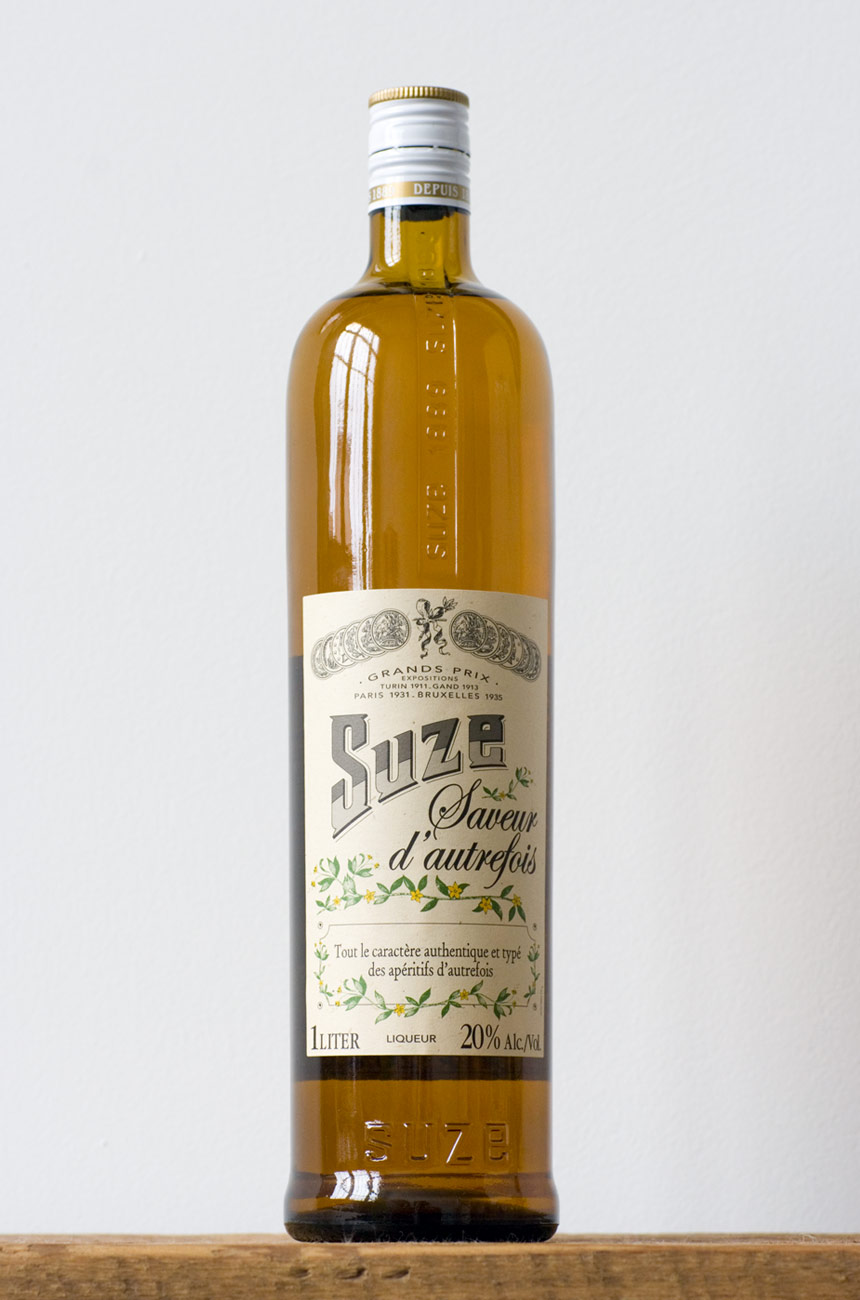
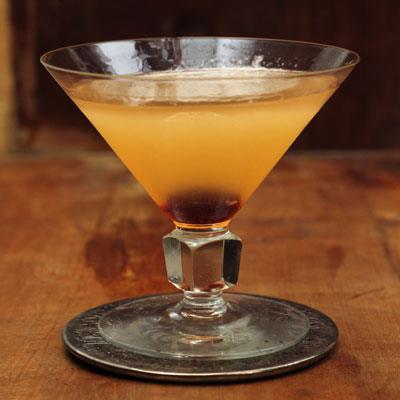
I recently found Suze, Saveur d’autrefois, a French, gentian-based aperitif that reminds me of a more perfumed version of Campari. As I sipped lazily on this very unique treat, I was inspired. Why not modify a few ingredients and recast The Negroni as a more feminine protagonist? So is born, La Contessa. Refreshing and with floral and honey notes, La Contessa enlivens the palate as a classic cocktail should…

Ladies and Gentlemen, La Contessa:

1-1/2 oz. London Dry Gin

1-1/2 oz. Suze

1-1/2 oz. Lillet Blanc

Shake the ingredients with crushed ice, vigorously. Strain into a cocktail glass. Garnish with a lemon twist.

Enjoy!

Napa versus Bordeaux – Part V – The saga continues…

In November I posted the accumulated results of the previous four Napa versus Bordeaux Shootouts: https://blog.musingsonthevine.com/2011/11/27/napa-versus-bordeaux-where-do-we-stand/

As promised, we just conducted match-up number five and have the following to report.

The fifth installment took place on May 11, 2013, matching a comparable set of six wines. The results were as follows:

By Wine

Wine

1st

2nd

3rd

Total

(3 pts)

(2 pts)

(1 pt)

1997 Cuvaison Merlot

3

1

4

15 pts

1997 Chimney Rock Stags Leap

3

5

1

20 pts

1997 Spottswoode

2

2

5

15 pts

1989 Gloria

0

1

2

4 pts

1989 Chasse-Spleen

0

1

0

2 pts

1988 Lafite Rothschild

4

2

0

16 pts

By Region

Napa Valley

50 pts

Bordeaux

22 pts

California clearly clobbered France! A somewhat unexpected result, although the panel was unanimous in stating that this meeting was the best/hardest match-up yet. Each of the panelists had an admittedly difficult time picking their top three favorites, with many vacillating during the tasting.

So after five installments, the results stack up as follows:

France’s lead is narrowed to 3 – 2 in overall wins. Point-wise the French have 149 points to Napa’s 140 points, again holding a narrow lead.

One of our panelists did point out that the Lafite did have the most first place votes of any wine, suggesting that the wine with the most first place votes could be construed the winner and by association, the country of origin of said wine could be called the winner. As tempting as I was to let France rule the day as a result of the fine showing of the Lafite, I allowed a more balanced approach to sort out the results. In the end, clearly California outpaced France.

A few observations are in order… The Bordeaux wines were appreciably older than their Californian counterparts. This was by design and what the group found was that the French wines were all nicely mature with layers of complexity, integrated tannins and impressive structure for wines approaching the quarter century mark. None were tired or showing their age. Truly a testament to a great wine in a great vintage. The Californian wines were also showing very well, but it was clear that with the exception of the Chimney Rock, the 1997 wines were on a downward slide. After spending an hour or so in the glass, the French wines were still vibrant, whereas the Californian wines were muddled and tired. This had been my assumption going in, hence the match-up.

Where does it go from here? Well if history repeats itself, I imagine a sixth match-up in 2015, either in April, or October…

Should be fun, as usual!

Arnaud’s Special Cocktail

One of my favorite cocktail books is Ted “Dr. Cocktail” Haigh’s Vintage Spirits and Forgotten Cocktails, it is truly an epic tome filled with some of the best classic cocktails.

I love Scotch… and sometimes I like to have more fun than just pour it neat with a few splashes of spring water… I also like rarities… Scotch cocktails, as Mr. Haigh points out, are indeed rare.

According to Mr. Haigh, Arnaud’s Special Cocktail “was the signature cocktail of the legendary Arnaud’s Restaurant in New Orleans” during the 1940’s and 1950’s. Another famous classic to come from Arnaud’s was the French 75, which is currently the reigning signature drink.

Arnauds

However, a disclaimer is in order… IF YOU DO NOT LIKE SCOTCH, THEN YOU WILL NOT LIKE THIS COCKTAIL… Unlike other Scotch-based cocktails, where the mixing ingredients serve to temper the smoky, peaty, distinctive flavor of the Scotch, In Arnaud’s Special Cocktail, neither the Dubonnet, nor the bitters does anything to impede the true nature of the spirit. Fine by me…

So, for those who are still game, I present Arnaud’s Special Cocktail:

2 oz. Scotch (I chose Johnny Walker Red on Haigh’s recommendation)

1 oz. Dubonnet Rouge

3 dashes Orange Bitters (I chose Regan’s Orange Bitters)

Shake with ice and strain into a cocktail glass. Garnish with an orange twist.

Cheers!


Vana Tallinn

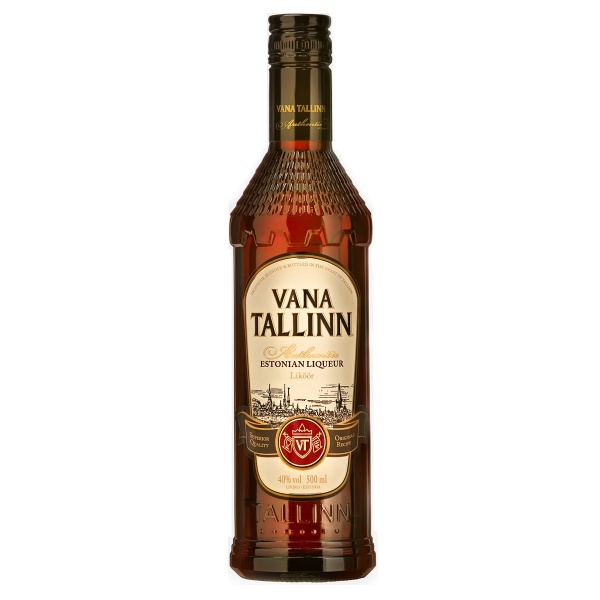
Who knew that the folks living in Estonia make a wonderful liqueur (liköör)? I sure as hell didn’t until a recent foray had me stumbling upon Vana Tallinn (or “Old Tallinn” in Estonian) in the amari/liqueur aisle. Because I am a true adventurer at heart, I had to pick up a bottle and give it a try. To my surprise, the spirit is actually quite fetching.

vana-tallinn-40-05l

Vana Tallinn is a dark, amber colored rum-based liqueur flavored with a secret blend of spices, including vanilla, cinnamon and citrus oils. The web site (www.vanatallinn.eu) unfurls like a game of Myst, filled with a mélange of marketing and folklore.

I have not yet started to experiment, although the web site has a curious list of cocktails…

My tasting note:

Highly aromatic with honey and floral hints. Full-bodied and velvety sweet, which artfully covers the alcoholic nature of the spirit. Long finish with butterscotch and anise. Really enjoyable as an after-dinner sipping treat.

Cheers!

It’s not easy being green…

A very close friend asked if I would help create a special cocktail for her 25th college reunion… It needed to be somewhat thematic, or at least… green.

Well, when one scans the horizon for the available choices in green spirits, one does not exactly find a panoply of stars… Let’s see… Green Chartreuse… Crème de Menthe, Apple Pucker and Midori… Sure there are probably a few more, but isn’t the current list bad enough? Excepting Green Chartreuse, or course…

Everyone who knows me, knows that I love a challenge, so we settled down with a bottle of each of the aforementioned lovelies, the balance of my well-stocked bar and a long Sunday afternoon… The results were surprisingly positive…

In the area of Green Chartreuse, I could find nothing that created a suitably green drink that was actually palatable. Most turned out a dull ocher or median rust color… far from the requisite green.

With the Apple Pucker, we turned out a respectable “Apple-tini” that was refreshing and quite nice:

ApplePucker

The Mel

1-1/2oz. Vodka

1oz. Apple Pucker

1/2oz. Apple Jack (I prefer Laird’s)

5 dashes Baked Apple Bitters

Combine the ingredients in a shaker with crushed ice, shake vigorously to chill and strain into a cocktail glass. Garnish with an apple peel.


With the Midori, we turned out a respectable tropical-influenced riff on a Daiquiri/Sidecar:

Midori

The 88

1-1/2oz. Vodka

1oz. Midori

1/2oz. Cointreau

5 dashes Spanish Bitters

Combine the ingredients in a shaker with crushed ice, shake vigorously to chill and strain into a cocktail glass. Garnish with a lemon or lime peel.


With the Crème de Menthe, we turned out a (shockingly) respectable homage to mint parfait:

CremedeMenthe

The Dimple

1-1/2oz. Vodka

1oz. Crème de Menthe (green)

1/2oz. Lillet Blanc

5 dashes Mint Bitters

Combine the ingredients in a shaker with crushed ice, shake vigorously to chill and strain into a cocktail glass.


So, in the final analysis, we found three very good uses for a few spirits that have usually found their way to the way back of the bar… I can’t wait until St. Patty’s Day!!

Cheers!

2004 Marqués de Cáceres Gran Reserva Rioja, Spain

My students and my wine tasting friends know that I perpetually extoll the virtues of Spanish wines. And it used to be that the only Spanish wine anyone knew anything about was Rioja. In point of fact, a long time ago, the only Spanish wine that was available, period was Rioja. My how things have changed, but that doesn’t mean that we should eschew or ignore that Spanish classic…

Rioja is arguably Spain’s most well-known wine region and may in fact be one of its oldest. Evidence of grape cultivation goes back to medieval times, with some historians claiming even earlier evidence of Phoenician and possibly even Greek wine making in the region.

If you look back in my archives to a posting from March 24, 2012, you will find the requisite technical details concerning the wines of Rioja, which I will not bother to repeat here…

Instead, let’s spend some time talking about one of my all-time favorite Rioja producers – Marqués de Cáceres and their wonderful Gran Reserva…

MarquesCaceresGR

Marqués de Cáceres, while not the oldest bodega in Rioja, is the product of a long tradition of wine making. Founded in 1970 by Enrique Forner, the descendent of successful Bordeaux wine makers, in conjunction with supervision from Emile Penaud, arguably one of Bordeaux’s most famous wine makers, Marqués de Cáceres was the first new winery in Rioja in nearly 50 years. The outstanding Bordeaux lineage produces wines of impeccable quality, with classic, elegantly structured characters, but with the unmistakable imprint of traditional Rioja wines. The winery is located in Cenicero, which is in La Rioja Alta and maintains a facility with over 40,000 aging barrels and over 10 million bottles of wine in their cellars. The wines are primarily Tempranillo-based, but do contain quantities of Garnacha and Graciano. In the case of the 2004 Gran Reserva, the wine is 85% Tempranillo and 15% Garnacha and Graciano. The vintage is highly regarded in Spain, with near ideal conditions throughout the growing season and into harvest time. The wines from the vintage tend to have solid structure with good fruit density, which translates to above average aging potential – this Gran Reserva is no exception…

My tasting note:

Powerful, yet refined nose with dark cherry, graphite and cedar hints. Full-bodied with moderate acidity and smooth, well-integrated tannin – well balanced. Dark fruit core with sour cherry, red current, cocoa dust saddle leather and tobacco notes. Long finish – smooth with vanilla and briarwood on the aftertaste. Drinking well and should improve nicely for another 5 to 7 years, easily.

At an average bottle price of $29.99 before the discount, this wine is a very respectable value.

Cheers!

The Lyndhurst Cocktail

“Shoulder” seasons demand “shoulder” cocktails and I am willing myself into spring, despite the unseasonably cold temperatures and generally inclement weather pattern these last few weeks.

That said, nothing says “shoulder” cocktail better than spiced rum… Yes, typically rum is a summer/southern climes kind of spirit, but when combined with the correct ingredients it works in non-summery seasons.

Pray tell, what would those ingredients be? How about Domaine Canton (ginger liqueur) and traditional Framboise (raspberry liqueur)… So I wish I could claim this cocktail as my own, but alas the clever folks at SpiritedLA (http://spiritedla.tumblr.com/) are the originators. I also wish it had a great, classic story…perhaps it will 100 years from now…

At any rate, on first blush the cocktail does seem like it could be too sweet, but the choice of liqueurs, both of which have a natural tartness to their characters, tempers what could be a cloying, sickening mess. I may choose to experiment with a spoonful of lemon juice, as well – nothing like bench testing to ease oneself into the weekend…

Lyndhurst

The Lyndhurst

.75oz Domaine de Canton

.75oz Framboise

1.5oz Dark Spiced Rum

3 dashes Cherry Bark Vanilla Bitters

Combine with crushed ice in a shaker, mix and strain into a cocktail glass rimmed with honey, ginger and raw sugar – garnish with a Luxardo cherry.

Cheers!

2009 Mas Lavail “Tradition” Côtes du Roussillon Villages, France

The south of France has many charms and the dark, red wines of the Côtes du Roussillon Villages are a real pleasure, especially in a great vintage like 2009.

The larger area known collectively as the Languedoc-Roussillon is an expansive region stretching from about the city of Nimes in the east to the border of Spain. While thought of as one large region, the area is actually two distinct appellations: Languedoc in the north and Roussillon in the south. If one were to provide an overarching stereotype to the two regions, one might say that the Languedoc has more in common, stylistically with the southern Rhone region, while Roussillon shares more in common with southeastern Spanish regions. No matter, the wines that hail from either area are quite diverse, but all share a more rustic style – the reds especially are big, dark-complexioned with flavors that give an obvious nod to their surroundings.

The smaller region of Côtes du Roussillon Villages is reserved for higher-quality red wines from the greater Roussillon region. Located in the hilly northern part of the Roussillon, the vineyards in the region have a long track record of producing a higher-tier of quality wines. The Côtes du Roussillon Villages does contain four named sub-regions: Caramany, Latour de France, Lesquerde and Tautavel, which may be listed on the label if the grapes originate from within their boundaries. If no designation is made, then the grapes hail from non-designated parcels.

Soil types vary in the overall region, but the presence of the ubiquitous garrigue (low-lying scrub brush on limestone soils) imprints much of what is produced. The climate is resolutely Mediterranean in character – hot, dry with some moderating winds, which makes for a ripe, disease-free crop.
MasLavail

The Mas Lavail Tradition is a blend of 40% Shiraz, 40% Carignan and 20% Grenache Noir, which is the usual cast of characters in this region. In researching the wine, I found the following from the importer’s web site:

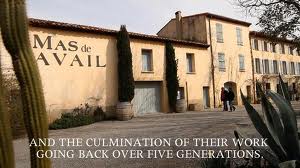
Nicolas Batlle, an enthusiastic young winegrower, farms the lands of the Mas de Lavail with his family in the heart of the Maury appellation in the Rousillon region.

This exceptional terroir consists of black shale and calcareous marl set between the Corbières and the Pyrenees at the foot of the Cathar castle, Quéribus. This location has a micro-climate which is favourable to noble grape varieties such as Grenache, Carignan and Syrah.

The property’s wines are produced from old vines and are concentrated, generous and elegant.

I also found the “technical” details of the wine – The vineyard comprises 8.04 hectares (19.54 acres) with an average vine age of 60 years. The soil type is listed as limestone-clay and the vineyard is noted as being “traditionally” managed. I assume that the term differentiates practices that would otherwise be considered “organic” or “biodynamic.” Grapes are harvested manually and are vinified, again, using “traditional” methods. A long maceration time is noted, which clearly is evidenced in the deep color of the wine. Total production is set at 30,000 bottles and it appears that the wines are aged for 12 months before bottling. The winemaker notes a 5 year aging potential, which I confirmed with my own tasting.

I found the wine to be quite stunning and well worth the price…

My tasting note:

Ripe, Jammy nose with explosive fruit – garrigue, pepper and floral hints. Full-bodied with moderate acidity and firm, dry tannin. Dark fruit core with black cherry, tar and spice notes. Moderate length with a layered finish – very nice. Drinking well now and should improve with another 3 to 5 years in the bottle.

At an average bottle price of $16.99 before the discount, this wine is a very respectable value.

Cheers!

Root – Art in the Age

I am always open to new experiences… This is how one learns, grows and finds maximum enjoyment in the limited time we have on this good earth…

So, a while back I took Facebook’s advice and “liked” a certain page: Art in the Age… It seemed interesting… From their “About” page:

Creators of organic artisan spirits: ROOT, SNAP, RHUBARB, SAGE.
Boutique/gallery space in Philadelphia, PA
Mission:
In this troubling epoch of industrial commodification, standardization of reproduction, and fomentation of a society of shallow spectacle, Art In The Age issues a challenge and rally cry. We fight fire with fire, subsuming the onslaught of watered down facsimiles and inaccessible displays with thought-provoking products of real cultural capital.

Every so often a news feed post would pop-up… Otherwise, I didn’t really pay too much attention…
root_poster

Then, I’m out poking around a local spirits shop and lo-and-behold, there on the shelf is a bottle of Art in the Age Root (http://www.artintheage.com/spirits-landing/root/)… Looks quite interesting… Billed as a “certified organic neutral spirit with North American herbs and pure cane sugar.” Brown, like molasses with a very enticing ingredients list: Birch Bark, Smoked Black Tea, Cinnamon, Wintergreen, Spearmint, Clove, Allspice, Orange, Lemon, Nutmeg, Anise, and Cardamom. Huh…

Digging further, the story evolves… “This rustic spirit was inspired by a potent 18th century Pennsylvanian folk recipe. It is an alcoholic version of what eventually evolved into Birch or Root Beer.”

So, I’m hooked… bought a bottle, poured a small glass and was quite amused… The taste was like a high-end, artisanal root beer with an adult kick. At 80 proof,  the power is masked by the far out blend of layered flavors. The bottle came with a little booklet of Root Cocktails… Haven’t tried any, yet…

Overall, I’m impressed and can’t wait to try the other spirits in the collection. If you’re into supporting local, artisanal product that is natural and off the beaten path, then search out these libations!

Cheers!

The Gold Rush

Domaine Canton, the ginger-based liqueur posted an interesting cocktail in my newsfeed… The Gold Rush.

GoldRush


Being the inquisitive sort, I decided to roll my own… The original recipe is as follows:

1.5oz. Domaine Canton

1.0oz Bourbon

0.5oz Lemon Juice

Shake the ingredients with crushed ice, vigorously. Strain into a cocktail glass. Garnish with a Luxardo Maraschino cherry.

So I sipped the libation… a trifle too sweet for my taste, so I amped up the lemon and used Rye instead of Bourbon… Ahhhh… now that is a refreshing cocktail, with an exotic, Far East hint…

Enjoy!