Category Archives: Wines

In Praise of Mont Ventoux

21 Friday Jun 2013

Posted by musingsonthevine in Wines

≈ Leave a comment

The Ventoux is a wine region in the southeastern part of the Rhône valley and is generally considered as part of the larger départment Vaucluse. The region was formerly known as the Côtes du Ventoux, but is now simply known as the Ventoux. The wines are generally easy-drinking in style with a rustic character. The principal geographic element of the region is Mont Ventoux, which is not particularly high as summits go. However, the name Ventoux derives from the French term venteux, meaning “windy.” And windy it is… for more than 200 days a year the wind averages speeds in excess of 50 mile per hour, with high speeds clocked at over 200 miles per hour… Yeah, that’s a formula for perpetual “bad hair…”

Despite these challenging conditions, enterprising vignerons plant vineyards on the foothills of Mont Ventoux and swear that the wind and weather contributes to the strength of the grapes pulled from their plots of land.

Economically, a lot of producers choose to sell to the more popular producer/négociant houses to maximize their return on investment. The Perrin family, the house of Jaboulet and the Frère Delas are large investors in the Ventoux with really stunning results. Most of these wines are meant for current consumption and are perfect for summer, grilled fair.

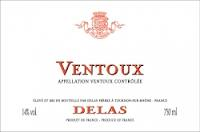
DelasVentoux

Recently I picked up the 2011 Frère Delas Ventoux, looking for a ripe, approachable summer red and I have to say I was not disappointed. The wine is predominantly Grenache, with some Syrah in the blend. The lack of black pepper and structure argues for more Grenache than Syrah, which is fine by me. The wine is NOT for aging and it is simply gulpable…

My tasting notes:

Ripe, jammy nose with bright fresh cherries, violets and dried herb hints. Medium-bodied with moderate acidity and soft, well-integrated tannin – good balance. Juicy palate with fresh, red berry fruit- easy drinking to a fault. Moderate length – smooth. Drinking well – not for aging. Great value!

At an average price of $9.99 per bottle, this is a very strong value.

Cheers!

“A rose by any other name would smell as sweet…”

25 Saturday May 2013

Posted by musingsonthevine in Wines

≈ 2 Comments

Cabernet Franc is a grape that doesn’t get much respect. I put various Cabernet Franc based wines in tastings from time to time and folks are underwhelmed. The wines usually represent solid producers in good to great vintages, but to no avail, people are not impressed.

In cool climates the grape often produces wines with strong under ripe characteristics: green, stemmy with bell pepper and green olive notes. High acid with a pronounced tartness, the wines take contemplation to see the merits within. In warmer climates the grape ripens more fully, but the wines still lack the jammy lushness of its progeny – Cabernet Sauvignon. Cabernet Franc demands concentration and a willingness to look deeper inside the wine.

“Yeah, thanks, but no thanks. I don’t need to struggle with my wine to find the greatness within. I want something that is obviously and quickly pleasing to my palate. I don’t want to spend 20 minutes contemplating my wine trying to find that elusive image of Christ hidden in the window.” So say most folks.

As you might expect, I feel a tad differently. I will give more time to a wine that demands it, because I believe the rewards are worth it. Now that doesn’t mean that every tough, under ripe, mouth-puckering wine can be redeemed. Sometimes bad wine is just that: bad wine.

However, when a wine with provenance and potential emerges from the mist, I will happily spend the time required to allow the wine to seduce me. Such is the case with many of the wines from Lamé Delisle Boucard, a 5th generation, family run winery in Bourgueil, France. Bourgueil is an Appellation d’Origine Contrôlée (AOC) for wine in the Loire Valley, and produces primarily red wine from Cabernet Franc grapes. Lamé Delisle Boucard was founded in 1869 by Pierre Guyot. Pierre’s son Jules Lamé took advantage of the lessons learned during the phylloxera epidemic, planting some of the first fully-grafted vineyards in France. Through numerous wars and other hardships, the winery passed through the hands of successive generations, each one adding vineyard land and a reputation for quality wines. Today the great great grandchildren of the original founder manage and run the operation, infusing their wines with the passion of five generations of French vignerons. The winery is relatively small, with approximately 100 acres of vineyard parcels peppered within the commune of Bourgueil. The vineyards are each on choice parcels with a good variation of the region’s unique soil types. The soils are a mix of clay, silica and limestone, which is evident on the palate. The average age of the vines is 35 years, which contributes to the immense complexity of the wines.
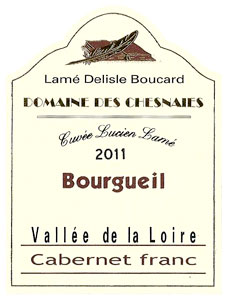
lamedelisleboucard

I have been following Lamé Delisle Boucard since I stumbled across their magnificent 2005 Cuvée Prestige, a tremendously brooding Cabernet Franc that has fantastic aging potential and layer upon layer of complexity. I recently picked up two more wines – the 2009 Cuvée Prestige and the 2011 Cuvée Lucien Lamé. Both wines have great potential and demand time and concentration, which will be rewarded handsomely.

My tasting notes:

2009 Lamé Delisle Boucard Cuvée Prestige Bourgueil AOC $12.99

Ripe, cherry nose with floral and mineral hints. Medium-bodied with moderate acidity and firm, dry tannin – good balance. Sour cherry on the palate with mint, fresh herb and chalk notes. Moderate length with a dark and brooding finish. Smooth. Drinking well and will improve with another 3 to 5 years in bottle and quite possibly beyond. Great value.

2011 Lamé Delisle Boucard Cuvée Lucien Lamé Bourgueil AOC $11.99

Ripe, jammy nose with bright fresh cherries, wild flowers and fresh mint hints. Medium-bodied with moderate acidity and firm tannin – well balanced. Tart, sour cherry palate, structured with red currant, bramble and wet stone notes. Moderate length – smooth. Not as complex as the Cuvée Prestige, but very pretty. Drinking well and will improve for another 2 to 3 years in the bottle. Great value.

Both wines are great values, with enough structure to age for several years, further rewarding the person with patience.

By the way, I had their 2010 Rosé last year – in a word – stunning!

Cheers!

2004 Marqués de Cáceres Gran Reserva Rioja, Spain

12 Friday Apr 2013

Posted by musingsonthevine in Wines

≈ Leave a comment

My students and my wine tasting friends know that I perpetually extoll the virtues of Spanish wines. And it used to be that the only Spanish wine anyone knew anything about was Rioja. In point of fact, a long time ago, the only Spanish wine that was available, period was Rioja. My how things have changed, but that doesn’t mean that we should eschew or ignore that Spanish classic…

Rioja is arguably Spain’s most well-known wine region and may in fact be one of its oldest. Evidence of grape cultivation goes back to medieval times, with some historians claiming even earlier evidence of Phoenician and possibly even Greek wine making in the region.

If you look back in my archives to a posting from March 24, 2012, you will find the requisite technical details concerning the wines of Rioja, which I will not bother to repeat here…

Instead, let’s spend some time talking about one of my all-time favorite Rioja producers – Marqués de Cáceres and their wonderful Gran Reserva…

MarquesCaceresGR

Marqués de Cáceres, while not the oldest bodega in Rioja, is the product of a long tradition of wine making. Founded in 1970 by Enrique Forner, the descendent of successful Bordeaux wine makers, in conjunction with supervision from Emile Penaud, arguably one of Bordeaux’s most famous wine makers, Marqués de Cáceres was the first new winery in Rioja in nearly 50 years. The outstanding Bordeaux lineage produces wines of impeccable quality, with classic, elegantly structured characters, but with the unmistakable imprint of traditional Rioja wines. The winery is located in Cenicero, which is in La Rioja Alta and maintains a facility with over 40,000 aging barrels and over 10 million bottles of wine in their cellars. The wines are primarily Tempranillo-based, but do contain quantities of Garnacha and Graciano. In the case of the 2004 Gran Reserva, the wine is 85% Tempranillo and 15% Garnacha and Graciano. The vintage is highly regarded in Spain, with near ideal conditions throughout the growing season and into harvest time. The wines from the vintage tend to have solid structure with good fruit density, which translates to above average aging potential – this Gran Reserva is no exception…

My tasting note:

Powerful, yet refined nose with dark cherry, graphite and cedar hints. Full-bodied with moderate acidity and smooth, well-integrated tannin – well balanced. Dark fruit core with sour cherry, red current, cocoa dust saddle leather and tobacco notes. Long finish – smooth with vanilla and briarwood on the aftertaste. Drinking well and should improve nicely for another 5 to 7 years, easily.

At an average bottle price of $29.99 before the discount, this wine is a very respectable value.

Cheers!

2009 Mas Lavail “Tradition” Côtes du Roussillon Villages, France

10 Wednesday Apr 2013

Posted by musingsonthevine in Wines

≈ Leave a comment

The south of France has many charms and the dark, red wines of the Côtes du Roussillon Villages are a real pleasure, especially in a great vintage like 2009.

The larger area known collectively as the Languedoc-Roussillon is an expansive region stretching from about the city of Nimes in the east to the border of Spain. While thought of as one large region, the area is actually two distinct appellations: Languedoc in the north and Roussillon in the south. If one were to provide an overarching stereotype to the two regions, one might say that the Languedoc has more in common, stylistically with the southern Rhone region, while Roussillon shares more in common with southeastern Spanish regions. No matter, the wines that hail from either area are quite diverse, but all share a more rustic style – the reds especially are big, dark-complexioned with flavors that give an obvious nod to their surroundings.

The smaller region of Côtes du Roussillon Villages is reserved for higher-quality red wines from the greater Roussillon region. Located in the hilly northern part of the Roussillon, the vineyards in the region have a long track record of producing a higher-tier of quality wines. The Côtes du Roussillon Villages does contain four named sub-regions: Caramany, Latour de France, Lesquerde and Tautavel, which may be listed on the label if the grapes originate from within their boundaries. If no designation is made, then the grapes hail from non-designated parcels.

Soil types vary in the overall region, but the presence of the ubiquitous garrigue (low-lying scrub brush on limestone soils) imprints much of what is produced. The climate is resolutely Mediterranean in character – hot, dry with some moderating winds, which makes for a ripe, disease-free crop.

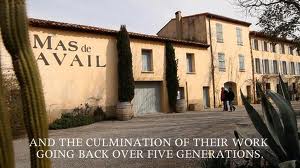
MasLavail

The Mas Lavail Tradition is a blend of 40% Shiraz, 40% Carignan and 20% Grenache Noir, which is the usual cast of characters in this region. In researching the wine, I found the following from the importer’s web site:

Nicolas Batlle, an enthusiastic young winegrower, farms the lands of the Mas de Lavail with his family in the heart of the Maury appellation in the Rousillon region.

This exceptional terroir consists of black shale and calcareous marl set between the Corbières and the Pyrenees at the foot of the Cathar castle, Quéribus. This location has a micro-climate which is favourable to noble grape varieties such as Grenache, Carignan and Syrah.

The property’s wines are produced from old vines and are concentrated, generous and elegant.

I also found the “technical” details of the wine – The vineyard comprises 8.04 hectares (19.54 acres) with an average vine age of 60 years. The soil type is listed as limestone-clay and the vineyard is noted as being “traditionally” managed. I assume that the term differentiates practices that would otherwise be considered “organic” or “biodynamic.” Grapes are harvested manually and are vinified, again, using “traditional” methods. A long maceration time is noted, which clearly is evidenced in the deep color of the wine. Total production is set at 30,000 bottles and it appears that the wines are aged for 12 months before bottling. The winemaker notes a 5 year aging potential, which I confirmed with my own tasting.

I found the wine to be quite stunning and well worth the price…

My tasting note:

Ripe, Jammy nose with explosive fruit – garrigue, pepper and floral hints. Full-bodied with moderate acidity and firm, dry tannin. Dark fruit core with black cherry, tar and spice notes. Moderate length with a layered finish – very nice. Drinking well now and should improve with another 3 to 5 years in the bottle.

At an average bottle price of $16.99 before the discount, this wine is a very respectable value.

Cheers!

2011 Kellerei-Cantina Andrian Pinot Bianco, Alto Adige, Italy

19 Tuesday Mar 2013

Posted by musingsonthevine in Wines

≈ Leave a comment

Italian whites get a bad rap… and why not? I begin to lose track of the names of the insipid multitude of Pinot Grigio and Soave that seem to splash over the gunwale like so many waves in the sea… Yes, yes, there are the occasional standout – Alois Lageder, Inama, Pieropan, Castellani are a few that come to mind… but generally speaking my heart lies with the red wines of my ancestors.

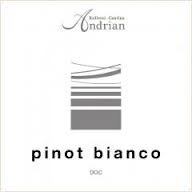
And then an Italian white shows up that really grabs my attention, shakes my tree so to speak and reminds me of just how perfect Italian white wine can be… The Kellerei-Cantina Andrian Pinot Bianco is just such a wine –Bright, fruity with minerality, complexity and beauty – the wine literally tastes like sunshine!

AndrianPB


The Andriano wine making cooperative is the oldest in the southern Tyrol, and was founded in 1893. Nestled in northeast Italy, near the Alps, this part of the Adige Valley rests under the protection of mount Gantkofel, which holds the harshest weather at bay. The winding Adige River flows to the south and provides a moderating effect on the undulating hillside vineyards. Located on the gently sloping eastern side of Andriano, and at an altitude of between 1,800 to 2,000 feet above sea-level, many late-ripening varieties of grapes enjoy an especially large amount of sunshine. Despite hot summer days, the grapes of Andriano benefit from a strong diurnal climate with cool evenings that ensure that the grapes have elevated acidity, as well as intense freshness and fruitiness.

My tasting note:

Bright, citrusy nose with mineral and melon hints. Light-bodied with moderate acidity – good balance. Lemony palate with apple, pear and apricot notes. Moderate length with a crisp, refreshing finish – clean. Drinking well now – not for aging.

At an average bottle price of $14.99 before the discount, this wine is a respectable value.

Cheers!

2010 Château du Hureau ‘Tuffe’, Saumur-Champigny, France

19 Tuesday Mar 2013

Posted by musingsonthevine in Wines

≈ Leave a comment

I try to stay away from controversial subjects… Nothing ruins a good glass of wine faster than unpopular sentiment.

So it is with reluctance that I mention the topic of global warming. I don’t actually believe in those prognosticators of doom and gloom who say that the Earth is merrily on its way to becoming a spinning ball of arid dust… Maybe I should, but the data feels somewhat disingenuous. Now, what does this have to do with wine?

Well, recent warming trends in Europe have dramatically changed the quality and style of several wines… Pinot Noir is now growing at ripeness levels in the south of England to actually cause a spike in sparkling wine production there – watch out Champagne! And, Cabernet Franc is growing well enough in the Loire to actually produce red wines of uncharacteristic fruitiness…

It used to be that most vintages of Loire-based Cabernet Franc tasted more like bell peppers and grape stems than anything else. I liked the wines in great vintages and found them to be eclectic, like Pinot Noir from the Alsace, but I can’t say I really loved them.

As I said, though, recent vintages are producing a lusher, more fruit forward version of Cabernet Franc and the Château du Hureau is a perfect example. Château du Hureau is located in the small town of Dampierre sur Loire, which is about four miles east of Saumur. The name of the Château, hureau means old, solitary boar, which is represented on the weathervane topping the octagonal tower looming large over the property, an impressive estate carved out of the limestone cliffs sometime in the 13th century. There are 17 hectares (approximately 42 acres) arrayed in 21 separate vineyard plots that are spread around the towns of Dampierre Sur Loire, Souzay, Champigny and Saumur and they are all planted with Cabernet Franc. The commonality among the vineyards and where this wine derives its name, Tuffe is a soft, chalky limestone from the Cretaceous period that underlies the soil.

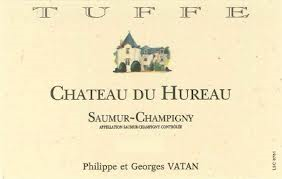
HureauTuffe


A definite crowd pleaser, this wine showcases the loveliness of Cabernet Franc grown under the correct conditions…

My tasting note:

Fruity nose with red berry, chalk and wildflower hints – very pretty. Medium-bodied with moderate acidity and firm tannin – good balance. Dark fruit core with sour cherry, tea leaf and wet stone notes. Moderate length with a tight finish. Drinking well and should improve with another 2 to 3 years in bottle.

At an average bottle price of $15.99 before the discount, this wine is a respectable value.

Cheers!

2011 Domaine Du Père Caboche Le Petit Caboche, Vin de Pays de Vaucluse, France

13 Wednesday Mar 2013

Posted by musingsonthevine in Wines

≈ Leave a comment

Domaine Du Père Caboche is a well-respected producer of Châteauneuf du Pape going back to 1777, when the lineage of the current owners, the Boisson family married into then current owners, the Chambellan family. From that point forward, the tradition of vine growing and wine making has been passed from one generation to another in an unbroken family tradition.

The name caboche comes from the French colloquial term for the nail used to secure a horseshoe to the bottom of a horse’s hoof. The original profession of the Boisson family was that of blacksmith, a tradition that ended with the father of the current head of the winery.

The family produces three wines : Châteauneuf du Pape, Côtes du Rhone and Vin de Pays de Vaucluse. The CDP wines, of which there are several bottlings, are produced from grapes harvested from impressive vineyards, some of which encompass the very famous Le Crau vineyard. All of the wines are predominantly Grenache-based. The Côtes du Rhone wines are also predominantly Grenache-based. All of which contributes to the impressiveness of the Vin de Pays offering.

CabocheVDP

The Vin de Pays de Vaucluse is, as you would expect dominated by Grenache in the blend, consisting of 80% Grenache, 10% Syrah, 5% Caladoc and 5% Marselan. The wine is produced in a traditional manner with light crushing of the fruit and constant temperature control throughout the process, preserving the freshness of the fruit. Maceration extends to 10 days, which contributes to the depth of color. The wine is then finished in large oak cooperage for 3 to 6 months. Tasting notes on the winery web site tout the wine’s fruity character and the fact that the wine should be consumed “very young.”

I have to agree and at such an outrageously cheap price, the wine rivals the previously reviewed Vega Sindoa as house wine for the summer at Chez Musings…

My tasting note:

Juicy, fruity nose with fresh cherry, red currant and wild flower hints. Medium-bodied with moderate acidity and supple tannin – good balance. Youthful palate with cherry, blackberry, anise and fresh mint notes – infinitely quaffable. Moderate length – seductive and easy drinking. Not for aging – meant for fun!

At an average bottle price of $7.99 before the discount, this wine is a superb value.

Cheers!

2011 Marqués de Cáceres Deusa Nai Albariño, Rias Baixas, Spain

12 Tuesday Mar 2013

Posted by musingsonthevine in Wines

≈ Leave a comment

Northwest Spain – Galicia… Green Spain as some folk call it… Unlike the central and southern portions of Spain, where the climate varies from Mediterranean to arid, desert-like conditions, Galicia is very wet, being heavily influenced by the Atlantic Ocean. The rainfall, nearly 50 inches a year combined with over 2000 hours of sunshine produces a humid, rainforest-like environment that is quite verdant, hence the nickname, Green Spain.

There are five Denominación de Origen (DO) in Galicia: Monterrei, Rías Baixas, Ribeira Sacra, Ribeiro and Valdeorras. The area is largely isolated from the rest of Spain, which accounts for the fact that stylistically, the wines of Galicia have more in common with Portugal than the rest of Spain.

The most popular and well-known DO in Galicia is Rías Baixas and produces amazing white wine from the indigenous Albariño grape. Overall, 90% of the wine produced in Rías Baixas is made from the Albariño grape. The vineyard soils of the region are granite based and well situated for the damp maritime climate of the area. While the rest of Galicia enjoys a reputation for high grape yields, Rías Baixas keeps the yield of its Albariño plantings low in order to produce concentrated fruity and fragrant wine. Known for fantastically perfumed noses, Albariño from Rías Baixas is best enjoyed young, slightly chilled on a hot summer’s day.

DeusaRai

Marqués de Cáceres is known for producing the full range of Rioja wines. The Deusa Nai is their newest wine and it falls well outside of their usual Ebro Valley homeland. The name means “Mother Goddess,” or one who protects the earth’s fertility. The initial production is relatively small, only 6,600 cases, but the limited production has put a focus on quality. The Deusa Nai is textbook Albarino with a lush, perfumed nose, but the wine possesses a depth and elegance, which is a bit uncharacteristic of the variety and the region. I guess I shouldn’t be surprised, given the wineries track record for outstanding Rioja wine – that and the fact that globe-trotting wine Guru Michel Roland is their consultant…

My tasting note:

Lovely, perfumed nose with tropical melon, floral and wet stone hints. Medium-bodied with firm, racy acidity – good balance. Tart, lemony palate with apple, pear and apricot notes. Surprisingly good depth. Moderate length – crisp and refreshing . Drinking well now – not for aging.

At an average bottle price of $13.99 before the discount, this wine is a very respectable value.

Cheers!

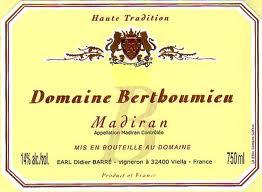
2005 Domaine Berthoumieu Cuvée Haute Tradition, Madiran, France

06 Wednesday Mar 2013

Posted by musingsonthevine in Wines

≈ Leave a comment

The Appellation d’Origine Contrôlée (AOC) called Madiran is in the southwest part of France in Gascony and is a red wine-only AOC dominated by the Tannat grape. The Tannat grape is known for prodigious levels of tannin and the wines produced typically require several years before they become enjoyable.

domaineberthoumieu

Domaine Berthoumieu is a prominent family producer in Madiran and the Cuvée Haute Tradition is comprised of a blend of 55% Tannat, 35% Cabernet Sauvignon, 10% Fer-Servadou, the last grape being used largely to contribute a perfumed aroma to the wines.

This wine is not for the faint of heart, or for those who abhor tannin. Be prepared to scrape your tongue after just one glass, because this wine is thick. Definitely built for consumption with hearty food – foie gras comes to mind with its rich, fatty consistency, or a nice, well-marbled sirloin or rib eye… Throw together a nice Cognac cream sauce with caramelized shallots and we’re talking heaven…

My tasting note:

Thick, black cherry nose – deep and dark with rose attar, violet and black currant hints. Full-bodied with firm acidity and firm, dry tannin – good balance. Very tightly wound with sour, tart cherry, pomegranate and roasted game notes – intense and brooding. Moderate length with a closed, muted finish. Needs time to open up, perhaps another 3 to 5 years in bottle, maybe more…

At an average bottle price of $14.99 before the discount, this wine is a very respectable value.

Cheers!

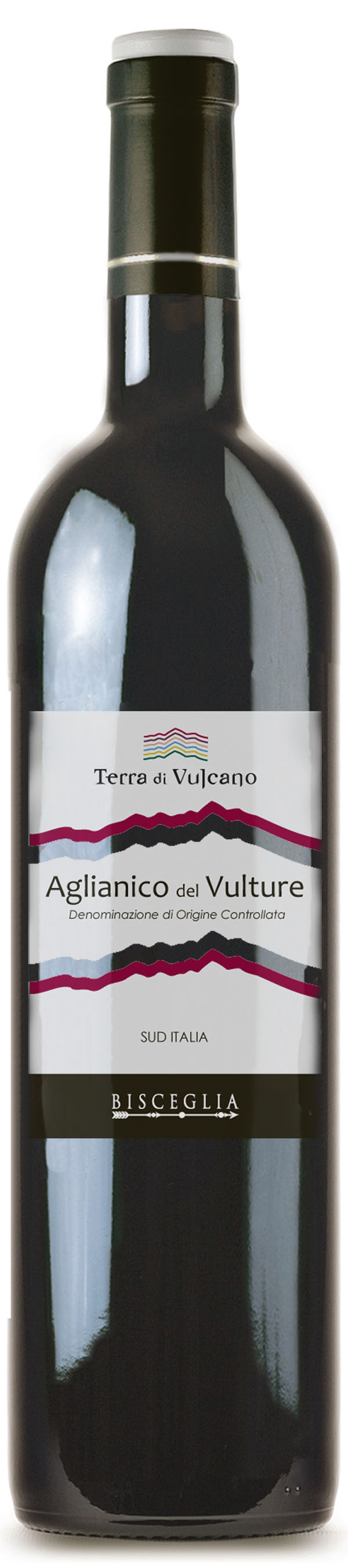
2010 Bisceglia Aglianico del Vulture, Italy

05 Tuesday Mar 2013

Posted by musingsonthevine in Wines

≈ Leave a comment

The Denominazione di Origine Controllata (DOC) of Aglianico del Vulture is nestled around the most prominent and defining fixture of this extremely southern Italian wine region – Mount Vulture. The term vulture in Italian translates to the English word vulture, and the meaning tends to be more broadly associated with any predatory scavengers, which vultures generally are. The DOC is part of the larger Basilicata region and it is the only area within larger whole that actually produces quality wine.

The history of the region, like most of Italy is about conquest, foreign settlement, annexation, usurpation, upheaval and eventual serenity. The original name for the region was Lucania, which was derived from the very first settlers in the area – the Lucanians. The term Lucania is itself derived from the Latin word for forest, lucus, which is apropos, as the region once possessed dense forests. The Greeks arrived in the 7th Century BC and established several cities and developed a rudimentary agricultural and commercial trading base.

It was in fact the Greeks who planted the very grape from which this wine is made – Aglianico. The name Aglianico is believed to be a bastardization of the term Hellenic, or Greek, by native Italian peoples. No other native grapes grow in the region.

The Romans eventually arrived in the region in about the 3rd Century BC and began a program of deforestation to provide wood for building other colonial cities and the large naval fleet required for further conquest. For hundreds of years the forests were plundered and eventually the land was entirely denuded of any trees. This is not unlike the story of central Spain…

The modern name for the region, Basilicata was given by the Byzantines. Further invasions and the appearance of marauding Saracen pirates eventually forced most of the population into the hills, where agriculture was generally poor, unless you are a grape grower. Grapes thrive where most crops fail and on the rich volcanic soil of Mount Vulture, the Aglianico flourished.

While the region only produces a single DOC wine, from a single grape, the quality of the wine is generally noteworthy, rivaling many of the great wines of northern Italy.

Bisceglia Terra di Vulcano Aglianico

The Bisceglia is a perennial favorite of mine, affordable and with all the wonderful characteristics of classic Aglianico. The wine is fruity, but edgy with an unmistakable dusty stoniness from the calcareous and volcanic clay-loam soil. The grapes are harvested from a single, 21 acre vineyard, Toppo di Viola, which is at approximately 1,250 feet above sea level. The yields in the vineyard are average at 2.8 tons/acre and the vines were originally planted in 2004. The must sees stainless steel fermentation over two weeks at a relatively low temperature (70 °F), which preserves the fresh, vibrant flavors of the fruit. The wine then undergoes full Malolactic fermentation as it ages for another year in stainless steel tanks.

The overall production runs to approximately 100,000 bottles, but careful winemaking and viticultural pedigree suggests a wine of much smaller production levels. Clearly a testament to the power of volcanic soil and sparse hillsides.

My tasting note:

Fruity nose with bright, cherry, violets and lots of wet stone and chalk hints. Medium-bodied with firm acidity and moderate tannin – good balance. Dark fruit palate with sour cherry, tar and anise notes – youthful. Moderate length with a smooth, layered finish – lightly spicy and dusty. Drinking well now – not for aging.

At an average bottle price of $13.99 before the discount, this wine is a very respectable value.

Cheers!

← Older posts
Newer posts →

Subscribe

  • Entries (RSS)
  • Comments (RSS)

Archives

  • June 2020
  • May 2020
  • April 2020
  • March 2020
  • February 2020
  • January 2020
  • December 2019
  • August 2019
  • February 2019
  • December 2018
  • November 2018
  • October 2018
  • September 2018
  • August 2018
  • July 2018
  • June 2018
  • May 2018
  • April 2018
  • March 2018
  • February 2018
  • January 2018
  • November 2017
  • August 2017
  • July 2017
  • June 2017
  • April 2017
  • March 2017
  • February 2017
  • January 2017
  • December 2015
  • October 2015
  • August 2015
  • July 2015
  • June 2015
  • December 2014
  • November 2014
  • August 2014
  • July 2014
  • June 2014
  • May 2014
  • April 2014
  • March 2014
  • February 2014
  • January 2014
  • December 2013
  • November 2013
  • October 2013
  • September 2013
  • August 2013
  • July 2013
  • June 2013
  • May 2013
  • April 2013
  • March 2013
  • February 2013
  • January 2013
  • December 2012
  • September 2012
  • August 2012
  • July 2012
  • June 2012
  • May 2012
  • April 2012
  • March 2012
  • February 2012
  • January 2012
  • December 2011
  • November 2011
  • October 2011

Categories

  • Cocktails
  • General
  • Restaurants
  • Spirits
  • Uncategorized
  • Wine Events
  • Wines

Meta

  • Create account
  • Log in

Blog at WordPress.com.

  • Subscribe Subscribed
    • blog.musingsonthevine.com
    • Join 36 other subscribers
    • Already have a WordPress.com account? Log in now.
    • blog.musingsonthevine.com
    • Subscribe Subscribed
    • Sign up
    • Log in
    • Report this content
    • View site in Reader
    • Manage subscriptions
    • Collapse this bar
 

Loading Comments...