Category Archives: Wines

2009 Badia a Coltibuono RS Chianti Classico, Italy

04 Friday May 2012

Posted by musingsonthevine in Wines

≈ Leave a comment

Thirty years ago producers in Chianti began a concerted effort to greatly improve the quality of their wines. The movement was anything but easy, largely due to “misguided” traditions that involved over cropping grapes to boost production and antiquated wine making techniques that did not promote quality. It is an ironic coincidence that the Italian word for the infamous straw-covered bottle is fiasco. Apropos, indeed.

The good news is that all the hard work is paying dividends and Chianti has rebuilt its reputation as a fine wine region.

Arguably, a lot of the hard work has been a combination of long-standing Chianti producers recognizing that change was necessary to survive and young, upstart Chianti producers bringing new insights and techniques into the mix. One long-standing producer that is at the forefront of the quality movement is Badia a Coltibuono, or The Abbey of the Good Harvest in Italian. Badia a Coltibuono dates back well over a thousand years:

Badia a Coltibuono is about one thousand years old but its prehistory takes us back to Estrucan times and beyond. As we know it today, Badia a Coltibuono (which means Abbey of the Good Harvest), dates from the middle of the eleventh century. In 1051 the monks of the Vallombrosan Order, a Tuscan reform of the Benedictines, founded the Abbey and also began planting the first vineyards in the Upper Chianti area. Over the centuries they extended their vast land holdings to include many thousands of acres and developed a flourishing wine production and commerce.

In 1810, when Tuscany was under Napoleonic rule, the monks were forced to leave Coltibuono and the monastery was secularized.

The estate was first sold by lottery and then in 1846, Coltibuono was bought by Guido Giuntini, a Florentine banker and great grandfather of Piero Stucchi-Prinetti, the present owner. Under the guidance of Piero Stucchi Prinetti, the estate grew and built a solid reputation in Italy and abroad through the high quality of its products.

Nowadays, his children Roberto, Emanuela and Paolo continue the activities embarked upon by their ancestors.

Badia a Coltibuono Web Site (www.coltibuono.com)

I have been a great fan of Badia a Coltibuono wines for a very long time, with the recent vintages of most of their different Chianti bottling showing stellar quality. One of particular note is the 2009 Chianti Classico Selezione RS, a high-value Chianti Classico that embodies the region with its bright red fruits and balanced acidity. At an average retail price of $14.99 per bottle, the wine is quite a nice value.

My tasting note:

Rustic, earthy nose with dried cherry, saddle leather and cedar hints. Medium-bodied with moderate acidity and moderate tannin – good balance. Sour cherry and red berry notes – persistent leather and cedar on the palate. Moderate length – smooth with a touch of floral on the aftertaste – violets and lavender. Drinking well now and should continue to improve for another 2 t 3 years in the bottle. Classic Chianti Classico and a very good value from a solid producer.

Cheers!

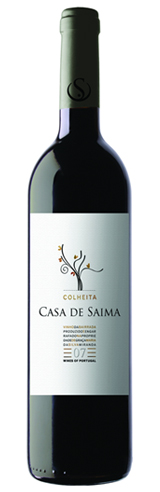
2009 Casa de Saima Colheita Tinto, Regional Beiras, Portugal

30 Monday Apr 2012

Posted by musingsonthevine in Wines

≈ Leave a comment

For most folks, Portugal is the home of one of the World’s most famous fortified dessert wines: Port.

But Portugal is home to hundreds of indigenous grape varieties that most wine drinkers have never heard of, most of which make really tasty wine, sweet and dry. How does Baga strike you? Don’t know it? Well you should…

Baga is a red grape grown primarily in the DOC zone of Bairrada along the Atlantic coast in the larger region of Beiras. The Atlantic Ocean serves to moderate the climate, which is ideal for grape cultivation. Baga tends to produce tannic, complex wines with fairly high acidity, not unlike traditional Barbera from Piedmont in Italy.

Casa de Saima, managed by Granca Miranda, maintains the fundamentalist tradition of treading by foot, fermenting in lagares, and aging the wine in 100 year old large casks, before an unfiltered bottling. The result is an approachable wine that has unmistakable, classic character. At an average bottle price of $9.99 per bottle pre-discount this is a significantly undervalued wine.

My tasting note:

Lush nose with black cherry, tar and floral hints. Medium-to-full-bodied with moderate acidity and firm, dry tannin – good balance. Nice core of dark fruit with plum, tobacco and vanilla notes. Moderate length – smooth – drinking well now and should improve with another 2 to 3 years in bottle. Great value!

Cheers!

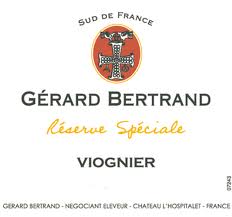
2010 Gerard Bertrand Réserve Spéciale Viognier, VDP d’Oc, France

30 Monday Apr 2012

Posted by musingsonthevine in Wines

≈ Leave a comment

I have been tasting and learning about wine for nearly 28 years – more than half my life… That’s a lot of time spent swirling, sniffing and sometimes, spitting and the one thing that has remained constant is change…

Case in point, the aforementioned wine is your garden variety Vin de Pays d’ Oc wine from France, a “country wine” from the most productive regional zone, the “Oc,” which covers most of southern France and is responsible for approximately 85% of VDP production. The VDP classification is a tier in the French Wine Quality hierarchy known as the AOC, or Appellation d’Origine Controlee and is just above Vin de Table and below AOC (technically just under a very rare VDQS tier). The classification was officially recognized in 1973 and has seen subsequent modifications in 1979, 2000 and 2009. The goal of the VDP class is to make it easier for global consumers to be able to understand French wine labels, which in theory increases the probability that your average wine consumer will buy the wine. For winemakers VDP means that the often very strict rules that are a part of the top tier classification of AOC are significantly eased, making it less costly to produce and market the wine. It’s all good, as far as I’m concerned, because most of the time, VDP wines are high-value, quaffable little numbers that have distinctive character with sub-$12 price tags.

As I was copying the information from the wine label for this review, lo and behold, I saw a new statement on the label: Indication Géographique Protegee, or IGP. Being the curious sort and a wine educator I began to dig and I found that in fact the change in VDP laws in 2009 included the new labeling, which corresponded to the registration of all VDP titles with the EU under their Protected Geographic Indication (PGI) designation. While meant to “replace” the Vin de Pays title on a wine label, the changes stipulate that wine makers can opt to use either or both designations on the label. So, just when you thought that European wine labeling was taking a turn towards clarity, guess again…

Remember what I said about the one constant in wine tasting over the last 28 years? Change.

At the end of the day, though, what matters is what is in the bottle and I can safely say that Gerard Bertrand has hit a solid home run with this lovely little Viognier and at an average retail price of $9.99 per bottle pre-discount, you can bet that this wine will find a comfortable spot in my Summer rotation. The screw cap closure means that I can hold it a while as well. Such a deal, no matter what the label says…

My tasting note:

Lively, floral nose with tropical fruit and honey hints – very pretty. Light-bodied with moderate acidity – clean – good balance. Soft palate, lightly fruity with papaya, honey and pear notes. Short, clean finish with a refreshing aftertaste. Drinking well now – not for aging. Superb value!

Cheers!

2009 Castello di Salle Sallis Castrum Montepulciano d’Abruzzo, Italy

29 Sunday Apr 2012

Posted by musingsonthevine in Wines

≈ Leave a comment

Montepulciano d’Abruzzo is an Italian DOC located in the east central part of Italy, sandwiched between the regions of Lazio, Marche and the Adriatic Sea. With more than half of the region considered mountainous terrain, the hillside vineyards in Abruzzo benefit from a warm, sunny climate, which is moderated by cooling breezes from the sea. The results are ripe, mature grapes that produce an easy-drinking, food friendly red wine. The wine is made from the Montepulciano grape, with very small quantities of Sangiovese allowed in the blend (less than 15%). The wine is typically dark colored with a spicy, almost peppery note and is generally not meant for aging.

Castello di Salle is a well-known quality leader in the region and the Sallis Castrum is their less-expensive bottling. At an average retail price of $13.99 per bottle, the wine is quite a nice value, providing a quaffable potation with some very interesting character.

My tasting note:

Earthy, rustic nose with anise, black cherry and briarwood hints. Medium-bodied with moderate acidity and moderate tannin – good balance. Dark fruit core with sour cherry, floral and dried herb notes. Smooth, Moderate length with tar and allspice on the aftertaste. Drinking well and should hold for another 2 to 3 years in the bottle. Good value.

Cheers!

2010 Ramón Bilbao Valiñas Albariño, Rias Baixas, Spain

26 Monday Mar 2012

Posted by musingsonthevine in Wines

≈ 1 Comment

I think it was fifteen years ago that I first tasted Rias Baixas Albariño and I am as taken with the wine today as I was fifteen years ago. Most folks are familiar with the Martin Codax Burgans, or the Paso Señorans bottling – both perennial favorites around our house. So how does one improve on such a simple little quaffer? Drop the price by a few bucks and amp up all the wonderful attributes of Albariño: beautiful, perfumed nose, refreshing palate with a crisp clean finish.

Such is the Valiñas from Ramón Bilbao, a stunning little wine from the northwest of Spain that, after a healthy discount is just a hair over $10! If you are looking for the perfect summer wine, look no further!

My tasting note:

Lively, fresh nose with tropical fruit and floral hints – lovely, perfumed scent. Light-bodied with firm acidity – well balanced. Racy with citrus and tropical fruit notes and a touch of mineral and chalk. Short, clean finish – smooth, clean and refreshing. Not for aging, although with the screw cap, the wine should hold up well. Great value!

Cheers!

Don’t cry for me, Argentina…

24 Saturday Mar 2012

Posted by musingsonthevine in Wines

≈ Leave a comment

I tend not to follow wine fads… They burn out relatively quickly and frankly do more harm than good. A current fad that seems to be running its course is Argentine Malbec… but first a bit about Argentina…

Argentina is considered the most important Latin American wine producing country, with the largest amount of land under vine (209,000 Hectares, or 504,000 Acres) and the largest per capita consumption rate for wine (40.99 Liters, or 10.8 Gallons).

Annual wine production had been as high as 27 Million Hectoliters or 713 Million Gallons in 1973, but has since fallen to 12.5 Million Hectoliters or 331 Million Gallons in 2000, ranking Argentina as the 5th most productive wine region in the world.

Argentina has a wide range of climates, mostly temperate due to the broad extent and varying elevations of the vineyards. Water is plentiful, land is cheap and there is a potential market of 35 Million residents who are of European heritage with an in-grained culture of wine drinking. So, why isn’t Argentina’s wine industry stronger? Simply put a lack of economic stability. With rampant inflation, the devaluation of the Peso and the recent change (1991) to an open market government, the wine industry has largely focused on producing large volumes of mediocre table wines.

This is slowly changing, which is evident from the increase in foreign investment and the increased availability of finer, Argentine wines.

Some History

The history of the Argentine wine industry begins with its colonization by the Spanish:

  • 1536 – Buenos Aires is founded by Pedro de Mendoza, but native Indians drive the Spaniards out.
  • 1553 – Santiago is founded by Spanish settlers arriving from Peru and Bolivia and the settlement begins to thrive.
  • 1561 – Mendoza is founded by Spanish settlers arriving from Chile.

In each case, missionaries accompanied the settlers, bringing God and the vine to Argentina. These initial plantings were likely the Criolla grape, which made only mediocre sacramental wines. Over time, plantings grew to include the more familiar European varieties.

The evolution of the Argentine wine industry was largely due to three factors:

  • Ever-growing immigrant population accustomed to drinking wine (Europeans).
  • Domingo Faustino Sarmiento, Argentine President (1868-74), responsible to establishing wine schools throughout Argentina, including noted French and Italian wine experts.
  • The Pacifíco Railway (1885) that connected Mendoza with Buenos Aires, which opened the country to trade.

The wine industry continued to grow throughout the 20th Century, peaking in 1976, largely due to exportation of cheap wine to Chile. It was at this time that Argentina was recognized as a country with “great wine-making potential” in the press. This led to Argentine wine makers actively and aggressively pursuing the export markets of Britain and America. The strategy met with success and exports shifted from cheaper, table wines intended for Chile, to finer wines destined for Europe and America. Production ramped-up to meet demand and it appeared as if Argentina was transforming into a true fine wine producer.

However, all of this success was destroyed by the invasion of the Falkland Islands in 1982. Overnight, the lucrative export markets outside of Latin America were gone and the wine being produced was too expensive for the cheap, Chilean market, which resulted in vast overproduction that led the industry to crash.

Upon cessation of hostilities Argentina set about rebuilding their wine industry. Over the following ten years the wine industry began to revive, fueled in large part to the regime change in Buenos Aires (1991). In the last ten years, the availability of hard currency, more foreign investment and the re-establishment of an export market for fine wines have allowed Argentina to build a strong, fine wine industry with even greater growth potential in the future.

Regions

The Instituto Nacional de Vitivinicultura (I.N.V) is responsible for organizing and administering the regions and wine laws of Argentina. The INV has established four basic regions in Argentina:

  • North-West
  • Centre-West
  • South
  • Other

The INV has also established an appellation system, like those of Europe, called the Denominación de Origen Controlada of DOC. The first appearance of the DOC on an Argentine wine label was 1992 (San Rafael). There are two regions officially recognized as DOC regions: San Raphael and Luján de Cuyo. Most old time producers do not believe in the DOC system, largely due to years of governmental distrust. More modern producers do not believe in the DOC system because they do not want to be “handcuffed” to antiquated rules like their European counterparts. The fact that the DOC is largely overlooked by the wine makers means that most labels are without any kind of DOC specified and the likelihood of more classifications is doubtful.

Despite the lack of a generally-accepted DOC system, there are many regions that are noted for fine wine production.


North-West

Salta Province

Production

Acreage/Elevation

White Wine

Red Wine


1%

1,500ha/2,000m

80% – Torrontes

20% – Cabernet


Cantamarca Province


1%

400ha/2.000m


100% – Pinot Noir


LaRioja Province


5%

5,300ha/935m

80% – Torrontes

20% – Cabernet


Centre-West (Cuyo)


San Juan Province


31%

21,000ha/630m

85% -Muscat

15% – Bonarda


Mendoza (Overall)


61%

72,000ha/1,300m


North Mendoza


Las Heras

Lavalle


El Borbollón

Los Coralitos


El Plumerillo

Costa de Araujo


Nueva California


Upper Mendoza River


Godoy Cruz

Guaymallén

Luján de Cuyo

Maipú


Agrélo

Coquimbito


Carrodilla

Russell


Drummond

Cruz de Piedra


Las Compuertas

Lunlunta


Perdriel

Las Barrancas


Portrerillas


Ugarteche


Vistalba


East Mendoza


San Martin

Junín

Rivadavia

Santa Rosa

La Paz


Medrano

Palmira

Las Catitas

AltoSalvador


Las Chimbas


Uco Valley


Tupungato

Tunuyán

San Carlos


La Arboleda

Villa Seca

El Cepillo


Aguas Amargas

VistaFlores

Chilecito


Las Rosas


Los Sauces


South Mendoza


San Rafael

General Alvear


Las Paredes

Carmensa


Cuadro Benegas


El Cerrito


La Llave


Goudge


Rama Caida


Cañada Seca


Las Malvinas


Jaime Prats


Villa Atuel


South


Patagonia –Rio Negro Province


1%

5,400ha/300m

10% – Sauvignon

90% – Malbec


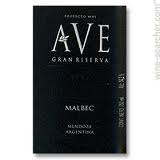
 Today, the craze is all about Malbec from Argentina – below are two from the same winery, AVE that I found noteworthy.

My tasting notes for the wines:

2009 AVE Malbec, Mendoza – $13.99 per bottle

Dark fruit nose with black cherry, menthol, briarwood and cedar hints. Full-bodied with moderate acidity and firm, well-integrated tannin – good balance. Black fruit core with herbaceous and cherry notes. Moderate length, smooth with dried fruit and vanilla on the aftertaste. Drinking well now and should hold for another 2 to 3 years in bottle. Good value!


2008 AVE Malbec Gran Reserva, Mendoza – $22.99 per bottle

Intense, rich nose with black cherry, anise menthol and cedar hints. Full-bodied with moderate acidity and firm, dry tannin – well balanced. Black cherry on the palate with vanilla, cedar and tar notes. Long finish, smooth with a nice allspice and dried fruit aftertaste. Drinking well and should benefit from another 5 to 7 years in the bottle.

Cheers!

A few from España…

24 Saturday Mar 2012

Posted by musingsonthevine in Wines

≈ Leave a comment

It’s been a while since I’ve posted… We’ve been tasting a lot, just bogged down with a whole host of other stuff… Well, we’re back, so here goes…

Spain is one of my favorite wine producing countries – great diversity of style and flavor, very high quality standards and fantastic values abound! For the last 20 years I have sung the song of praise for Spain and many of my friends have appreciated that.

I recently picked-up two wonderful little wines from arguably the most well-known region in Spain – Rioja. Located in the Ebro valley in northern Spain, the region is divided into three sub-regions: Rioja Alta, Rioja Baja and Rioja Alavesa, each with its own terrior that lends diversity of character to the blend. Rioja is one of the oldest wine making regions in Spain, officially recognized by the King of Navarre in 1102 AD.

The region is known primarily for its red wines, which make up approximately 85% of production and are largely produced from the Tempranillo grape. Other red grapes can be found in the blend, such as Graciano and Mazuelo. Rosado wines are also produced, as well as whites, the latter being a product of the Viura grape, known elsewhere in Spain as Macabeo. The style of classic, or traditional Rioja is very distinctive, often times possessing a rustic, yet elegant flavor profile, tinged with vanilla and cedar notes. The vanilla and cedar notes come from the American oak cooperage winemakers use in the aging process of the wine.

Rioja is one of two regions that holds the highest honor in the Spanish wine hierarchy – Denominación de Origen Calificada, the other being Priorato. Within this hierarchy, Rioja is categorized as thus:


Time in Cask

Total Time Aged


Red

White

Red

White

Vino Joven

None

None

1-year after vintage date

Crianza

6 months

6 months

24 months

12 months

Reserva

12 months

6 months

36 months

24 months

Gran Reserva

24 months

6 months

60 months

48 months

 The first wine is a Rioja Blanco from a very well-known, high-quality producer – Bodegas Muga. The Muga wine is barrel fermented and aged in oak to produce a smooth, creamy wine with elegant structure, but the application of wood is light-handed so the lively fruit persists on the palate. According to their web site: “Bodegas Muga is located in the historical Barrio de La Estación (railway station district) in Haro. The facilities (270,000 square foot) are two centuries old, built mainly of stone and oak. In fact, oak is paramount in the winery. There are 200 oak deposits as well as 14,000 barrels, made out of different types of oak ranging from French oak (Allier, Tronçais or Jupilles), American, Hungarian, Russian and even the small consignment of Spanish oak.”

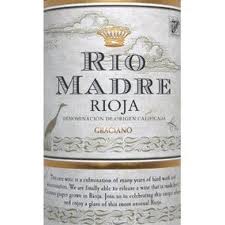
The second wine is a Rioja Crianza from Rio Madre with the distinction of being made from 100% Graciano grapes. The wine is powerful with great structure and wonderful complexity. Rio Madre is a relatively young winery located in the Rioja Baja and growing Graciano on 60+ year-old vines. Jorge Ordonez, the world renowned wine maker is a consultant to the operation, which could account for the unbelievable intensity of the wine.

My tasting notes for the wines:

2009 Bodegas Muga Rioja Blanco Barrel Fermented – $11.99 per bottle

Lively, creamy nose with vanilla, apple and tropical hints – very pretty. Medium-bodied with firm acidity – refreshing and crisp – good balance. Tart apple and lemon palate with oak and caramel notes. Moderate length – smooth with a pretty honeyed aftertaste. Drinking well – not for aging. Great value!


2010 Rio Madre Rioja – $11.99 per bottle

Earthy nose with deep plum, lavender and briarwood hints. Full-bodied with firm acidity and firm, dry tannin – good balance. Dense, chewy palate with blackberry jam and stewed  fruit notes – Wow! Long finish with a smooth but tight aftertaste. Some spice, cedar and vanilla – very nice. Drinking well and should benefit from another 5 to 7 years in the bottle. Great value!

Cheers!


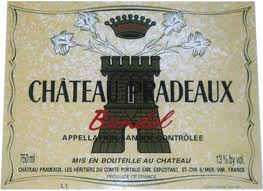
2005 Château Pradeaux, Bandol

26 Sunday Feb 2012

Posted by musingsonthevine in Wines

≈ Leave a comment

Bandol, in the south of France in Provence is a sun-drenched wine region along the Mediterranean Sea known for making powerful red and lively rosé wines. The overall region has a long-standing viticultural tradition going back almost 2,600 years, largely started by colonizing Greek settlers and significantly bolstered by each successive wave of settling peoples. Proximity to the port of Marseille has meant that the region has benefited from access to historical, global trade routes, which has placed Provencal wines and the wines of Bandol on tables across the globe.

The principle grape variety of Bandol is Mourvèdre, which must make up at least 50% of the blend in AOC wines. Other allowable grapes are Syrah, Carignan, Grenache and Cinsault, although most of the best producers lean very heavily on Mourvèdre. Stylistically, the red wines are often massively tannic with long aging potential. Both dry and sweet red wines are produced. The rosé wines are light and perfumed, ready for enjoying on a sunny patio with lighter fare. A small percentage of white wine is produced, primarily from Clairette, Bourboulenc and Ugni Blanc, but it almost never gets out of the region. The soil in the vineyards is primarily limestone, sand and silica, which are ideal for growing Mourvèdre.

Château Pradeaux a well-regarded estate owned by the Portalis family since the 18th century, has a reputation for seriously structured, often powerfully tannic wines made almost exclusively from Mourvèdre. The wines are aged in large old casks and are released as much as four years after the harvest. Successive bottle aging is the key to releasing the complexity of these wines, but be prepared to wait a while because the wines unfold very slowly.

The 2005 is the current offering from Pradeaux and it will be a while before the wine is at its full potential. At an average retail price of almost $50 per bottle, it is not cheap, but it is a very special wine with tremendous potential.

My tasting note:

Fresh, lively nose with cherry, allspice and light floral hints. Full-bodied with moderate acidity and firm, tough tannin – good balance. Tight, unyielding palate with sour cherry, tobacco leaf, dried herb and tar. Moderate length – closed with traces of spice and cedar. Needs time – not for the faint of heart.

Cheers!

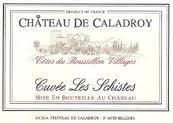
2009 Château de Caladroy “Cuvée Les Schistes,” Côtes de Roussillon Villages

25 Saturday Feb 2012

Posted by musingsonthevine in Wines

≈ Leave a comment

The Côtes du Roussillon is one of France’s sunniest and warmest wine growing regions, with a climate and history that has more in common with Spain, its neighbor to the west, than its French cousin, the Languedoc to the east. The sub-region Côtes du Roussillon Villages is bestowed upon twenty-five villages to the south of Corbières, along the Agly River.

Principle red grapes are Carignan, along with Cinsault, Grenache and Mourvèdre – only red wines are allowed to be made in Côtes du Roussillon Village, with Rosé and White wines allowed elsewhere in the appellation. Principle white grapes are Macabeu and Malvosie and produce wines that are a perfect match with seafood and shellfish.

Château de Caladroy is a well-known producer in the region, with several bottling. The Cuvée Les Schistes represents their entry-level wine and at an average per bottle price of $18.99, before the discount, the wine is good value in a superb vintage.

From the Vintage 59 web site:

In its heyday, Château de Caladroy was a small outpost high in the arid hills behind Perpignan. It had its own school, workers’ quarters, stables, an elegant 19th century chapel, a manor house and other dwellings, and an ancient fortress dating from the 12th century—for Caladroy was once a fortress on the ancient Kingdom of Majorca’s frontier. All of this is perched on a knoll; below, on a broad saddle of a ridge, grow the vineyards.

Although the school no longer functions and the workers’ quarters lie empty except at harvest, the chateau and its surroundings are striking. You drive up from Perpignan, a city which has a whole lot more in common with Barcelona than it does with Paris, and climb winding roads into the hills where the sparsely populated land is rocky and covered with scrub hardwoods and the ever present garrigue. At the top of the last rise, the road turns onto the saddle of vineyards; at the far end, beyond a windbreak of cedars, rises the Caladroy knoll with white buildings and red clay-tiled roofs. Looming in the distance are the snow-capped Pyrenees.

This is Roussillon, the sunniest viticultural area in France, forever battered by a dry wind that sweeps off the high Pyrenees known as the tramontane. Fully exposed at over 1,000 feet above the nearby Mediterranean, Caladroy and its vineyards occupy the top of the Fenouillèdes hills, isolated between two river valleys. This altitude gives Caladroy’s wines a certain measure of finesse that nicely balances their darkly concentrated flavors.

Today the vineyards have been extensively replanted, with Grenache, Syrah, and Mourvèdre dominating. Yields here average 25hl/ha, far below the permissible 45hl/he granted the top “Côte du Roussillon-Villages” AC designation. Moreover, the cellar was completely revamped in 2001, enabling cellarmaster Jean-Philippe Agen to make some super wine.

My tasting note:

Earthy nose with black cherry, menthol and briarwood hints – classic southern France. Medium-to-full-bodied with moderate acidity and firm, dry tannin – good balance. Dark fruit core with black cherry, rose attar and tarry notes. Long finish – smooth with  dark chocolate and cocoa dust. Lovely. Drinking well now and should improve with another 3 to 5 year in bottle.

Cheers!

2008 Principe Corsini Birillo di Marsiliana, Maremma Toscana IGT

25 Saturday Feb 2012

Posted by musingsonthevine in Wines

≈ Leave a comment

Maremma, a fertile agricultural area located in the southwestern part of the larger region known as Tuscany, is a very popular vacation destination. Its popularity is due in part to the nearly untouched beauty of the landscape, combined with impeccable cuisine and an up-and-coming number of quality wineries.

Principe Corsini has a long-standing history in the Maremma, going back to the 17th and 18th Centuries. However, the Corsini were not known for their winemaking until Duccio Corsini began cultivating grapes on 10 hectares (24.3 acres) of land near the family estate, Marsiliana. Over the years, production grew and winemaking became a Corsini hallmark.

The Birillo is a classic Bordeaux-blend of 60% Cabernet Sauvignon and 40% Merlot, grown on sandy silt on clay. The average age of the vines is 13 years and the resultant wine spends 12 months in re-used oak barrels. Production yields approximately 86,000 bottles and at a per bottle price of $18.99, before discount, the wine represents a very good value.

My tasting note:

Earthy, rustic nose with dark cherry, anise and briarwood hints. Medium-to-full-bodied with moderate acidity and smooth, supple tannin – good balance. Sour cherry, cedar and saddle leather notes. Moderate length with a smooth, spicy finish. Drinking well now and should hold for another 2 to 3 years in bottle. Good value!

Cheers!

← Older posts
Newer posts →

Subscribe

  • Entries (RSS)
  • Comments (RSS)

Archives

  • June 2020
  • May 2020
  • April 2020
  • March 2020
  • February 2020
  • January 2020
  • December 2019
  • August 2019
  • February 2019
  • December 2018
  • November 2018
  • October 2018
  • September 2018
  • August 2018
  • July 2018
  • June 2018
  • May 2018
  • April 2018
  • March 2018
  • February 2018
  • January 2018
  • November 2017
  • August 2017
  • July 2017
  • June 2017
  • April 2017
  • March 2017
  • February 2017
  • January 2017
  • December 2015
  • October 2015
  • August 2015
  • July 2015
  • June 2015
  • December 2014
  • November 2014
  • August 2014
  • July 2014
  • June 2014
  • May 2014
  • April 2014
  • March 2014
  • February 2014
  • January 2014
  • December 2013
  • November 2013
  • October 2013
  • September 2013
  • August 2013
  • July 2013
  • June 2013
  • May 2013
  • April 2013
  • March 2013
  • February 2013
  • January 2013
  • December 2012
  • September 2012
  • August 2012
  • July 2012
  • June 2012
  • May 2012
  • April 2012
  • March 2012
  • February 2012
  • January 2012
  • December 2011
  • November 2011
  • October 2011

Categories

  • Cocktails
  • General
  • Restaurants
  • Spirits
  • Uncategorized
  • Wine Events
  • Wines

Meta

  • Create account
  • Log in

Blog at WordPress.com.

  • Subscribe Subscribed
    • blog.musingsonthevine.com
    • Join 36 other subscribers
    • Already have a WordPress.com account? Log in now.
    • blog.musingsonthevine.com
    • Subscribe Subscribed
    • Sign up
    • Log in
    • Report this content
    • View site in Reader
    • Manage subscriptions
    • Collapse this bar
 

Loading Comments...