2011 Leitz Dragonstone Riesling, Rheingau, Germany

There is nothing as pleasing as really good Riesling, especially really good German Riesling. For many, German Riesling is an untapped treasure, largely a result of having had too many bottles of Blue Nun or Black Tower Liebfraumilchs. Ouch.

To me, German Riesling is all about balance and subtly. The interplay between acidity and fruit with hints of lemon, floral and stone are what make German Riesling so alluring. Weingut Leitz is a small, family run winery located in Germany’s Rheingau region. The winery’s website (http://www.leitz-wein.de) claims a link back to winemaking in 1744, although the current operation dates back to 1985 when Johannes Leitz took over the winery. Johannes is credited with being German winemaker of the year in 2011 and his Dragonstone Riesling clearly showcases his talent.

leitzdragonstone

My tasting note:

Citrus nose with slate, beeswax and petrol hints. Medium-bodied with firm acidity – well balanced. Lemon, apple and honeysuckle on the palate. Classic profile. Moderate length – crisp and refreshing finish – lovely. Drinking well now – not for aging.

At an average bottle price of $17.99 before the discount, this wine is a respectable value.

Cheers!

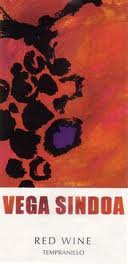
2010 Vega Sindoa Tempranillo, Navarra, Spain

I have to just nod my head… This wine comes from Spain, which is about 3,400 miles from Boston… Across an ocean…

It has a sturdy bottle, cork closure and an attractive label… The wine itself is quaffable, not meant for aging, but instead should be easily consumed with a nice strong Manchego cheese and paper thin slices of Serrano ham… Pepper and spice tease the palate and a vibrant core of red fruit evokes a sun-splashed Mediterranean shore line…

All this for a measly $6.99 per bottle before discount… I received 10% off when I picked up my case, bringing the per bottle price to $6.29… I checked in the Beverage Journal and the quantity wholesale price (3 cases minimum) was $64 per case, or $5.33 per bottle. So the retailer made $1 per bottle… Not sure what Winebow (the distributor) paid, but assuming they marked it up 50%, then they paid somewhere around $3.6 per bottle. Factoring in maritime shipping costs, glass and labeling costs, the wine maker, Bodegas Nekeas probably sold the wine for somewhere around $1.20 per bottle. And it’s Estate Bottled…

That is just outrageous – and not in a bad way. I keep telling anyone who will listen that as long as Spain (and parts of France and Italy) can produce little gems like the Vega Sindoa for such criminally cheap prices, there is absolutely no need to buy domestic. I will be putting this wine in a tasting, blind against a number of other wines from Europe and America. My guess is that folks will like it, but they won’t love it… probably too youthful… but when they get wind of the price, they will buy at least a case to put on table this summer with all kinds of BBQ fare.

If you’re at our house this summer, you will now know what you will be drinking… among other things…

vegasindoa

My tasting note:

Earthy nose with cherry, eucalyptus and banana chip hints. Medium-bodied with firm acidity and moderate tannin – good balance. Youthful, vibrant with bright cherry and raspberry notes. Moderate length. Smooth with pepper and cinnamon on the aftertaste. Drinking well – not for aging.

At an average bottle price of $6.99 before the discount, this wine is a downright cheap summer quaffer.

Cheers!

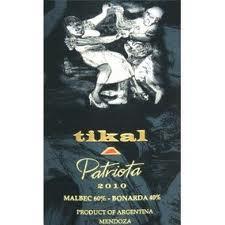
2010 Tikal Patriota, Mendoza, Argentina

I worry about the future of Malbec…

No, there is no great scourge awaiting this wonderful grape, prepared to wipe it from the earth, depriving all of us of its hearty pleasures. No, the threat is far more insidious… It is a threat that has hurt many grape varieties in the past, leaving their over cropped fruit hanging juicily on the vine, destined for that great vat of mass-produced jug wine… And what could this threat be?

I speak of, faddism… a fashion that is taken up with great enthusiasm for a brief period of time, a craze… Does the fate of Merlot and Pinot Noir jog your memory?

Malbec is perched on that slippery slope of becoming the next fad wine… or perhaps it is too late? Saving grace – while Argentina is hustling Malbec to market in every conceivable form, the French are doing what the French always do, shrug with a wily glint and walk away, letting you know that Malbec is their grape, originally, but not worth all the fuss. Bravo.

Actually, the Argentines are proceeding in a measured, if not somewhat zealous way, which bodes well. It may be that Malbec is just a little too edgy to actually become the next darling of the wine world. If Merlot and Pinot Noir have a certain smoothness and style that charms the palate, Malbec is the loud, boisterous college friend who is perpetually locked in frat party mode. Often full-bodied and unapologetic, Malbec is an in-your-face blast of black fruits and wild spices.

Another good sign… My Father-in Law eschews Malbec, despite my many attempts to convince him it is worthy of opening at table… Trend setter? No, but his taste in wine is classic and you can’t go wrong with the classics… He wears Brooks Brothers too… Need I say more?

But what about those youthful adventurers striving for the next great grape? Malbec isn’t sweet enough for their young palates… Have you noticed the sudden explosion of sweet reds on the market? Jellybean wines? Flip Flop wines? Yeah, Malbec is that scary guy in the leather jacket enjoying a few snake bites before a great game of darts… read “stay away…”

tikalpatriota

All of this makes me smile… Why? Because as long as Malbec stays just on the periphery of faddism, then wines like the 2010 Tikal Patriota are widely available at very reasonable prices. Tikal has a few different bottles of Malbec to choose from, but I think I like the Patriota the best. A blend of 60% Malbec and 40% Bonarda, the two grapes work together to create a pleasingly balanced wine with dark, inky fruit layered with exotic spices. I sipped it over two evenings and the wine held up impressively even without my usual Vineyard Fresh squirt in the bottle.

My tasting note:

Jammy nose with dark, blackberry and cedar hints. Full-bodied with moderate acidity and moderate tannin – good balance. Fruity with peppery, cherry and briarwood notes – mint and eucalyptus – youthful and vibrant. Moderate length with a smooth and layered finish – vanilla and allspice. Drinking well and should hold nicely for another 2 to 3 years.

At an average bottle price of $19.99 before the discount, this wine is a respectable value.

Cheers!

2013 Wine Tasting Events @ Musings on the Vine

AskPaul

We are pleased announce our 2013 Spring & Summer Wine Tasting season!

March 23, 2013 – Wine Judging @ 3:00pm

Cost: $50 per person

Location: Wrentham, Massachusetts

I have written about how being a judge differs from being a critic, the former stressing objective analysis and the suppression of any personal bias to provide a neutral assessment of what’s in the glass. The art of judging wines depends heavily on the utilization of a structured framework and technique along with a practiced palate. While I won’t be able to make everyone who attends this class an expert wine judge, it is my hope to be able to provide the tools and guidance to begin the journey. At this event we will taste several wines, red and white from a variety of regions, grapes and price points in a blind simulation of a wine competition. At the conclusion we will compare our results with those of both professional judges and critics to see how we did.

April 13, 2013 – Old World vs. New World @ 3:00pm

Cost: $50 per person

Location: Wrentham, Massachusetts

Wine making got its start in the Old World vineyards of Europe, some of which chart their beginnings back to the 1st century.  Wine making countries like France have been the standard-bearer for these Old World bastions of wine.  With the migration of Europeans across the globe, wine as a function of their many cultures followed them to their new homes.  The result has created an interesting phenomenon, with distinct differences arising between wines made in the Old World and those made in the New World. At this event we will taste a number of wines from both well-known Old World and New World regions in a comparative analysis. We will also serve a collection of artisanal cheeses from both Old World and New World producers to complement the experience.

May 11, 2013 – Napa/Bordeaux Shootout V @ 3:00pm

Cost: $100 per person

Location: Wrentham, Massachusetts

Back in 2004, we conducted a simulation of the famous 1976 tasting that pitted Cabernet-based wines from Napa Valley against the some of the best that Bordeaux had to offer. In 2007, 2009 and 2011 we again reprised the famous standoff. Popular demand has brought this event back to Musings, so once again we will put these two regions to the test. At this event we will taste at least six wines in a reenactment of the historic 1976 tasting. Of course, the wines will be from more recent vintages, but the experience should be quite similar.

June 15, 2013 – Summer Sippers @ 3:00pm

Cost: $50 per person

Location: Wrentham, Massachusetts

Summer is a time for easy drinking, high-value wines that require very little thought or demand even less contemplation. The wines of summer should be light and refreshing, pairing well with the usually light repasts or foods from the grill. At this event we will examine several wines, both white and red that are light, refreshing and represent good value.


Sign-up soon, because these events will sell out quickly!

Contact: paul_malagrifa@musingsonthevine.com to reserve your seats today!

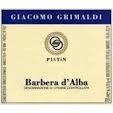
2009 Giacomo Grimaldi Pistin Barbera d’Alba

To me, Barbera always brings back memories of slices of steaming hot pizza, gooey with cheese, loaded with mushroom, sausage and maybe caramelized onion… Or, perhaps a nice slab of Lasagna Bolognese, sprinkled with Parmigiano-Reggiano and crushed red pepper… the point is, Barbera is about simple pleasures. For years I remember buying cases of sub-$10 Barbera and serving it as my house red – infinitely quaffable with no pretense except to please.

Well, it turns out that Barbera has, in a phrase, grown up. Somewhere along the way, Barbera producers got serious and decided they were going to produce wine for a more discerning palate. Giacomo Grimaldi is a small, family run winery in Langhe, Piedmont that, since 1930 has been producing some of the finest the region has to offer. Known for holding their wines for extended periods, Grimaldi’s Barolo wines are among the best. Similar care is taken with the Barbera wines from Grimaldi.

grimaldi-pistin

Grimaldi’s Barbera grapes are sourced from three vineyards located in Monteforte d’Alba, Barolo and Novello. The soils are primarily calcareous clay, which promotes a strong minerality in the wine. Vinification is in stainless steel with an extended maceration of 5 to 6 days, giving the wine a dark, deep ruby hue. Temperature control preserves the more delicate floral notes of the varietal and Malolactic fermentation softens the wine’s structure. The wine is aged in stainless steel for 9 months before bottling – no use of oak gives the wine a clean, fruit-forward style.

grimaldi-monteforte

Make no mistake, this is serious Barbera, but it is youthful and fun as well. I tasted the wine over two days, with nothing but a cork in place over night and it was magnificent. I actually enjoyed the wine more on day two – it had shed some of its reticence and blossomed into quite the seductress.

My tasting note:

Bright, cherry nose with rose petal, mineral and anise hints. Medium-bodied with firm acidity and moderate, dry tannin – good balance. Sour cherry, tart with tarry, herbaceous notes. The wine really evolves with some time, showing a nice dark core of fruit and some bittersweet chocolate flavors. Moderate length, starts out tight but shows real potential as the wine breathed. Drinking well now and should improve over the next 3 to 5 years.

At an average bottle price of $23.99 before the discount, this wine is not exactly cheap, but it is very respectable Barbera with serious pedigree!

Cheers!

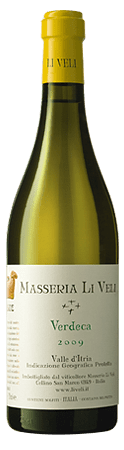
2011 Masseria Li Veli Askos Verdeca, Valle d’Itria IGT

White wine in the middle of winter? Sure! Especially when the white wine is lush, structured and filled with complexity.
masseriaverdeca

The Masseria Li Veli is a winery located on an ancient Messapian site, dominating the fertile and sunny Salento plain. The Salento region, also known as the “heel of the boot” (of Italy), is situated in the southern part of Apulia, between the Ionic and Adriatic seas. In the First century B.C. it was the land of the Messapi, whose name meant “people between two seas”.

The property was originally founded by the Marquis Antonio de Viti de Marco (1858 – 1943), an internationally known Italian economist, university professor and Radical Party Deputy of the Reign of Italy. The Marquis had wanted to transform Masseria into a model cellar for the entire south of Italy. Although this did not happen in his lifetime, the Falvo family, owners of the property since 1999, has taken 40 years of experience in the wine business to rejuvenate the property as well as the dream of the Marquis.

The climate of this area is ideal for the cultivation of the vine with mild winters and hot and dry summers. The strong diurnal weather pattern makes this peninsula the perfect place to ripen grapes.

The soil of Masseria Li Veli is karstic, mainly calcareous and clayey with gravel and tuff. The color is reddish and sandy, highly-permeable, and rich in sub-moisture from the large underground water strata present in the area that builds up during the winter. These soil conditions allow the vine roots to access water and get through the driest summers without stress.

The vineyards of Masseria Li Veli cover a total area of 33 hectares (80 acres), mainly cultivated with native alberello trained (goblet pruned without trellising) vines, with three two-bud spurs, at a high density planting (5120 plants per hectare). The layout is the settonce or “seven twelfths pattern,” whereby each vine finds itself in the center of a hexagon. This pattern was invented by Roman military engineers who for a long time used the Latin square layout, later adopting the quinconce (diamond pattern) and finally the settonce (ordo septuncialis). Today according to Li Veli, the settonce layout with the alberello training system offers, more than any other system, an ideal combination of beneficial effects: high planting density, maximum soil exploitation by the vine roots, maximum exposure of foliage to the sun, good circulation of air, vines forming rows in all directions making cultivation easier, maximum equilibrium of plant growth (all plants have the same space, both externally and below ground).

Vinification at Masseria Li Veli involves hand-picked grapes that are then refrigerated to preserve the delicate aromas of the varietal. The grapes are pressed and then macerated on the skins for a very short period, once again under refrigeration, which promotes extraction of maximum aromatic potential, which clearly shows in the final product. Fermentation is cool and slow, which not only preserves varietal character, but also impedes Malolactic fermentation.

Among the grapes cultivated at Masseria Li Veli are the Negroamaro, Primitivo, Susumaniello, Aleatico, and Verdeca. The wine under review is produced from 100% Verdeca, a white variety that has been cultivated for a many years exclusively in certain areas of Apulia, particularly in the Valle d’Itria. Because of its great resistance to disease and adaptability to different soils and conditions, for many years Verdeca was neglected and almost never used for varietal wines. Verdeca was almost always used for blending in dessert wines or in Vermouth, primarily for export. Masseria Li Veli started making varietal Verdeca in 2009 with the intent of showcasing the lovely and powerful characteristics of this historical local variety.

My tasting note:

Lush Nose with tropical fruit and chalky, mineral hints. Medium-bodied with firm acidity – good balance. Fruity with great structure and finesse – apple, apricot and pineapple notes with intense volcanic minerality. Long finish with evolving, layered complexity – very pretty – crisp and refreshing. Not for aging.

At an average bottle price of $17.99 before the discount, this wine is a superb alternative to every day whites!

Cheers!

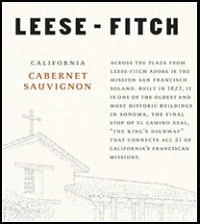
2010 Leese-Fitch Cabernet Sauvignon, California

I am not a wine snob. Actually, some folks have come to call me the “Will Rogers” of wine, in that I haven’t met a wine I didn’t like… Perhaps it is my devotion to judging wines not merely critiquing wines. So, in the spirit of fairness and equality, I will tell you about the Leese-Fitch Cabernet, a very inexpensive, very simple fruit bomb from the other coast (and as the label claims “from the other guys…”)

leese-fitch-cabernet-sauvignon-california

The 2010 Leese-Fitch Cabernet is a product of The Other Guys Winery, a subsidiary of the huge Sebastiani wine empire. The Leese-Fitch label is a value-conscience brand that strives to make high-quality, inexpensive wine that tastes at a price point $10 – $15 above its retail prices. Housed in the restored Leese-Fitch building located in Sonoma Square, the winery uses a mix of fruit from area growers, producing a Merlot, Pinot Noir, Chardonnay, Cabernet Sauvignon and Zinfandel. The building was originally built in 1836, and is an historical landmark in Sonoma Plaza, named after Jacob Leese and Henry Fitch, brothers-in-law to General Mariano Vallejo, the founder of the town of Sonoma.

I generally eschew these easy-drinking west coast wines, usually because the value proposition isn’t there. But with Leese-Fitch, the price point is low-enough to make the ratio work.

My tasting note:

Ripe, juicy nose with black cherry jam and cedar hints. Medium-bodied with moderate acidity and supple, approachable tannins. Good balance. Youthful and fruity with bright red berry notes. Classically west coast – gulpable and easy drinking. Smooth finish without a lot of complexity – not for aging, simply for quaffing.

At an average retail price of $10.99 per bottle before discount, this wine is a good value with no pretense!

Cheers!

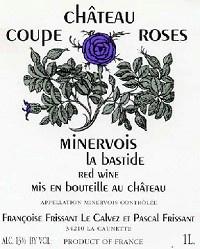
2010 Château Coupe Roses La Bastide Minervois

It’s no lie – I love the wines of southern France. Whether it is the massively complex and age-worthy wine of Châteauneuf-du-Pape, or some lovely, quaffable rose from the Côtes de Provence, many of my desert island wines would hail from that part of France that lovingly hugs the Mediterranean Sea.

So it should come as no surprise to anyone that I would love the 2010 Château Coupe Roses from Minervois. Named for the French term for “fortified farm,” La Bastide is a youthful explosion of flavors with enough structure to give it some serious aging potential. Made from a blend of old-vine Carignan and Grenache, (and yes, in France old-vines actually means something) the wine is filled with all the great terrior elements that make southern French wines so appealing.

The winery and vineyards are situated north-east of Carcassonne, which is located in the heart of the Languedoc. The climate is classically Mediterranean with warm, dry sunlit days and cool, still nights and promotes slow, steady maturation of the fruit. The vineyards are influenced by altitude, planted on barren, stony hillsides at between 800 to 1,200 feet above sea-level.  The soils are composed largely of clay and chalk, which are perfect for retaining heat in the evening (chalk) and water during the day (clay). Large manganese deposits give the eponymous faded rose coloration to the top soil.

chateaucouperoses

My tasting note:

Earthy nose with dried herb, black cherry and anise hints. Full-bodied with moderate acidity and firm, tight tannins. Good balance. Youthful with a nice dark fruit core. Gamey with briar patch, red berry and deep, cocoa notes. Needs time – very tight, but showing some nice complexity offering great potential. Should be really showing well in about 5 to 7 years, if you can wait…

At an average retail price of $14.99 per bottle before discount, this wine is a stunning value!

Cheers!

The Ward 8

The Ward 8 is a classic cocktail with roots in Boston, Massachusetts, having been invented at the Locke-Ober bar in 1898… or so one story goes… According to Boston folklore, the drink was invented in honor of Democratic political czar Martin M. Lomasney, who hoped to capture a seat in the state’s legislature. After his election, the drink was created to fete the man, and to honor the city’s Ward 8, which presumably delivered Lomasney the winning margin.

Locke-Ober_Restaurant_2009

As cocktails go, this libation is well-balanced, with a crisp, refreshing finish, owing to the lemon juice.

The Ward 8

2 oz. Rye Whiskey

½ oz. Lemon Juice

¼ oz. Orange Juice

¼ oz. Grenadine

Shake all ingredients with ice until chilled. Strain into a cocktail glass then add a splash of sparkling water and enjoy. A Maraschino cherry can be used as a garnish, if so desired.

Cheers!

First Wine Tasting Event of our 2013 Season…

AskPaul

We’re still updating our 2013 Event Schedule, which will be published on the web site soon, but we are reprising an event and wanted to let folks know about it!!

February 16, 2013 – Wine & Chocolate

Adventurous chocoholics and lovers of fine wine are invited to join us as we experiment with various wine and chocolate pairings. At this “experimental event” we’ll examine different combinations of chocolate and wine to better understand how they can be paired for maximum enjoyment. We will taste a variety of milk and dark chocolate artisanal Candies, Chocolate-covered Strawberries, and Chocolate-Dipped Biscotti, and pair our delicacies with appropriate wines including Port, Sauternes, and Sparkling wine. We’ll compare a wine in both its dry-fermented and dessert forms, and see how each pairs with chocolate. Join us for this indulgent experience, and learn how to match the flavors, sweetness, acidity, and texture of wines with chocolate.

The cost: $50
Location: Wrentham, Massachusetts
Time: 3:00 PM

Space is limited – Make sure to sign up today:
http://www.musingsonthevine.com/events.shtml

Cheers!