Category Archives: Wines

2010 Château du Pin

15 Sunday Sep 2013

Posted by musingsonthevine in Wines

≈ Leave a comment

ChateauDuPin2010

Recently picked this up on special – $8.99 per bottle before the discount – I’m always in the market for inexpensive, everyday wines that I don’t mind opening with weeknight suppers. Often times I’m looking for something with character that is also easy-drinking and food friendly. This little wine fits the bill perfectly.

A 50% Merlot – 50% Cabernet Sauvignon blend, with grapes primarily from the Bordeaux area of Entre Deux Mers, the Château du Pin has a classic Bordelaise style with a very approachable, fruity palate. Because the appellation is the larger Bordeaux AOC, consumers will benefit in a strong vintage like 2010 because prices will be moderate – as evident in my opening sentence – and quality will be high.

My tasting note:

Fresh cherry nose with currant, anise and cedar hints. Medium-bodied with moderate acidity and moderate, dry tannin – good balance. Dark fruit core with cocoa dust, tobacco leaf and classic earthy garrigue. Moderate length – smooth and just a little bit tight. Drinking well now – may improve over the next 2 to 3 years, but not meant to be laid down. Great value!

Cheers!

2010 Bridlewood Pinot Noir, Monterey County, California

09 Friday Aug 2013

Posted by musingsonthevine in Wines

≈ Leave a comment

I’ve been on a Pinot Noir kick of late, primarily because I find this thin-skinned grape to be a friendlier red wine during summer. And yes, while I am usually drawn to Pinot Noir from Europe, I’m finding some of the Pinot Noir coming out of California to be more pleasant this summer. Fruitier and more approachable…

So there, I’m not a European wine snob after all.

Anyway, all that aside, there are a few areas in California that are better for Pinot Noir than others. The Russian River Valley and Los Carneros in the north are very well-known. The Central Coast is also well-known and some of the more popular sub-AVA’s within that zone, like the Santa Rita Hills are well documented in these pages. Another sub-AVA that is growing in stature is Monterey County. A few years ago, I was on the Monterey Penisular and found myself knee deep in really yummy Pinot Noir. Mostly from small producers, the wines don’t make it to the east coast very often, if at all. Yes, Cuvaison is an exception and one that I have touted before, but so many others never get past the Rockies.

The ones that do make the trip are usually more commercial offerings, which often lack personality, which is why I was pleased to stumble across the Bridlewood recently. A relatively inexpensive, Pinot Noir made from Monterey County fruit that is quite nice.

Bridlewood-pinot_noir_img

Interestingly, Bridlewood is a mid-size estate in the Santa Ynez Valley, which is smack dab in the middle of the Central Coast AVA. The estate consists of approximately 105 acres of total land, of which 40 acres are “set on a high bench of ancient seabed on the eastern edge of the Santa Ynez Valley, where the vines produce an intensely rich Syrah.” The Bridlewood web site had this to say about their Pinot Noir :

Monterey County enjoys a cool, foggy climate that is ideal for Pinot Noir. Typically, bud break begins several weeks earlier and harvest ends several weeks later than other growing regions. This extra month of time on the vine allows the grapes to develop intense, complex flavors. Monterey County houses the significant Monterey AVA, which includes nine sub-regions, united by the cooling influence of Monterey Bay.

Their winemaker added :

Most of the fruit was picked at night to keep the grapes as cool as possible. The fruit was then destemmed, but not crushed, leaving a significant portion of whole berries going into the fermentor. The skins had approximately 5 – 7 days contact, and the wine was racked as needed to maintain the purity of fruit flavors in the finished wine.

Judging by what I tasted, their appraisal is not too far afield.

Another interesting fact… Bridlewood was the starting location for The Amazing Race reality show on CBS back in February of 2012…

My tasting notes:

Ripe, jammy nose with cherry, red currant and lilac hints. Medium-bodied with moderate acidity and moderate tannin – good balance. Dense, fruity palate with blackberry jam, vanilla and raspberry notes. Moderate length – smooth, easy drinking. Not for aging

At an average retail cost of $16.99/bottle pre-discount, this wine is an okay value – with the special discounts my cost dropped to $12.59/bottle – at that price this wine is a better value and worthy of consideration.

Cheers!

2011 Mark West Pinot Noir, California

08 Thursday Aug 2013

Posted by musingsonthevine in Wines

≈ Leave a comment

MarkWestPinotNoir

I first became acquainted with Mark West Pinot Noir with the 2003 vintage. I touted it then as a great value because the price was sub-$10 and the product was solid, if not overly simple. My point at the time was, not every bottle has to curl your toes or send you into rapturous convulsions – having a solid, well-made quaffer is fine, especially when that sip is really cheap. Here, here…

So I watched with dismay as successive vintages came to market several dollars over $10 and when it hit $16.99, I moved on. No great loss, but I was disappointed that such a clear cut value leader had succumbed to what I have dubbed “the West Coast disease,” wines that are clearly priced beyond their provenance.

And you can imagine my pleasure when a recent trip down the wine aisle yielded the current Mark West vintage priced at $12.99/bottle, with a special markdown to $9.99. Boo-yeah. We were back in the sub-$10 zone, so I picked up a bottle and was equally pleased that the quality was still there. Again, this is not a paean to age-worthy Pinot Noir with layers of complexity, unfolding with grace and elegance that conjures images of red-robed Chevalier paying homage to the Dukes of Burgundy. No, it is just a really fun, drinkable glass of red wine that’s weighted perfectly for summer. And it’s cheap enough not to worry about the fact that ketchup and BBQ sauce is going to spoil the party.

My tasting notes:

Bright, fruity nose. Ripe red berry and soft floral hints. Medium-bodied with moderate acidity and supple tannin – good balance. Juicy raspberry and strawberry palate – very easy drinking. Moderate length – smooth – not complex, simply quaffable. Not for aging.

At an average retail cost of $12.99/bottle pre-discount, this wine is an okay value – with the special discounts my cost dropped to $8.99/bottle – at that price this wine is a superb value!

Cheers!

2009 Château Côtes de Saint Clair, Puisseguin-Saint-Émilion, France

02 Friday Aug 2013

Posted by musingsonthevine in Wines

≈ Leave a comment

I started collecting wine with a case of Bordeaux wine almost exactly 30 years ago… The case in question? A 1983 Château Kirwan – magical wine indeed! It was expensive, but worth the investment and over the years, Bordeaux has remained one of my favorite regions. It is also fairly easy to understand from an appellations perspective and the many classifications make it fun to collect.

No shock, the prices in Bordeaux continue to escalate with a string of strong, vintages serving as the primary driver. My advice has always been to look at lesser labels, or second labels of “classified growths” in really strong vintages, because you can find some really tremendous values that have great aging potential and great drinkability. One needs to be careful, of course, but generally this approach has garnered some real gems in the cellar.

Another strategy is to look to the many sub-regions of Bordeaux that lack name recognition and notoriety. In these smaller, less-well-known areas, wine makers craft some really nice wine and sell it at very fair prices.

To me, Puisseguin-Saint-Émilion is one of those lesser-known regions; a small satellite of the more well-known Saint-Émilion region, which has the potential for producing really nice wine, usually at very reasonable prices. Puisseguin-Saint-Émilion itself is on the right bank of the Dordogne River, northeast of Saint-Émilion proper, and was granted its AOC status in 1936. There are a little less than 2,000 acres under vine producing a little less than 1 million gallons of wine. Not prodigious, but enough. Only red wine is produced in the region, and while all of the five grape varieties (Cabernet Sauvignon, Cabernet Franc, Merlot, Malbec and Petit Verdot) allowable in Bordeaux can be and are used, it is Merlot that dominates the blends.

Chateau-Cotes-De-Saint-Clair-Label

Château Côtes de Saint Clair is a bit of a mystery… I could find almost no information about the property, but that does not diminish my enjoyment of the wine. A definite winner, which underscores the validity of my aforementioned Bordeaux wine-buying tip.

My tasting notes:

Lush nose with plum, blackberry and minerally hints. Medium-bodied with moderate acidity and firm, dry tannin – well balanced. Dark fruit core with tobacco leaf, cocoa dust and black currants – very nice. Long finish – smooth with layered complexity – anise and bittersweet chocolate on the aftertaste. Drinking well now and should continue to improve for another 5 to 7 years in the bottle, at least. Great value!

At an average retail cost of $14.99/bottle pre-discount, this wine is a fantastic value!

Cheers!

Bodegas San Alejandro

25 Thursday Jul 2013

Posted by musingsonthevine in Wines

≈ Leave a comment

I have been following Bodegas San Alejandro for almost ten years now and I have rarely been disappointed. Their website uses the year 2003 as the moment when wine critics really took notice of their wines, so I feel particularly prescient in that I was “ahead of the curve” on “discovering” this little gem of a wine. I’ve watched the price for their wines steadily climb as more and more fans discover the wonderfulness in the bottle. At the current price point the wine is still a good value, worthy of consideration any day of the week.

Bodegas San Alejandro is a cooperative consisting of more than 350 farmers, founded in 1962. The cooperative has almost 3,000 acres under vine in the minuscule town of Miedes, Calatayud, just north of the city of Madrid, within the Perejiles River valley. It is said that the relics of the real San Alejandro are kept nearby at a Franciscan convent.

The Las Rocas brand is the melding of Spain, France and America, with winemakers from all three countries collaborating to create, in their own words: “a modern wine that would capture the unique qualities of Garnacha and the special flavors of the Calatayud region.” The Managing Director of Bodegas San Alejandro, Yolanda Diaz is a truly passionate, focused woman who is dedicated to crafting wines of superior quality and style that showcase the unique terrior of the Calatayud soils. In keeping with this philosophy, the Garnacha grapes are cold soaked before fermentation to ensure the greatest vibrancy to both the color and flavor of the resulting wines, with a judicious use of lightly toasted oak during elevage to enliven spiciness without masking the richness of the fruit. According to Ms. Diaz: “we focus on making wines that are elegant and balanced. The most important element in our winemaking philosophy is to keep intervention at a minimum. Let the land speak in the wine.”

This must be why I like these wines so much, given that I tend to eschew many of today’s highly-manipulated wines…

About the region…

The Calatayud Denominación de Origen (DO) is located in the southwest corner of the Spanish province of Zaragoza, including 14,000 acres of vineyard in 46 small towns along the many river valleys. Most of the vines are planted at altitudes of 2,500 to 3,500 feet above sea level, on diverse soils ranging from chalk and limestone, to clay and marl. The region’s name can be traced back to the Moorish occupation of Spain, when the local governor, Ayud, had a fortress called a Qalat, where the town of Calatayud now stands. Wine has been made in the region for nearly 2,000 years.

The climate of Calatayud is continental with hot, dry summers and very cold winters. While summer temperatures occasionally soar to 100°F and the winter months pose a frost risk, the vines generally enjoy a temperate climate year-round. Most of the vineyards have loose, rocky limestone soils with low nutrient levels and high lime content. With an average annual rainfall between 12 and 20 inches, the vines in this region have to work their way deep into the fractured soils to find the water and nutrients they need to flourish.

Calatayud is best known for its red wines, which represent 83% of yearly wine production in the region. Of the 11 wine grape varieties approved for the DO (7 red and 4 white), Garnacha is by far the most widely planted with 55% of the overall total.

I recently had cause to taste the 2009 vintages of both the standard and Viñas Viejas bottles. Characteristic of Bodegas San Alejandro, I was very pleased with both…

My tasting notes:

las-rocas-de-san-alejandro

2009 Bodegas San Alejandro Las Rocas Garnacha, Calatayud ($12.99/bottle)

Jammy, blackberry nose with spicy, black cherry and vanilla hints. Medium-bodied with moderate acidity and supple, well-integrated tannin – well balanced. Fruity palate, black cherry, anise and violet notes. Juicy. Moderate length – smooth and easy drinking – not for aging. Great value.

las-rocas-de-san-alejandro-vinas-viejas

2009 Bodegas San Alejandro Las Rocas Viñas Viejas Garnacha, Calatayud ($19.99/bottle)

Dark fruity nose, jammy with black cherry, blackberry and anise hints. Full-bodied with moderate acidity and supple, soft tannin – well balanced. Lush palate with lively fruit – cherry, berry and vanilla notes. Nice, refined structure. Long finish – smooth with layered complexity – spicy. Drinking well now and should hold for another 2 to 3 years in bottle.

Personally, I thought that the straight-up Garnacha was the real value here, given that the premium Viñas Viejas didn’t offer enough of a step-up in quality to warrant the additional cost… In my humble opinion.

Cheers!

A Pleasant Return

23 Tuesday Jul 2013

Posted by musingsonthevine in Wines

≈ Leave a comment

I have the utmost respect for winemakers who make decisions to not produce certain wines in their portfolio during difficult vintages. It shows a true commitment to quality that frequently comes at a steep cost.

La Rioja Alta, S.A., the producer behind Viña Ardanza Rioja had such a situation. The two successive vintages following their blockbuster 2001 offering were abysmal, meaning that the flagship Viña Ardanza did not get produced. I sorely missed the wine, since it had become a favorite with the 1996 vintage many years ago.

Viña Ardanza2004

The good news is that the wine has returned with the 2004 vintage and it is back in fine form. The weather during 2004 really benefited the vineyards of La Rioja Alta, allowing for a slow, balanced growing cycle that led to fruit of superior quality. The wine itself is a blend of Tempranillo (80%) and Garnarcha (20%), the former being grown on 30-year old vines planted in Fuenmayor and Cenicero (Rioja Alta), the latter on old goblet-pruned vines in Tudelilla (Rioja Baja). The blending of these two sub-zones within the greater Rioja region produces a well-balanced wine with great structure and finesse.

La Rioja Alta takes an interesting approach to the aging of their wine. Like traditional Reserva Rioja wines, the Tempranillo spent 36 months in American oak barrels with an average age of 4 years. Unlike more traditional wines, the Garnacha only spent 30 months in American oak that was 2 to 3 years old. The result is an interesting interplay between the more dried cedar-infused, leathery Tempranillo and a fresher, fruitier and brighter oaked Garnacha. The wine was finally blended and bottled in December of 2008.

If you are a fan of classic Rioja, then this wine will put a big smile on your face!

My tasting notes:

Bright, lively nose – spicy with vanilla, cedar and dried cherry hints. Medium-bodied with moderate acidity and firm, dry tannin – good balance. Sour cherry palate with black pepper, oak and saddle leather notes. Classic Reserva Rioja. Moderate length – smooth finish with an evolving, layered complexity. Drinking well now and should continue to improve for the next 3 to 5 years in bottle.

At an average per bottle cost of $29.99 before customary discounts, this is a reasonable value and for lovers of classic Rioja, a real treat.

Cheers!

Sun Splashed Pleasure

16 Tuesday Jul 2013

Posted by musingsonthevine in Wines

≈ 1 Comment

In my History of Italy in Ten Glasses class I always reinforce the diversity and richness of Italian culture, which is the direct byproduct of the mixing of so many conquering/colonizing people on this verdant peninsular in the Mediterranean. Where other countries have specific areas devoted to grape growing and wine making, in Italy, the entire country is one giant vineyard. In Italy, wine is considered an integral part of everyday life. Wine is as essential to life – and the quality of life – as bread and olive oil. Contadini (local farmers) used to grow grape vines among other food crops, a practice referred to as: agricolturo promiscuo (promiscuous agriculture). People who visit Italy today quickly realize that the unsuspecting jug of wine served at a small roadside enoteca (wine house), is some of the most delicious wine they have ever enjoyed.

It used to be that Italy had a corner on value-leading wines, most of which were straightforward, thirst-quenching quaffs meant to accompany hearty meals with friends and family. At least that’s how it worked at my house when I was growing up… And it usually happens this way in our home today, except the bottle is more likely something Spanish given their command of the high-value market.

So, when a bottle of Italian wine appears that stresses value and pays homage to those classic characteristics of sun splashed fermented grape juice, I sit up and want to tell folks about it!

Cantina Zaccagnini Montepulciano d’Abruzzo is not new to this wine writer. I stumbled across this producer with their 2001 vintage many years ago and really like it then. For whatever reason, I lost touch with the wine, but thankfully came across a bottle locally of the current vintage, 2010. In a word the wine is charming. Like most of my relatives, the wine could charm the shirt off your back and make you feel especially loved for giving up all your worldly possessions…

Abruzzo is one of the major wine regions in Central Italy, ranked as the sixth most productive region in Italy. Abruzzo is home to numerous DOC and IGT wines, probably best known is Montepulciano d’Abruzzo. The wine is produced from the Montepulciano grape, a prolific red grape known for producing full-bodied, fruity wines and should not be confused with Vino Nobile di Montepulciano, a red wine made from Sangiovese in the Tuscan town of Montepulciano. Whenever I open Montepulciano d’Abruzzo I feel envious – what must life be like making wine of such genuine character, which is guaranteed to put a smile on your face every time you drink it?

Zaccagnini

The 2011 Cantina Zaccagnini is classic Montepulciano d’Abruzzo. Rustic and earthy with a seductively lush mid-palate that seems to go on forever, all for an average cost of $14.99 per bottle before any discounts (I found it for $11.99/bottle). Great value in classic Italian wine!

My tasting notes:

Rustic, earthy nose with currant, plum and dried lavender hints. Medium-to-full-bodied with moderate acidity and firm, well-integrated tannins – good balance. Dark fruit core with thick blackberry and cherry notes. Rich tasting. Long finish – smooth with a nicely layered finish – anise and saddle leather on the aftertaste. Drinking well now and should continue to evolve for another 2 to 3 years in the bottle. Great value.

Cent’anni!

My Three Sons…

11 Thursday Jul 2013

Posted by musingsonthevine in Wines

≈ Leave a comment

Who doesn’t remember that iconic television show from the ‘60’s and ‘70’s? Fred MacMurray played Steven Douglas, a widower and aeronautical engineer raising three exuberant young sons… Interestingly, the series was the second longest-running live action situation comedy – The Adventures of Ozzie and Harriet was first…

Anyway, Fred MacMurray, born in 1908 in Kankakee, IL was quite the accomplished performer, with turns as a big band vocalist, Broadway actor and ultimately, Hollywood movie star. Personally, my favorite performance was his role as the cynical and duplicitous Lieutenant Thomas Keefer in The Caine Mutiny (1954). MacMurray became a multimillionaire acting in Hollywood and in 1941 he purchased land in the Russian River Valley in Northern California and established MacMurray Ranch. The ranch had been a homestead since the mid-19th century and possessed breathtaking views with lush, rolling hills. MacMurray spent time at the ranch when not making films, engaging in many activities, including raising prize-winning Aberdeen Angus cattle and Shorthorn Romeldale Sheep. MacMurray passed away in 1991 after a long battle with cancer and wanted the property’s agricultural heritage preserved. In 1996 the property was sold to Gallo Wines, which planted the present vineyards and started producing wine under the MacMurray Ranch label. Maintaining a connection to the history of the property, Kate MacMurray, daughter of MacMurray with renowned actress June Haver, now lives on the property (in a cabin built by her father), and, from the MacMurray Ranch website (www.macmurrayranch.com), she is “actively engaged in Sonoma’s thriving wine community, carrying on her family’s legacy and the heritage of MacMurray Ranch.”

My first experience with MacMurray ranch was back at the end of the 1990’s, early 2000’s. At the time I was impressed with the quality of the wine and the very modest price tag. If I recall correctly, the wine was produced at Gallo’s Dry Creek facility from fruit sourced from the MacMurray Ranch property, as well as other supplemental vineyards. I also recall that one year, after buying a case of the MacMurray Ranch Pinot Noir, most of the bottles had a strong presence of TCA or “cork taint.” Turns out, Gallo had an issue with TCA at their Dry Creek facility, which cost them quite a bit in lost wine and winery clean-up. It was one of the first published accounts of TCA infecting wine as a result of problems at the wine making facility, as opposed to TCA infection as a result of problems with cork sterilization. Big boon to cork producers, who were taking it on the chin as a result of escalating TCA problems in wine…

I shied away from the label for a while and recently picked up a few bottles to “re-acquaint” myself with the brand. Happily, I found the wines to be quite nice, albeit a bit more expensive than when I first tried them. I tried both the Russian River Valley and Central Coast Pinot Noirs and both were classic west coast Pinot – expressive, lively fruit with good mid-palate weight and supple, well-integrated tannins. Not terribly complex, but decidedly approachable and seductive.

My tasting notes:

MacMurray Ranch 2010 Central Coast

2011 MacMurray Ranch Pinot Noir Central Coast (Average Bottle Price: $26.99)

Bright, fresh and fruity nose with red berry, red currant and lavender hints. Pretty. Medium-bodied with moderate acidity and smooth, supple tannin – good balance. Youthful and fresh – bright cherry with raspberry jam notes. Moderate length – smooth and seductive – very nice. Drinking well now – not for aging.

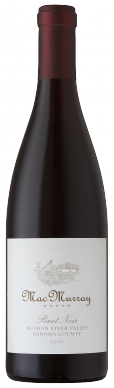
MacMurray Ranch 2010 R. River Valley-Sonoma County

2010 MacMurray Ranch Pinot Noir Russian River Valley Sonoma Coast (Average Bottle Price: $36.99)

Lush nose with deep cherry, currant and violet hints – lovely. Medium-bodied with moderate acidity and supple tannin – very well balanced. Fruity palate with a dark fruit core – black cherry and rose attar notes. Long finish – smooth and seductive – really pretty. Drinking well now and should continue to improve with 2 to 3 years in bottle.

I found both locally, comfortably discounted…

Cheers!

Wild Horse

04 Thursday Jul 2013

Posted by musingsonthevine in Wines

≈ Leave a comment

Pinot Noir is a finicky grape that unlike Cabernet Sauvignon and Chardonnay is not a world traveler. Pinot Noir made its fame in the vineyards of the Côte d’Or, where it can command astronomical prices and produce some of the most beautifully complex wines on the planet. In Champagne, Pinot Noir is one of two black grapes that go into the production of some of the world’s most luxurious sparkling wines.

In the US, the grape has found a few places where the climate and soil are particularly hospitable and produce some very noteworthy Pinot Noir. The area that has probably received the most press of late is California’s Central Coast. I’ve blogged about the Central Coast, specifically the Santa Rita Hills before (https://blog.musingsonthevine.com/2012/09/10/santa-rita-hills-update/), so my readers know of my deep appreciation for the region. We also have family in the area, so reasonably frequent visits have allowed for much exploration and enjoyment at the well over 350+ wineries in the region.

While cruising the wine aisles recently I ran across what I will call a “blast from the past.” When I was first discovering wine, I made a point of visiting my favorite wine shops weekly to collect up mixed cases of various wines that the proprietors deemed “important,” or at least “instructive.” Among these early cases were several nascent wineries from California that were noted for genuine quality and had a bit of the pioneer in their hearts. Among those cases were bottles of Wild Horse Winery and Vineyard Pinot Noirs.

WildHorsePN

Wild Horse, located in Templeton California is in the heart of the Central Coast region, just south of Paso Robles. According to their web site (http://www.wildhorsewinery.com/Winery/Our-Story) they got their start making “our first wine in a plastic tub. Stirred it with a baseball bat. It was a senior project at Cal Poly that very quickly became a reason to be.” In 1981, they bought their first vineyards and produced their first vintage two years later. The name of the winery presumably is a tribute to the herds of wild mustangs that roamed over the hillsides in the area for decades. That, and possibly a tribute to Cal Poly’s mascot, a galloping horse. Wild Horse has come a long way over the last thirty years and despite being one of the “darlings” of the Central Coast, they have remained grounded, pun intended. We visited the winery a few years ago and found a commitment to the land and a commitment to quality, which pays homage to their humble beginnings.

Are their more impressive wines coming out of the Central Coast? Perhaps, but for the money, Wild Horse is a good story and a very good wine.

My tasting notes:

Lively, fruity nose with red berry, cherry and raspberry hints. Medium-bodied with moderate acidity and supple, well-integrated tannin – good balance. Lush palate with cherry, currant, rose attar and tea notes – Lovely. Moderate length with a deep, smooth finish – Seductive. Drinking well now – Not for aging.

The wine retails for around $25 ($20 at the winery) – I found it locally, after discounts for $16…

Cheers!

Newman’s Own

01 Monday Jul 2013

Posted by musingsonthevine in Wines

≈ Leave a comment

Paul Newman was one of my favorite actors. Like so many actors from his era, Mr. Newman displayed great diversity in the roles he undertook, gently evolving his characters appropriately as he aged. I was also impressed that he remained devoted to his second wife, Joanne Woodward for fifty years. Another aspect of Mr. Newman’s life that I found admirable was his charitable work, most especially the co-founding of his Newman’s Own (http://newmansownfoundation.org/) line of foods in 1982. The brand started humbly with salad dressing, and has since expanded to include pasta sauce, salsa, soft drinks, snack products, frozen entrees and wine. With the foundation, Mr. Newman established a philanthropic policy where all proceeds, after taxes, would be donated to charity. As of today, the foundation has donated in excess of $370 million. Organizations supported by the foundation include philanthropic organizations, organizations helping children with life-limiting conditions, as well as organizations of empowerment and nutritional support (http://newmansownfoundation.org/what-we-support/).

By and large, the products sold by Newman’s Own brand are quite good, with our shelves being lined by several jars of salsa, salad dressing and pasta sauce. However, I had yet to seriously dabble with his wine. Why? Well, the wine is inexpensive, California juice, which I rarely find appealing or interesting.

The engine behind Newman’s Own wine is none other than Rebel Wine Company out of St. Helena, California. Rebel is known for its commitment to high value wines. In addition to Newman’s own, Rebel has several value conscience brands, namely Bandit Wines and The Show Wines. Artful marketing under the Three Thieves mantle (http://threethieves.com/index.php) promotes an interesting story focused on “wine for everybody.”

Recently I picked up the Pinot Noir and Cabernet Sauvignon in the Newman’s Own portfolio and I was pleasantly surprised by the quality. These wines are not terribly complex, nor do they possess any aging potential, but they are a simple, straight-forward, fruity style that falls into the category I call “daily drinkers.” Both were priced around $10 dollars, so for those looking for fruit forward simplicity, they work well. Both made an excellent accompaniment to meat off the grill…

My tasting notes:

NewmansOwnPN

2010 Pinot Noir – California

Fresh, fruity nose with bright red berry, raspberry and violet hints. Medium-bodied with moderate acidity and moderate, supple tannin – good balance. Sour cherry palate with rose attar and blackberry notes. Moderate length – smooth finish – easy drinking. Not for aging – good value.

2011 Cabernet Sauvignon – California

Bright, fruity nose with cherry, floral and fresh, herbal hints. Medium-bodied with moderate acidity and moderate tannin – good balance. Soft palate with fresh, red berries on the palate. Moderate length with a smooth easy finish. Drinking well – not for aging. Good value.

Cheers!

← Older posts
Newer posts →

Subscribe

  • Entries (RSS)
  • Comments (RSS)

Archives

  • June 2020
  • May 2020
  • April 2020
  • March 2020
  • February 2020
  • January 2020
  • December 2019
  • August 2019
  • February 2019
  • December 2018
  • November 2018
  • October 2018
  • September 2018
  • August 2018
  • July 2018
  • June 2018
  • May 2018
  • April 2018
  • March 2018
  • February 2018
  • January 2018
  • November 2017
  • August 2017
  • July 2017
  • June 2017
  • April 2017
  • March 2017
  • February 2017
  • January 2017
  • December 2015
  • October 2015
  • August 2015
  • July 2015
  • June 2015
  • December 2014
  • November 2014
  • August 2014
  • July 2014
  • June 2014
  • May 2014
  • April 2014
  • March 2014
  • February 2014
  • January 2014
  • December 2013
  • November 2013
  • October 2013
  • September 2013
  • August 2013
  • July 2013
  • June 2013
  • May 2013
  • April 2013
  • March 2013
  • February 2013
  • January 2013
  • December 2012
  • September 2012
  • August 2012
  • July 2012
  • June 2012
  • May 2012
  • April 2012
  • March 2012
  • February 2012
  • January 2012
  • December 2011
  • November 2011
  • October 2011

Categories

  • Cocktails
  • General
  • Restaurants
  • Spirits
  • Uncategorized
  • Wine Events
  • Wines

Meta

  • Create account
  • Log in

Blog at WordPress.com.

  • Subscribe Subscribed
    • blog.musingsonthevine.com
    • Join 36 other subscribers
    • Already have a WordPress.com account? Log in now.
    • blog.musingsonthevine.com
    • Subscribe Subscribed
    • Sign up
    • Log in
    • Report this content
    • View site in Reader
    • Manage subscriptions
    • Collapse this bar
 

Loading Comments...