Author Archives: musingsonthevine

Barolo Chinato

26 Thursday Jan 2017

Posted by musingsonthevine in Wines

≈ Leave a comment

Herbalism, the treatment of illness using plants, is where the history of modern medicine begins. For many millennia, people developed a deep understanding of which plants provided relief from a variety of maladies. Creating tinctures, tonics, balms and salves using the leaves, bark, and roots of plants was integral to society’s well-being. The practice of herbalism continues today and is a thriving market.

No people were more involved with herbalism than the Italians and careful attention to the number of digestifs available at your local wine & spirits shop is a testimony to this fact. The sheer number of Amari and Liqueurs is staggering.

One that stands out from the pack is Barolo Chinato, a potion that steeps the bark of the cinchona tree to create a magical and pleasing elixir, believed to have many beneficial medicinal properties. The cinchona tree is native to South America and extractions from the bark were first used by the Quechua people of Peru and Bolivia to treat a variety of illness, including malaria and arthritis. The primary compound present in these extracts is quinine, found as the sharply bitter flavor in tonic water. Quinine has been a recognized treatment for malaria going back to 1820, although the compound was taken off the primary treatment list by WHO in 2006.

The importance of quinine as a medicinal treatment in Italy was pioneered in the 1650’s by Pietro Castelli, the distinguished Roman physician, and botanist. Pietro wrote over fifty pamphlets extolling the virtues of quinine, including recipes for a variety of bark extracts. In characteristically frugal Italian fashion, enterprising winemakers in Piedmont seized on an opportunity to use Barolo wine that was too old to be sold at market as viable table wine. Taking guidance from Dr. Castelli, Barolo producers leveraged non-viable table wine to steep cinchona bark and other flavor ingredients to produce a digestif/elixir that harnessed the curative properties of quinine in a flavorful drink. And Barolo Chinato was born!

While there are several Barolo Chinato wines on the market, the original pioneer was Giulio Cocchi, patriarch of the producer that bears his name. Casa Giulio Cocchi was founded in 1891 in Asti and has truly been a trailblazer for this almost cult-beverage. Giulio was the first producer to establish “authorized retailers” where saleable product could be tasted by a curious public. Recognizing that the flavors of many of his products were new and quite distinctive, as well as having medicinal benefits, Giulio set about creating a global distribution network that spawned outposts as far west as Caracas Venezuela. Thus, the most well-known Barolo Chinato and the wine by which all others are measured is Barolo Chinato Cocchi.

It should be noted that, like many Amari and Liqueurs on the market today, their flavors are not for everyone.  This is especially true for Barolo Chinato. While the wine itself is sweetened to make it more palatable, the overriding flavor characteristic is quinine. Because quinine is so evident, there are folks who definitely scratch their heads upon taking a sip, wondering why anyone would make such a wine…

It is a truism of wine and food pairing that the wine should always be sweeter than the food served. For this reason, Barolo Chinato finds a perfect partner in bittersweet chocolates and cocoas. The pairing is so noteworthy that in 2007 Cacaococchi was founded to promote the research and production of luxury chocolates that utilize Barolo Chinato as an essential ingredient.

Unfortunately, like anything that purports to have medicinal qualities and that is produced in a unique and labor intensive process, the cost is not cheap. Average retail for Barolo Chinato Cocchi is approximately $50 for a 500ml bottle. However, digestif wines are meant to be sipped in small quantities after a meal, so the bottle should satisfy for several seatings.

Cin-Cin!

 

Musings on the Vine: 2015 in Review

31 Thursday Dec 2015

Posted by musingsonthevine in Wine Events

≈ Leave a comment

I’m not often one to share statistics, but I wanted to say thanks to all my followers and to those folks who merely stopped in for a casual read. Wine and spirits are a passion for me and nothing gives me more pleasure than to share that passion with you!

We have lots of things tee’d up for 2016, so stay tuned for another exciting year with Musings on the Vine!

Happy New Year!


The WordPress.com stats helper monkeys prepared a 2015 annual report for this blog.

Here’s an excerpt:

The concert hall at the Sydney Opera House holds 2,700 people. This blog was viewed about 8,400 times in 2015. If it were a concert at Sydney Opera House, it would take about 3 sold-out performances for that many people to see it.

Click here to see the complete report.

Napa versus Bordeaux – Part VI

23 Wednesday Dec 2015

Posted by musingsonthevine in Wine Events

≈ Leave a comment

Back in May of 2013 we had the fifth installment of our version of the Judgement of Paris: https://blog.musingsonthevine.com/2013/05/13/napa-versus-bordeaux-part-v-the-saga-continues/

As predicted in that post, we conducted match-up number six and have the following to report.

The sixth installment took place on November 14, 2015, matching a comparable set of eight wines. The results were as follows:

By Wine
Wine 1st 2nd 3rd Total
(3 pts) (2 pts) (1 pt)
1986 Silverado Vineyards 2 3 1 13 pts
1986 Forman 1 0 3 6 pts
1987 Mondavi Reserve 1 1 0 5 pts
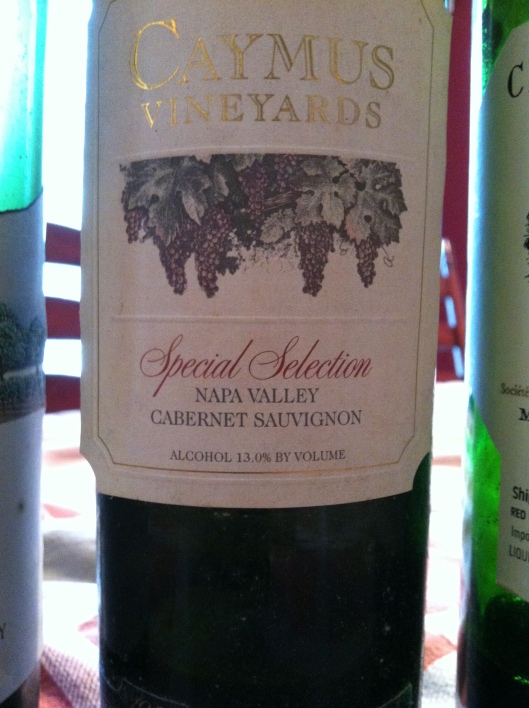
1985 Caymus Special Select 3 0 1 10 pts
1986 D’Angludet 0 2 0 4 pts
1989 Cos Laboury 3 4 1 18 pts
1989 Grand Mayne 2 2 2 12 pts
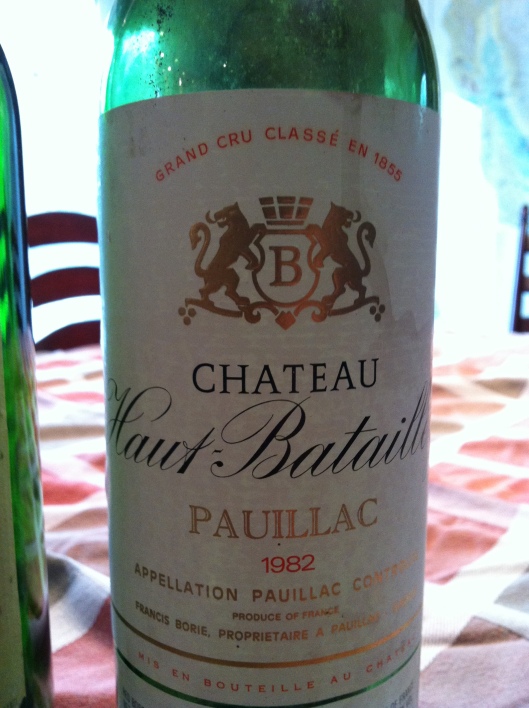
1982 Haut Batailley 5 1 2 19 pts
By Region
Napa Valley 34 pts
Bordeaux 53 pts

Well, as you can see, France took the prize this time around fairly handily.

So after six installments, the results stack up as follows:

France’s lead is back to 4 – 2 in overall wins. Point-wise the French have 202 points to Napa’s 174 points, a widening margin.

A few observations are in order… In this installment, the wines were from closer vintages, which definitely helped the French. The US wines were all very good, but showed their age. On the contrary, the French wines were drinking marvelously – mature but not tired – vibrant with layers of complexity.

The US wines included a Wine Spectator 100-point wine – the 1985 Caymus Special Select and while it garnered a handful of first place votes, the wine was decidedly average.

IMG_2249

One of the most touted, or should I say “hyped” vintages is represented with the 1982 Haut Batailley – Robert Parker was made famous by this vintage and interestingly, he did not think much of this wine. He last tasted the wine in 1995 and felt that it might last another 7 – 8 years. Our results suggest that the predictability of aging potential is still more art than science… For me personally, I was thrilled with the quality of the two 1989 Bordeaux wines – both were from the first futures I ever bought!

IMG_2243

Where does it go from here? Well if history repeats itself, I imagine a seventh match-up in 2017, either in April, or October…

Should be fun, as usual!

The Bijou Cocktail

21 Monday Dec 2015

Posted by musingsonthevine in Cocktails

≈ Leave a comment

I struggle with Chartreuse, the French herbal liqueur, made by Carthusian monks at their monastery in the Chartreuse mountains near Grenoble. The monks have been making Chartreuse since 1737 according to a recipe given to them in 1605 by François Annibal d’Estrées. It is composed of distilled alcohol aged with 130 herbs, plants and flowers, and has a strong, herbaceous quality, as well as a healthy percent alcohol. The challenge with Chartreuse is the 130 herbs, plants and flowers. Finding the correct mix of ingredients to blend and balance with the heady mix already present in Chartreuse is akin to the quest for the Holy Grail. I have yet to find a cocktail containing Chartreuse that I truly love. Mind you that doesn’t stop me from searching… remember, great rewards are given unto that brave knight who quests for the Grail!

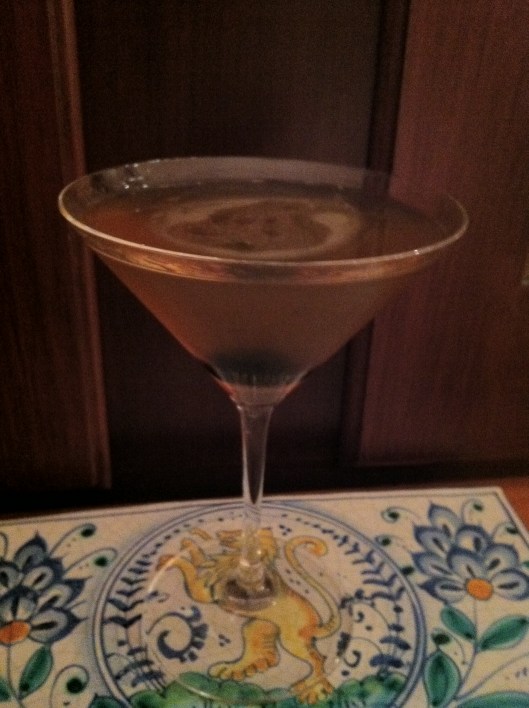
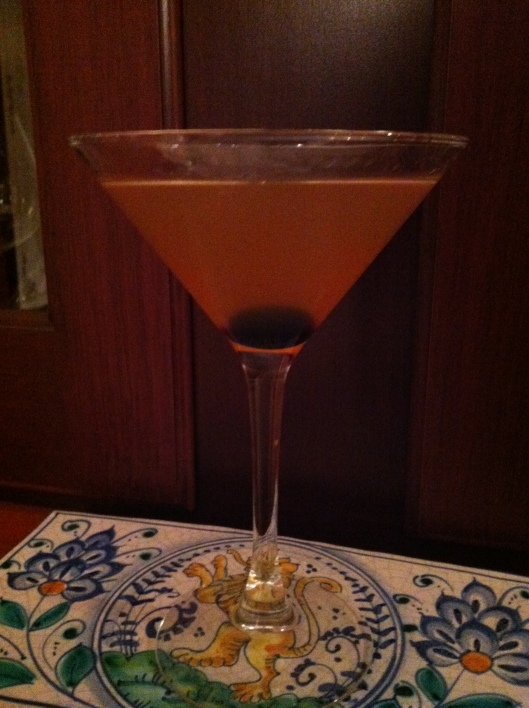
Enter the Bijou cocktail, a mix of Gin, Vermouth, and Chartreuse. In French, the term “bijou” means “jewel.” The cocktail is said to have been invented by Harry Johnson, one of the forefathers of the classic cocktail and one of the earliest documenters of the craft in his 1900 tome: New and Improved Bartender Manual. Actually, the Bijou stands out as one of the oldest recipes in his book, itself dating to 1890.

IMG_2237

The cocktail is presumably called Bijou because it combines the colors of three jewels: Gin for diamond, Vermouth for ruby, and Chartreuse for emerald. An original-style Bijou is made stirred with ice as noted by Harry, but I really prefer my cocktails shaken with crushed ice, so that is my preferred method.

On the palate the three components come together nicely to make for a refreshing and balanced cocktail. The herbaceous quality of the Chartreuse actually finds a nice foil in the sweet, figgy Vermouth, while the Gin lends a clean, refreshing bite on the aftertaste. Quite pleasant indeed.

Ladies and gentlemen, I present the Bijou cocktail…

2 oz.  Gin

1 oz. Green Chartreuse

1 oz. Sweet Vermouth

1 dash Angostura Orange Bitters

Combine ingredients in a shaker with ice and shake to chill. Strain into a chilled glass and garnish with an lemon twist (preferred).

Cheers!

The Brother Kipling Cocktail

21 Monday Dec 2015

Posted by musingsonthevine in Cocktails

≈ Leave a comment

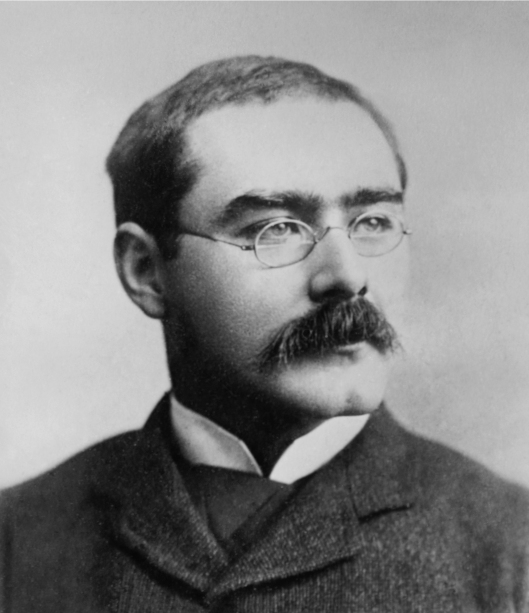
I was feeling experimental a while back and decided to create something exotic. As I scanned the bar, an interesting, as yet unused ingredient jumped out at me – Cardamaro – and I started to postulate a theme. My friends all know of my Masonic affiliation, so I thought about a cocktail to honor my Brethren… In scrolling through the endless list of notable Brothers for whom my libation could be named, I came across the perfect dedicatee – Brother Rudyard Kipling!

Kipling_nd

Bro Rudyard Kipling was born December 30, 1865 in Bombay, India. He is generally considered one of England’s greatest writers and has left the world with an impressive library of notable works. During his life he achieved literary greatness and was richly rewarded for his contributions to the English language. Revisionist history or course has created some polarizing opinions about Bro Kipling, most notably that his writing glorified the imperialism that defined English history in the 19th Century and should therefore not be celebrated, but instead denigrated. Not being a fan of revisionist history, I will move on…

Bro Kipling is believed to have become a Freemason in 1885, which would have been before he turned 21, then the minimum age for membership. Bro Kipling was initiated into Hope and Perseverance Lodge No. 782 in Lahore, India. He was extremely fond of Freemasonry, so much so that he commemorated its ideals in his famous poem, “The Mother Lodge”, and used the fraternity and its symbols as important plot devices in his novella, “The Man Who Would Be King.” The latter was made into a movie starring Sean Connery and Michael Caine, which has regular screenings in Lodges around the world.

In thinking about a theme for my cocktail I began to think about spirits. I knew that I wanted to use Cardamaro, an Italian wine-based amaro featuring cardoon and thistle as a component. Now, because Bro Kipling is intrinsically linked to India and because his Majesty’s forces supporting the Raj were fueled by Gin (unlike His Majesty’s navy, which was fueled by rum), a clean, London dry Gin would be my base spirit. Keeping with the idea of exotic and wanting to create an alluring aroma to the cocktail, I decided that Luxardo Maraschino liqueur would add a nutty, floral note to both the nose and palate of my potation. Last element required to balance this potion – lime juice. I tried lemon juice, but I liked the malic greenness of the lime over the astringency of the lemon.

Bench testing is hard work, and after several tries, we found the proper balance. My impressions? Refreshing with an exotic collection of flavors, building like a well-made curry, but without the heat. Although for a moment I almost tossed in a dash or two of Ancho Reyes, the pepper-infused liqueur from Chile, but thought better of it…

So, in honor of our Brother, Rudyard Kipling, I present a cocktail in his name…

IMG_2305

2 oz. London Dry Gin

3/4 oz. Cardamaro

1/2 oz. Maraschino Liqueur

1/2 oz. Lime Juice

2 dashes Cardamom Bitters

Combine ingredients in a shaker with ice and shake to chill. Strain into a chilled glass and garnish with an orange twist (preferred), or a Maraschino cherry.

Cheers!

2013 Ca’ La Bionda “Campo CasalVegri” Valpolicella Classico Superiore

31 Saturday Oct 2015

Posted by musingsonthevine in Wines

≈ Leave a comment

As I get older, I find myself gravitating to fewer and fewer regions to slake my thirst. This is not to say that I don’t relish trying new wines or making the veritable “world tour of wine” on any given weekend, but when it comes to every day drinking, I find my stops are limited to only a few vineyards.

One of those vineyards is inevitably in the Veneto in northeast Italy, home to many of the world’s most well-known wines. Like many regions in Italy, the Veneto has been experiencing a bit of a rebirth over the last decade as winemakers use a combination of technology, flexibility and artisanship to make their wines better. Combine these efforts with the positive support of Mother Nature and you have all you need to put a smile on most wine drinker’s faces.

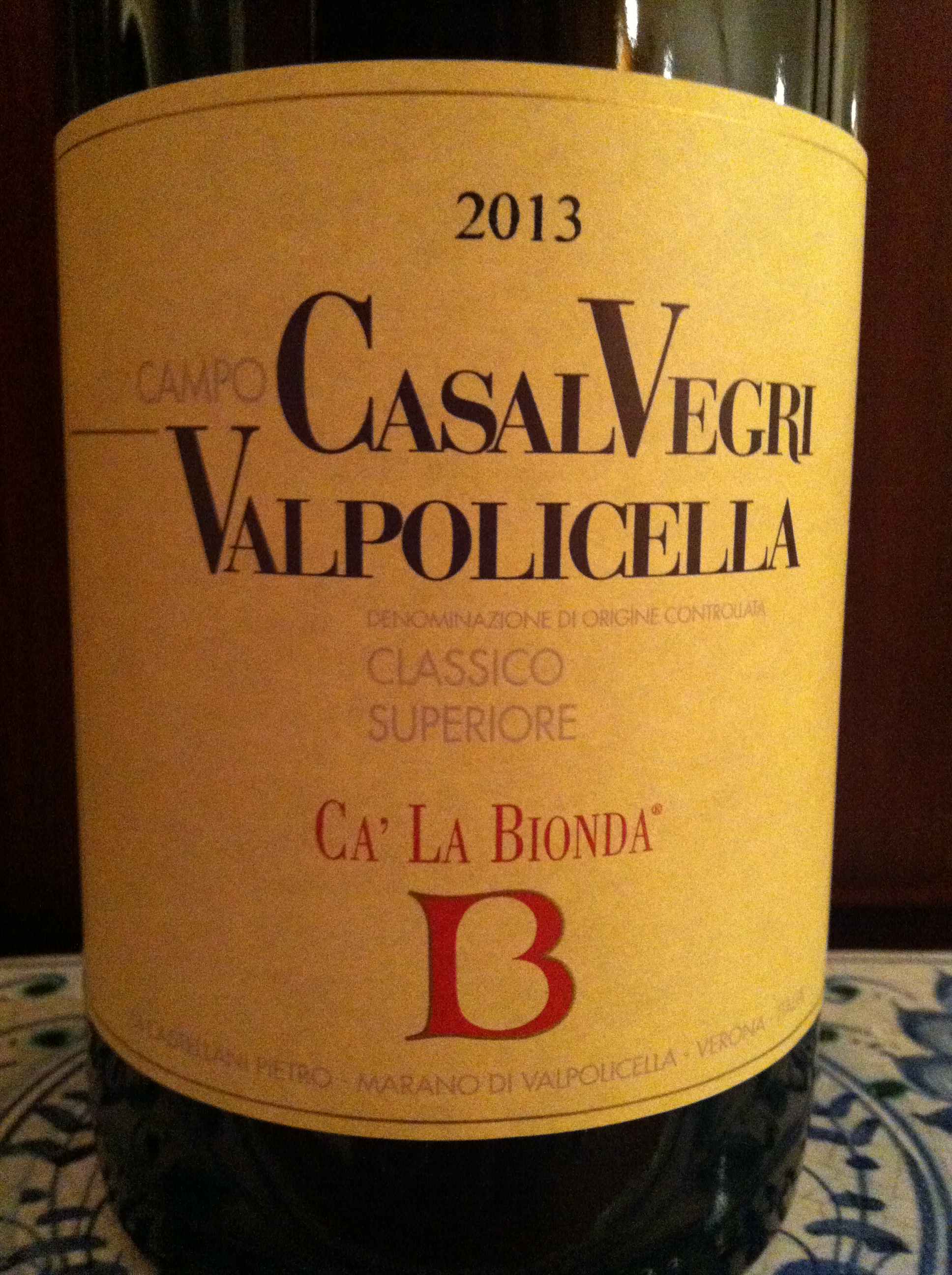
It’s no secret – scroll through my posts and you will find that the Veneto is clearly a favorite, especially Valpolicella. More often than not, I’m posting about this Amarone, or that Vino di Ripasso, extolling the virtues of their complexity and drinkability. Admittedly this may appear myopic, as Amarone and Vino di Ripasso are a small contingent in the “sea” of wine flowing from the greater Valpolicella region. Enter Ca’ La Bionda, a small, fourth generation producer in the commune of Marano di Valpolicella, in the heart of the historically “classic” area of the Valpolicella.

IMG_2227

The winery was founded in 1902 by Pietro Castellani a truly passionate and dedicated grape grower and wine-maker. Fortunately for us, Pietro imbued his successors with the same love and passion for grape growing and wine making, because today, members of the Castellani family continue these fine traditions. All phases of the wine-making process, from the cultivation of the highest quality grapes, to grape harvesting, vinification, and ageing are all carried out directly by the family.

Ca’ La Bionda does produce Amarone (two actually), as well as a Vino di Ripasso. They even produce a Recioto dessert wine, but experience has taught me that the measure of a winemaker’s ability is best found in their mid-level offerings. For this reason, the CasalVegri bottling is a prime candidate for study.

The wine is made from grapes grown in the estate-owned CasalVegri vineyard. The family feels that all of the contributing factors to great winemaking, micro-climate, soil composition and hill-side topography, combine to enable the production of some really terrific wine. The family is so confident of the wine’s potential that they have made the conscious decision to use 100% of the grapes grown in this vineyard for the making of a single Valpolicella Classico. The family does not cull the best of the crop for Amarone, nor do they employ the “ripasso” technique, in their opinion, “to correct” the shortcomings of the vineyard, both conscious decisions that produce a wine of exacting purity and character.

The wine is the usual blend, consisting of 70% Corvina, 20% Corvinone, and 10% Rondinella. The vineyard soil is mainly clay-limestone with a high proportion of rock and stone, which contributes minerality and structure to the resulting wine. The vineyard is located on an east-facing hillside, at between 300 and 900 feet above sea-level. The elevation and orientation promotes slow maturation and ripeness, which contributes to the finesse and elegance of the resulting wine.

Fermentation occurs in temperature-regulated stainless steel tanks at a temperature of no more than 77°F, which is relatively cool and ensures the preservation of the delicate flavors and aromas present in the grapes. Following fermentation, the wine is aged for 18months, 90% in large 3000 liter (792 gallon) barrels and the remaining 10% in 225 liter (59 gallon) barriques. The wine undergoes a further 6 months of bottle ageing before being released to the public.

Overall the wine is a charming quaffer with hints of fresh cherry and violets in the nose and lively, spicy fruitiness on the palate. Well-balanced with well-integrated tannin, the wine exhibits moderate length and a layered complexity on the finish. The wine is drinking well now and should continue to improve with another 5 to 7 years in the bottle.

At the average price of $19.99/bottle before discount, this wine is a very good value and makes a worthy addition to the cellar.

Cheers!

Kékfrankos… Blaufränkisch… Lemberger

09 Sunday Aug 2015

Posted by musingsonthevine in Wines

≈ Leave a comment

What do you mean you never heard of any of those grapes? For one, they are all synonyms of the same grape, just from different regions. The grape in question is a black-skinned wine grape grown widely in Austria and Hungary, and to a lesser extent in neighboring Germany, Slovakia, Bulgaria and Croatia. Miniscule quantities are also grown in the United States, most notably in New York’s Finger Lakes but can also be found in various parts of Washington state (the Rattlesnake Hills, Horse Heaven Hills, Yakima Valley), and such far-flung states as California, Michigan, Indiana, Pennsylvania, Rhode Island and Colorado. The common feature in Blaufrankisch wines from all of these places is a fruit-forward profile with aromas of spiced black cherries.

In Austria, Blaufränkisch is the second most popular red-wine variety behind Zweigelt – a crossing of Blaufränkisch with Austria’s other signature red variety, Saint-Laurent. Blaufränkisch is grown in almost every Austrian wine region to some extent, but its stronghold is unquestionably Burgenland. Classic Austrian Blaufränkisch wines are intensely colored, medium-bodied reds with brooding, black-fruit flavors and a hint of peppery spice. Those made around Lake Neusiedl, and in Sudburgenland, can be particularly full-bodied and spicy.

In Hungary, where it is known as Kékfrankos, the variety occupies almost 20,000 acres (8100 ha) in total – nearly three times its Austrian coverage. The majority of this is located in the vast but little-known Kunsag region, where it is rarely made into anything intended for export. Its other Hungarian homes include Sopron in the northwest (on the eastern shore of Lake Neusiedl) and Eger in the northeast. Both of these regions have strong histories of wine production, and have the potential (in the right hands) to lead Hungary into a new era as a wine-producing nation, with Kékfrankos as their flagship grape. It has already played a pivotal role in Hungary’s most famous red wine, Egri Bikaver, better known as Bull’s Blood.

Blaufränkisch was long thought to be genetically identical to Pinot Noir, and even Gamay Noir, which explains its Croatian and Bulgarian nicknames Borgogna and Gamé. Modern DNA profiling has now shown that it is at least related to both of these varieties, as they are all descendants of Gouais Blanc.

And I’m telling you all this for what reason?

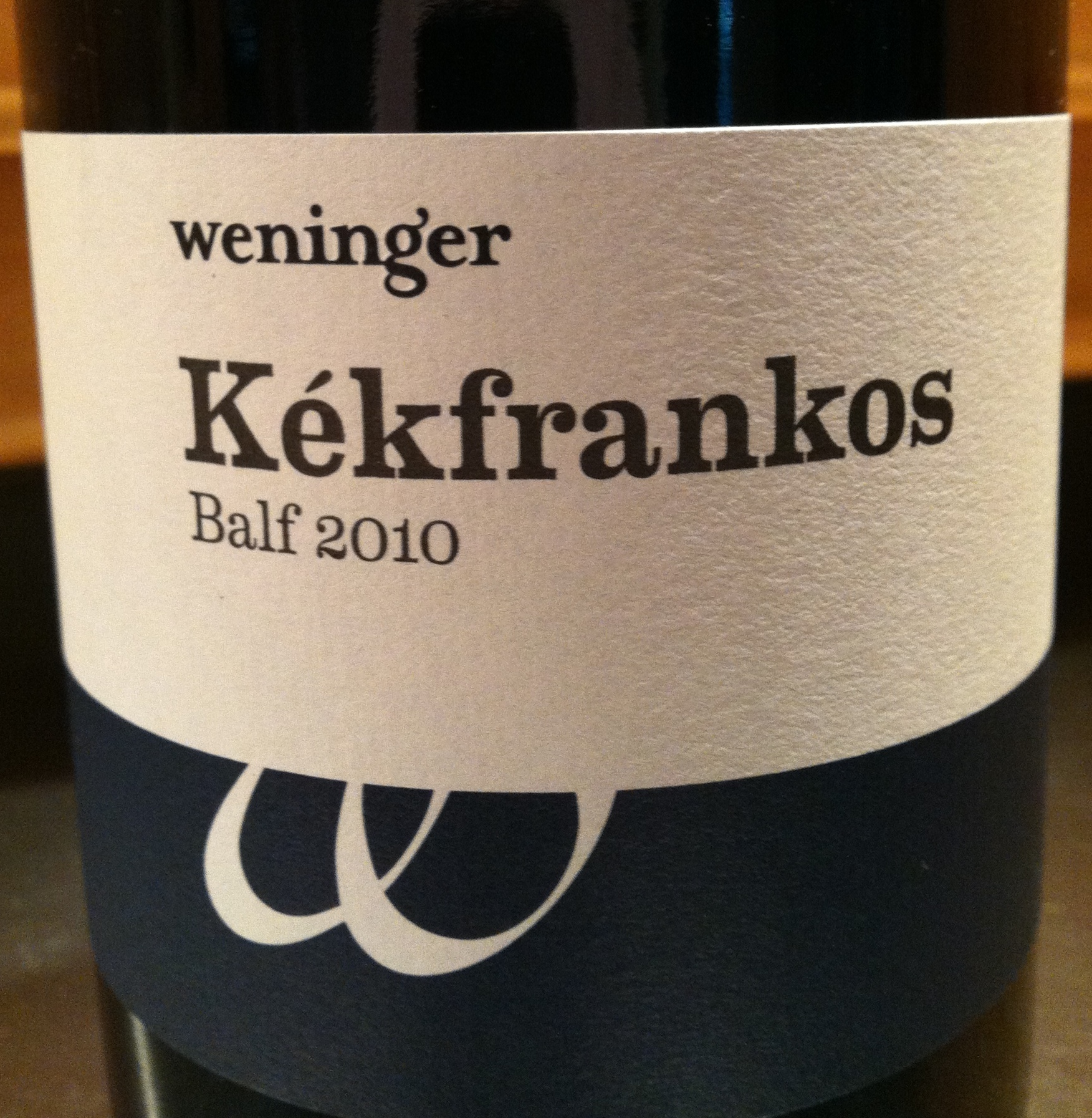
Well, I came across a Hungarian Kékfrankos that is pretty tremendous. The 2010 Weninger Kékfrankos Balf is a charming wine with great varietal character. The wine is from Sopron, specifically the small village of Balf, which is on Lake Neusiedl. The warm thermal springs of the area are loaded with minerals and not only contribute to ripening the grapes fully, but also add levels of complexity and minerality to the finished wine.

IMG_1828

The grapes are selectively hand harvested with only native yeast strains used to start the fermentation, which takes place in stainless steel tanks. After three weeks of maceration, the wine is pumped into large oak barrels, held in passive, non-climate-controlled cellars. The wine is then put through full malolactic fermentation to soften the acids and broaden the palate. After a year in barrel, the wine is bottled without being fined or filtered.

The vineyards are estate owned with vines varying in age from 13 to 40 years. Viticulture is biodynamic and uses no pesticides. In 2010 there were 6,300 bottles produced, a comparatively small production by most modern winery standards.

The wine is delightful. Bright, lively fruit dances on your palate, held aloft by firm, crisp acidity. Fresh cherry with dark notes of rose petal and violets abound. On the finish, loads of black pepper and allspice combine in layers of complexity. Ideal for summer – the wine takes a slight chill well and the spicy finish echoes well the tastes of the grill.

At an average bottle price of $9.99 before the discount, you know that 12 of those 6,300 bottles will find a home in my wine cellar!

Cheers!

2012 Castello di Neive “Santo Stefano” Barbera d’Alba DOC, Italy

07 Friday Aug 2015

Posted by musingsonthevine in Wines

≈ Leave a comment

My apologies for touting yet another Italian Barbera, but when I find something truly remarkable, I feel compelled to share.

Castello di Neive is among my favorite Piedmont producers. Their wines are of the highest quality and have a very traditional flavor profile. That said, the wines are somewhat pragmatic, meaning that for all their traditional character they embody modernity.

For some background, I adapted the following from their web site…

Castello di Neive, and its 150 acre estate are owned by the Stupino family – Anna, Giulio, Italo and Piera. They were all born in Neive, and so were their parents, grandparents and great-grandparents. The history of the company began when their father, Giacomo, started to capitalize on both his experience as a surveyor and on his knowledge of the area, to purchase, whenever possible, vineyards and land in extremely favorable locations. In the small cellars of their home, they began the first production of wine for domestic consumption, which they sold in bulk. The first vineyards Giacomo acquired, which have become synonymous with great wines, were Messoirano, Montebertotto, Basarin, Valtorta, I Cortini. In 1964 they purchased the castle with its spacious cellars, and a few more vineyards in Santo Stefano and Marcorino, as well as additional land from the castle’s previous owner, Count Guido Riccardi Candiani.

The acquisition of all these vineyards, along with the purchase of the historic castle was a turning point, which drove the family to renovate the castle’s cellars, and to make significant investments to restore the vineyards, long neglected by previous owners. With the upgrade in the cellar came the introduction of more modern wine making methods. When Giacomo died, in 1970, Giulio and Italo took over operations and oversaw the transition from tenant farming to direct management of the land. With the help of a talented and skilled winemaker, Talin Brunettini, Castello di Neive began to bottle its own wines instead of selling them off in bulk for sale by others.

Castello di Neive has continued to lead in Piedmont, establishing clonal programs for the native Arneis grape. The wines from Castello di Neive are among some of the finest in Piedmont, unparalleled except for a select few producers.

My favorite wines of Castello di Neive have always been their Barbaresco, but their prices have always reflected the importance of their single vineyard holdings. Meaning, I can’t buy them very often…

So imagine my excitement when their single vineyard Barbera, the Santo Stefano popped up on the radar screen at a very reasonable price. The Santo Stefano vineyard, as noted above was purchased in 1964 and the story on the web site tells of a piece of property that was fallow and in a questionable state. Apparently, the patriarch, Giacomo brushed aside the warnings, purchased the land and proceeded to restore the site and plant vines. Within short order, the vineyard was producing amazing Barbera.

IMG_1827

The 2012 wine is a relatively modest 10,000 bottle production, from 20 – 30 year old vines, grown on calcareous marl soil. The vineyard is hand harvested using traditional wooden boxes. The grapes are put through a traditional fermentation process, with pump over, for about 10 days and then allowed to macerate for another 10 days. Once complete, the wine is moved to large, 1,000 gallon French oak barrels to age for 8 months. The wine is then bottled, unfiltered and held for another 3 months before release.

When I first tasted the wine, I was pleasantly surprised at the depth of fruit and the lushness of the palate. Black cherry and blackberry saturate the flavor, with well integrated tannin to give the wine structure and balance. Layers of complexity on the finish, with hints of anise and dried herbs maintain a connection to the traditional flavor characteristics of the Barbera grape. The wine has good aging potential and at $19.99 per bottle before a discount, represents a tremendous value.

Not the cheapest Barbera on the shelf, but certainly one with a fine pedigree and great provenance.

Cheers!

The Road Not Taken

28 Tuesday Jul 2015

Posted by musingsonthevine in Wines

≈ Leave a comment

I am constantly telling my friends, students and frankly anyone who will listen to experiment with wine. Thirty plus years ago I would not have been so bold, but today the overall quality and diversity of wine available from all around the globe demands that people take a chance and stray from their comfort zone.

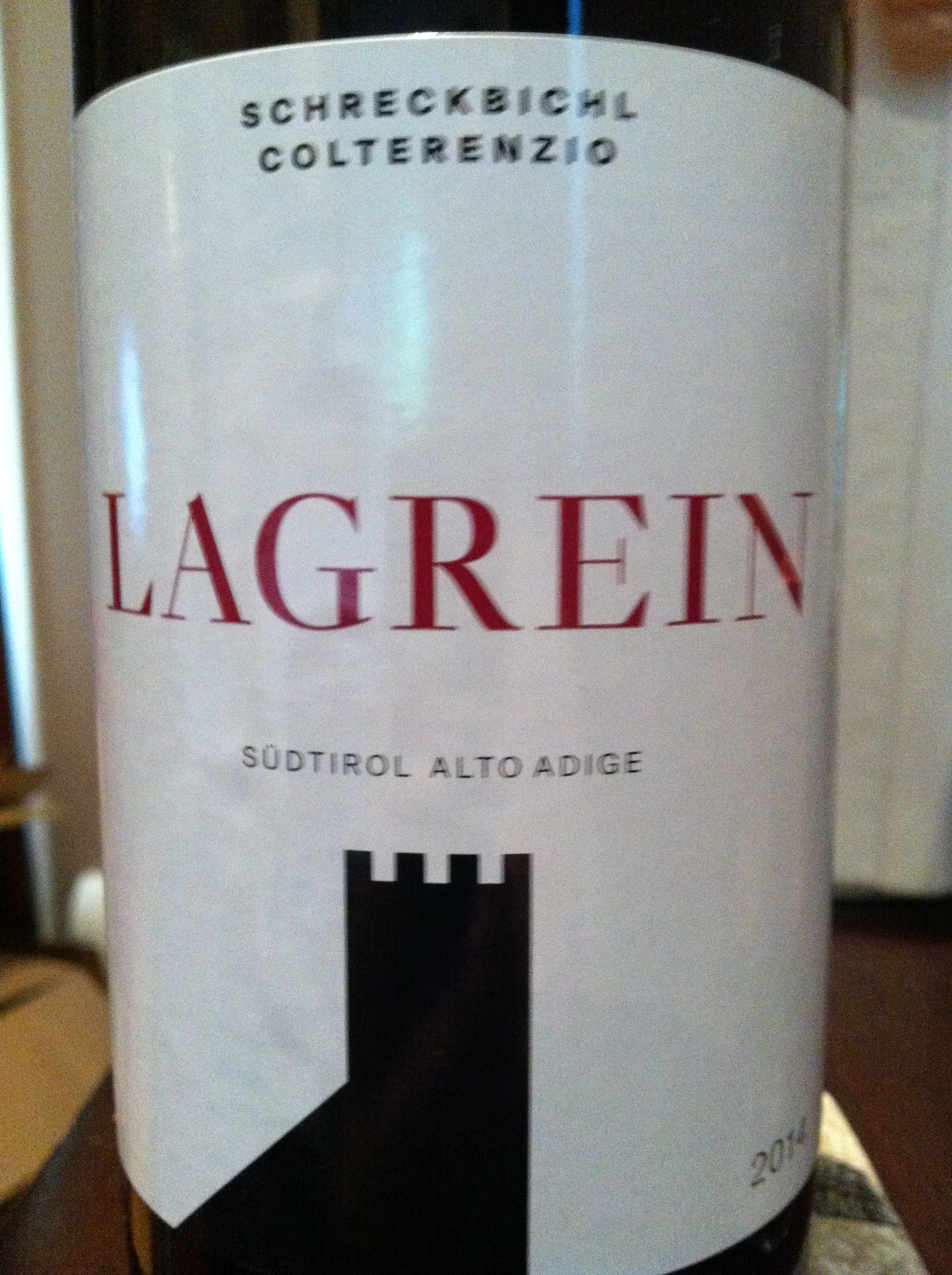
One such wine that deserves attention is the 2014 Lagrein from the Colterenzio Cooperative in Alto Adige, a small region in the northeast corner of Italy. The cooperative was started in 1960 with 28 producers. Over the last 50 years the cooperative has grown to 300 producers and over 300 hectares of land under vine.

The wine comes from the southern part of Alto Adige or the Sudtirol, which is home to some of the Alto Adige’s highest vineyards. Warmer than other more northern areas, the sub region’s climate is conducive to ripening red grapes. Along with the mixed soils of limestone, marl, dolomite and sand, the vines produce grapes of exceptional quality and distinction.

Lagrein is a red grape variety descended from Teroldego and related to Syrah, Pinot Noir and Dureza. It is believed to be native to the Lagarina Valley in Trentino. For many years the grape produced highly tannic wines that were tough and unapproachable. Modern wine making techniques have transformed the wines made from Lagrein into expressive, voluptuous wines with bright, fragrant personalities.

IMG_1817

The 2014 Lagrein from Colterenzio is magical. The wine has a lively, fragrant nose with fresh floral notes and hints of herbal sweetness. On the palate the wine is bright and fruity with some dark rose attar and cherry notes. The wine has well-integrated tannin and just enough acid to give it structure. Drinking well, the wine should age well for another 2 to 4 years in the bottle.

Another nice feature of the wine is the price. At $13.99 per bottle before any discount, the wine is a great value and perfect for the summer weather!

Cheers!

In Praise of Older Wine

28 Tuesday Jul 2015

Posted by musingsonthevine in Wines

≈ Leave a comment

Despite what the statistics suggest, that better than 87% of fine wine made today is meant to be consumed within one to two years of bottling, frequently the stars align to create a wine that really benefits from continued time in the bottle. My students know that I am a huge proponent of aging wine, including those bottles that do not demand to be aged. I espouse the many benefits of this practice: from allowing a wine time to improve; to the educational value of tasting a wine throughout its life and thereby fully understanding the mystery of wine; to the often jaw-dropping impact of pulling an unavailable gem from the dark reaches of one’s cellar to share with the best of friends.

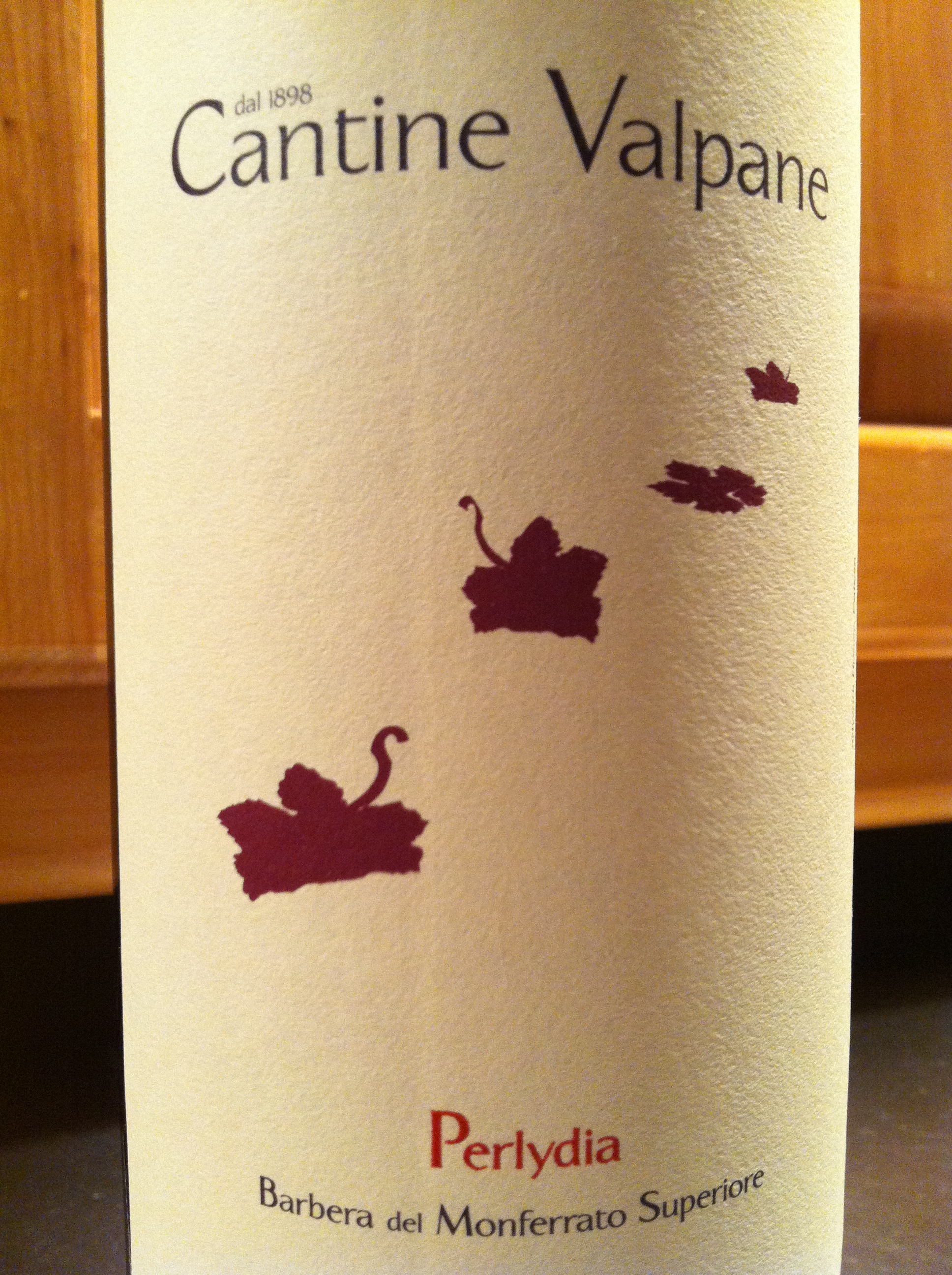
In my usual perusal of the various wine shop circulars that arrive in my mailbox, my attention was piqued by an “older” wine – a 2005 Barbera del Monferrato from Cantine Valpane, their Perlydia bottling. Now 2005 isn’t particularly old at 10 years, but Barbera is not known to make long-aging wine. I eyed the tasting note from the store and decided that more research was warranted.

Cantine Valpane is a historic winery located in the Monferrato wine making region of Piedmont in northwest Italy. The winery website states that the present owners, the Arditi family have owned the property for over 100 years and during that time have sought to maintain the highest quality, while creating wines, specifically Barbera-based that exemplify the unique character of the Monferrato region. The Valpane vineyards, unlike those in Alba and Asti, the two bastions of Barbera in Piedmont, are planted in soils heavy in limestone and clay, which imparts an earthy minerality often not found in Barbera. Additionally, the DOC rules for Barbera del Monferrato allow for the inclusion of the Friesa grape to the blend, which contributes lively, fragrant touches to the wine.

IMG_1815

When one examines how the Cantine Valpane Barbera is produced, it is no surprise that the wine can age and frankly, should age to present its best version of itself. From the Kermit Lynch website:

The grapes are late-harvested from vines that average 5 – 10 years in age. Fermentation takes place in stainless steel and cement tanks and lasts 21-23 days. Following fermentation the wine is further aged 2-5 years in stainless steel and cement tanks before bottling. To ensure optimal smoothness, the wine is aged another year in bottle before its release. No Friesa is used in the blend of the “Perlydia” bottling.(“Perlydia” translates to: “for Lydia,” who is Pietro’s aunt who ran the estate before him.)

My own analysis, 10 years after the wine was made? Simply magnificent. The wine is smooth, mellow and possesses layered complexity with soft fruit, fragrant floral and rustic earthy notes. The wine is clearly Barbera in nature, with bright cherry flavors and a slight bite of acid that gives the wine impressive structure.

The most impressive thing about the wine… the price… at $17.99 per bottle before a discount, this wine is a steal. Very rarely do you get to possess a wine with 10 years of age that shows improvement and the longevity to continue to improve for this price. Where did I find the wine? At my friends at The Wine & Cheese Cask in Somerville, MA – it’s in their July-August Newsletter!

Cheers!

← Older posts
Newer posts →

Subscribe

  • Entries (RSS)
  • Comments (RSS)

Archives

  • June 2020
  • May 2020
  • April 2020
  • March 2020
  • February 2020
  • January 2020
  • December 2019
  • August 2019
  • February 2019
  • December 2018
  • November 2018
  • October 2018
  • September 2018
  • August 2018
  • July 2018
  • June 2018
  • May 2018
  • April 2018
  • March 2018
  • February 2018
  • January 2018
  • November 2017
  • August 2017
  • July 2017
  • June 2017
  • April 2017
  • March 2017
  • February 2017
  • January 2017
  • December 2015
  • October 2015
  • August 2015
  • July 2015
  • June 2015
  • December 2014
  • November 2014
  • August 2014
  • July 2014
  • June 2014
  • May 2014
  • April 2014
  • March 2014
  • February 2014
  • January 2014
  • December 2013
  • November 2013
  • October 2013
  • September 2013
  • August 2013
  • July 2013
  • June 2013
  • May 2013
  • April 2013
  • March 2013
  • February 2013
  • January 2013
  • December 2012
  • September 2012
  • August 2012
  • July 2012
  • June 2012
  • May 2012
  • April 2012
  • March 2012
  • February 2012
  • January 2012
  • December 2011
  • November 2011
  • October 2011

Categories

  • Cocktails
  • General
  • Restaurants
  • Spirits
  • Uncategorized
  • Wine Events
  • Wines

Meta

  • Create account
  • Log in

Blog at WordPress.com.

  • Subscribe Subscribed
    • blog.musingsonthevine.com
    • Join 36 other subscribers
    • Already have a WordPress.com account? Log in now.
    • blog.musingsonthevine.com
    • Subscribe Subscribed
    • Sign up
    • Log in
    • Report this content
    • View site in Reader
    • Manage subscriptions
    • Collapse this bar
 

Loading Comments...