Author Archives: musingsonthevine

A Pleasant Return

23 Tuesday Jul 2013

Posted by musingsonthevine in Wines

≈ Leave a comment

I have the utmost respect for winemakers who make decisions to not produce certain wines in their portfolio during difficult vintages. It shows a true commitment to quality that frequently comes at a steep cost.

La Rioja Alta, S.A., the producer behind Viña Ardanza Rioja had such a situation. The two successive vintages following their blockbuster 2001 offering were abysmal, meaning that the flagship Viña Ardanza did not get produced. I sorely missed the wine, since it had become a favorite with the 1996 vintage many years ago.

Viña Ardanza2004

The good news is that the wine has returned with the 2004 vintage and it is back in fine form. The weather during 2004 really benefited the vineyards of La Rioja Alta, allowing for a slow, balanced growing cycle that led to fruit of superior quality. The wine itself is a blend of Tempranillo (80%) and Garnarcha (20%), the former being grown on 30-year old vines planted in Fuenmayor and Cenicero (Rioja Alta), the latter on old goblet-pruned vines in Tudelilla (Rioja Baja). The blending of these two sub-zones within the greater Rioja region produces a well-balanced wine with great structure and finesse.

La Rioja Alta takes an interesting approach to the aging of their wine. Like traditional Reserva Rioja wines, the Tempranillo spent 36 months in American oak barrels with an average age of 4 years. Unlike more traditional wines, the Garnacha only spent 30 months in American oak that was 2 to 3 years old. The result is an interesting interplay between the more dried cedar-infused, leathery Tempranillo and a fresher, fruitier and brighter oaked Garnacha. The wine was finally blended and bottled in December of 2008.

If you are a fan of classic Rioja, then this wine will put a big smile on your face!

My tasting notes:

Bright, lively nose – spicy with vanilla, cedar and dried cherry hints. Medium-bodied with moderate acidity and firm, dry tannin – good balance. Sour cherry palate with black pepper, oak and saddle leather notes. Classic Reserva Rioja. Moderate length – smooth finish with an evolving, layered complexity. Drinking well now and should continue to improve for the next 3 to 5 years in bottle.

At an average per bottle cost of $29.99 before customary discounts, this is a reasonable value and for lovers of classic Rioja, a real treat.

Cheers!

Sun Splashed Pleasure

16 Tuesday Jul 2013

Posted by musingsonthevine in Wines

≈ 1 Comment

In my History of Italy in Ten Glasses class I always reinforce the diversity and richness of Italian culture, which is the direct byproduct of the mixing of so many conquering/colonizing people on this verdant peninsular in the Mediterranean. Where other countries have specific areas devoted to grape growing and wine making, in Italy, the entire country is one giant vineyard. In Italy, wine is considered an integral part of everyday life. Wine is as essential to life – and the quality of life – as bread and olive oil. Contadini (local farmers) used to grow grape vines among other food crops, a practice referred to as: agricolturo promiscuo (promiscuous agriculture). People who visit Italy today quickly realize that the unsuspecting jug of wine served at a small roadside enoteca (wine house), is some of the most delicious wine they have ever enjoyed.

It used to be that Italy had a corner on value-leading wines, most of which were straightforward, thirst-quenching quaffs meant to accompany hearty meals with friends and family. At least that’s how it worked at my house when I was growing up… And it usually happens this way in our home today, except the bottle is more likely something Spanish given their command of the high-value market.

So, when a bottle of Italian wine appears that stresses value and pays homage to those classic characteristics of sun splashed fermented grape juice, I sit up and want to tell folks about it!

Cantina Zaccagnini Montepulciano d’Abruzzo is not new to this wine writer. I stumbled across this producer with their 2001 vintage many years ago and really like it then. For whatever reason, I lost touch with the wine, but thankfully came across a bottle locally of the current vintage, 2010. In a word the wine is charming. Like most of my relatives, the wine could charm the shirt off your back and make you feel especially loved for giving up all your worldly possessions…

Abruzzo is one of the major wine regions in Central Italy, ranked as the sixth most productive region in Italy. Abruzzo is home to numerous DOC and IGT wines, probably best known is Montepulciano d’Abruzzo. The wine is produced from the Montepulciano grape, a prolific red grape known for producing full-bodied, fruity wines and should not be confused with Vino Nobile di Montepulciano, a red wine made from Sangiovese in the Tuscan town of Montepulciano. Whenever I open Montepulciano d’Abruzzo I feel envious – what must life be like making wine of such genuine character, which is guaranteed to put a smile on your face every time you drink it?

Zaccagnini

The 2011 Cantina Zaccagnini is classic Montepulciano d’Abruzzo. Rustic and earthy with a seductively lush mid-palate that seems to go on forever, all for an average cost of $14.99 per bottle before any discounts (I found it for $11.99/bottle). Great value in classic Italian wine!

My tasting notes:

Rustic, earthy nose with currant, plum and dried lavender hints. Medium-to-full-bodied with moderate acidity and firm, well-integrated tannins – good balance. Dark fruit core with thick blackberry and cherry notes. Rich tasting. Long finish – smooth with a nicely layered finish – anise and saddle leather on the aftertaste. Drinking well now and should continue to evolve for another 2 to 3 years in the bottle. Great value.

Cent’anni!

My Three Sons…

11 Thursday Jul 2013

Posted by musingsonthevine in Wines

≈ Leave a comment

Who doesn’t remember that iconic television show from the ‘60’s and ‘70’s? Fred MacMurray played Steven Douglas, a widower and aeronautical engineer raising three exuberant young sons… Interestingly, the series was the second longest-running live action situation comedy – The Adventures of Ozzie and Harriet was first…

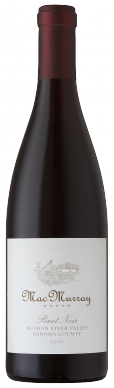
Anyway, Fred MacMurray, born in 1908 in Kankakee, IL was quite the accomplished performer, with turns as a big band vocalist, Broadway actor and ultimately, Hollywood movie star. Personally, my favorite performance was his role as the cynical and duplicitous Lieutenant Thomas Keefer in The Caine Mutiny (1954). MacMurray became a multimillionaire acting in Hollywood and in 1941 he purchased land in the Russian River Valley in Northern California and established MacMurray Ranch. The ranch had been a homestead since the mid-19th century and possessed breathtaking views with lush, rolling hills. MacMurray spent time at the ranch when not making films, engaging in many activities, including raising prize-winning Aberdeen Angus cattle and Shorthorn Romeldale Sheep. MacMurray passed away in 1991 after a long battle with cancer and wanted the property’s agricultural heritage preserved. In 1996 the property was sold to Gallo Wines, which planted the present vineyards and started producing wine under the MacMurray Ranch label. Maintaining a connection to the history of the property, Kate MacMurray, daughter of MacMurray with renowned actress June Haver, now lives on the property (in a cabin built by her father), and, from the MacMurray Ranch website (www.macmurrayranch.com), she is “actively engaged in Sonoma’s thriving wine community, carrying on her family’s legacy and the heritage of MacMurray Ranch.”

My first experience with MacMurray ranch was back at the end of the 1990’s, early 2000’s. At the time I was impressed with the quality of the wine and the very modest price tag. If I recall correctly, the wine was produced at Gallo’s Dry Creek facility from fruit sourced from the MacMurray Ranch property, as well as other supplemental vineyards. I also recall that one year, after buying a case of the MacMurray Ranch Pinot Noir, most of the bottles had a strong presence of TCA or “cork taint.” Turns out, Gallo had an issue with TCA at their Dry Creek facility, which cost them quite a bit in lost wine and winery clean-up. It was one of the first published accounts of TCA infecting wine as a result of problems at the wine making facility, as opposed to TCA infection as a result of problems with cork sterilization. Big boon to cork producers, who were taking it on the chin as a result of escalating TCA problems in wine…

I shied away from the label for a while and recently picked up a few bottles to “re-acquaint” myself with the brand. Happily, I found the wines to be quite nice, albeit a bit more expensive than when I first tried them. I tried both the Russian River Valley and Central Coast Pinot Noirs and both were classic west coast Pinot – expressive, lively fruit with good mid-palate weight and supple, well-integrated tannins. Not terribly complex, but decidedly approachable and seductive.

My tasting notes:

MacMurray Ranch 2010 Central Coast

2011 MacMurray Ranch Pinot Noir Central Coast (Average Bottle Price: $26.99)

Bright, fresh and fruity nose with red berry, red currant and lavender hints. Pretty. Medium-bodied with moderate acidity and smooth, supple tannin – good balance. Youthful and fresh – bright cherry with raspberry jam notes. Moderate length – smooth and seductive – very nice. Drinking well now – not for aging.

MacMurray Ranch 2010 R. River Valley-Sonoma County

2010 MacMurray Ranch Pinot Noir Russian River Valley Sonoma Coast (Average Bottle Price: $36.99)

Lush nose with deep cherry, currant and violet hints – lovely. Medium-bodied with moderate acidity and supple tannin – very well balanced. Fruity palate with a dark fruit core – black cherry and rose attar notes. Long finish – smooth and seductive – really pretty. Drinking well now and should continue to improve with 2 to 3 years in bottle.

I found both locally, comfortably discounted…

Cheers!

Wild Horse

04 Thursday Jul 2013

Posted by musingsonthevine in Wines

≈ Leave a comment

Pinot Noir is a finicky grape that unlike Cabernet Sauvignon and Chardonnay is not a world traveler. Pinot Noir made its fame in the vineyards of the Côte d’Or, where it can command astronomical prices and produce some of the most beautifully complex wines on the planet. In Champagne, Pinot Noir is one of two black grapes that go into the production of some of the world’s most luxurious sparkling wines.

In the US, the grape has found a few places where the climate and soil are particularly hospitable and produce some very noteworthy Pinot Noir. The area that has probably received the most press of late is California’s Central Coast. I’ve blogged about the Central Coast, specifically the Santa Rita Hills before (https://blog.musingsonthevine.com/2012/09/10/santa-rita-hills-update/), so my readers know of my deep appreciation for the region. We also have family in the area, so reasonably frequent visits have allowed for much exploration and enjoyment at the well over 350+ wineries in the region.

While cruising the wine aisles recently I ran across what I will call a “blast from the past.” When I was first discovering wine, I made a point of visiting my favorite wine shops weekly to collect up mixed cases of various wines that the proprietors deemed “important,” or at least “instructive.” Among these early cases were several nascent wineries from California that were noted for genuine quality and had a bit of the pioneer in their hearts. Among those cases were bottles of Wild Horse Winery and Vineyard Pinot Noirs.

WildHorsePN

Wild Horse, located in Templeton California is in the heart of the Central Coast region, just south of Paso Robles. According to their web site (http://www.wildhorsewinery.com/Winery/Our-Story) they got their start making “our first wine in a plastic tub. Stirred it with a baseball bat. It was a senior project at Cal Poly that very quickly became a reason to be.” In 1981, they bought their first vineyards and produced their first vintage two years later. The name of the winery presumably is a tribute to the herds of wild mustangs that roamed over the hillsides in the area for decades. That, and possibly a tribute to Cal Poly’s mascot, a galloping horse. Wild Horse has come a long way over the last thirty years and despite being one of the “darlings” of the Central Coast, they have remained grounded, pun intended. We visited the winery a few years ago and found a commitment to the land and a commitment to quality, which pays homage to their humble beginnings.

Are their more impressive wines coming out of the Central Coast? Perhaps, but for the money, Wild Horse is a good story and a very good wine.

My tasting notes:

Lively, fruity nose with red berry, cherry and raspberry hints. Medium-bodied with moderate acidity and supple, well-integrated tannin – good balance. Lush palate with cherry, currant, rose attar and tea notes – Lovely. Moderate length with a deep, smooth finish – Seductive. Drinking well now – Not for aging.

The wine retails for around $25 ($20 at the winery) – I found it locally, after discounts for $16…

Cheers!

Newman’s Own

01 Monday Jul 2013

Posted by musingsonthevine in Wines

≈ Leave a comment

Paul Newman was one of my favorite actors. Like so many actors from his era, Mr. Newman displayed great diversity in the roles he undertook, gently evolving his characters appropriately as he aged. I was also impressed that he remained devoted to his second wife, Joanne Woodward for fifty years. Another aspect of Mr. Newman’s life that I found admirable was his charitable work, most especially the co-founding of his Newman’s Own (http://newmansownfoundation.org/) line of foods in 1982. The brand started humbly with salad dressing, and has since expanded to include pasta sauce, salsa, soft drinks, snack products, frozen entrees and wine. With the foundation, Mr. Newman established a philanthropic policy where all proceeds, after taxes, would be donated to charity. As of today, the foundation has donated in excess of $370 million. Organizations supported by the foundation include philanthropic organizations, organizations helping children with life-limiting conditions, as well as organizations of empowerment and nutritional support (http://newmansownfoundation.org/what-we-support/).

By and large, the products sold by Newman’s Own brand are quite good, with our shelves being lined by several jars of salsa, salad dressing and pasta sauce. However, I had yet to seriously dabble with his wine. Why? Well, the wine is inexpensive, California juice, which I rarely find appealing or interesting.

The engine behind Newman’s Own wine is none other than Rebel Wine Company out of St. Helena, California. Rebel is known for its commitment to high value wines. In addition to Newman’s own, Rebel has several value conscience brands, namely Bandit Wines and The Show Wines. Artful marketing under the Three Thieves mantle (http://threethieves.com/index.php) promotes an interesting story focused on “wine for everybody.”

Recently I picked up the Pinot Noir and Cabernet Sauvignon in the Newman’s Own portfolio and I was pleasantly surprised by the quality. These wines are not terribly complex, nor do they possess any aging potential, but they are a simple, straight-forward, fruity style that falls into the category I call “daily drinkers.” Both were priced around $10 dollars, so for those looking for fruit forward simplicity, they work well. Both made an excellent accompaniment to meat off the grill…

My tasting notes:

NewmansOwnPN

2010 Pinot Noir – California

Fresh, fruity nose with bright red berry, raspberry and violet hints. Medium-bodied with moderate acidity and moderate, supple tannin – good balance. Sour cherry palate with rose attar and blackberry notes. Moderate length – smooth finish – easy drinking. Not for aging – good value.

2011 Cabernet Sauvignon – California

Bright, fruity nose with cherry, floral and fresh, herbal hints. Medium-bodied with moderate acidity and moderate tannin – good balance. Soft palate with fresh, red berries on the palate. Moderate length with a smooth easy finish. Drinking well – not for aging. Good value.

Cheers!

The Terrace Café – Wrentham

25 Tuesday Jun 2013

Posted by musingsonthevine in Restaurants

≈ Leave a comment

WrenthamTerracesitef_04

We finally visited a not-so-new local restaurant, The Terrace Café (www.WrenthamTerrace.com) and are absolutely thrilled to have such a welcoming in-town option for fine dining so close by!

The restaurant is approaching their one year anniversary and we are happy to pass along the good word to help keep them busy and popular.

The space is cozy with an awesome outside patio for dining al fresco (the above picture nicked from their website does the patio proud…). The lack of AC did make for a slightly warm experience, but the light and airy space was never oppressive.

Our server was charming – friendly, courteous and professional – attentive without being effusive. The owner, Nancy Lockwood spent a considerable period of time chatting with us, offering positive commentary on our wine selection. Speaking of which, the list is a nice selection of very serviceable bottles from a small distributor out of Weymouth (Masciarelli Wine Co.) – we had their estate bottled 2011 Montepulciano D’Abruzzo, which was a good summer-weight red and at $18.00/bottle it was a phenomenal value. Massachusetts’ doggy-bag wine law meant I was able to order the bottle and happily take the remainder home for consumption later.

The food was great! I had the Pork Tenderloin with Potato Croquette and Broccoli, served with a pleasant cranberry glaze. The pork was perfectly prepared, tender, juicy and mouthwatering. Betsy had the Tower of Eggplant, a twist on eggplant parmigiana with alternating layers of eggplant, bell pepper and Mascarpone cheese. Pete had a very tasty cheeseburger with really tasty steak cut fries. All of our entrees presented very generous servings – none of us left hungry.

We finished with a slice of Tiramisu, which was a decadent serving of cocoa-dusted creaminess.

Overall, very impressive and we are especially delighted to have a local fine dining establishment that is committed to supporting the community. There was no live music while we were visiting, however, The Terrace Café does feature a great line-up of local musical entertainment most evenings. And, a full-service liquor license is coming in the future, meaning I can torture the bartenders with my eclectic cocktail requests… My hope is they give me a “spirits locker” to keep my favorite libations close at hand…

Cheers!

In Praise of Mont Ventoux

21 Friday Jun 2013

Posted by musingsonthevine in Wines

≈ Leave a comment

The Ventoux is a wine region in the southeastern part of the Rhône valley and is generally considered as part of the larger départment Vaucluse. The region was formerly known as the Côtes du Ventoux, but is now simply known as the Ventoux. The wines are generally easy-drinking in style with a rustic character. The principal geographic element of the region is Mont Ventoux, which is not particularly high as summits go. However, the name Ventoux derives from the French term venteux, meaning “windy.” And windy it is… for more than 200 days a year the wind averages speeds in excess of 50 mile per hour, with high speeds clocked at over 200 miles per hour… Yeah, that’s a formula for perpetual “bad hair…”

Despite these challenging conditions, enterprising vignerons plant vineyards on the foothills of Mont Ventoux and swear that the wind and weather contributes to the strength of the grapes pulled from their plots of land.

Economically, a lot of producers choose to sell to the more popular producer/négociant houses to maximize their return on investment. The Perrin family, the house of Jaboulet and the Frère Delas are large investors in the Ventoux with really stunning results. Most of these wines are meant for current consumption and are perfect for summer, grilled fair.

DelasVentoux

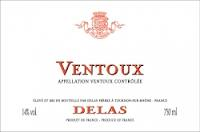
Recently I picked up the 2011 Frère Delas Ventoux, looking for a ripe, approachable summer red and I have to say I was not disappointed. The wine is predominantly Grenache, with some Syrah in the blend. The lack of black pepper and structure argues for more Grenache than Syrah, which is fine by me. The wine is NOT for aging and it is simply gulpable…

My tasting notes:

Ripe, jammy nose with bright fresh cherries, violets and dried herb hints. Medium-bodied with moderate acidity and soft, well-integrated tannin – good balance. Juicy palate with fresh, red berry fruit- easy drinking to a fault. Moderate length – smooth. Drinking well – not for aging. Great value!

At an average price of $9.99 per bottle, this is a very strong value.

Cheers!

A Man About Town…

18 Tuesday Jun 2013

Posted by musingsonthevine in Cocktails

≈ 3 Comments

RussellHouseLogo

I recently enjoyed a wonderful dinner at Russell House Tavern – great food, great drinks and even better company!

To begin the festivities, I ordered a signature cocktail from their drink menu – A Man About Town. The cocktail was of particular interest because it contained one of my favorite Amari – Montenegro, which has a soft, almost “toasted” citrus rind hint. The drink was well-crafted and certainly slaked my thirst, for a moment…

Ladies and Gentlemen, I present A Man About Town:

1-1/2 oz. Rye Whiskey (Rittenhouse 100, preferred)

1 oz. Aperol

3/4 oz. Amaro Montenegro

1/2 oz. Dolin Dry Vermouth

1 dash Orange Bitters

Stir with ice and strain into a rocks glass over ice. Garnish with an orange twist.

Enjoy!

“A rose by any other name would smell as sweet…”

25 Saturday May 2013

Posted by musingsonthevine in Wines

≈ 2 Comments

Cabernet Franc is a grape that doesn’t get much respect. I put various Cabernet Franc based wines in tastings from time to time and folks are underwhelmed. The wines usually represent solid producers in good to great vintages, but to no avail, people are not impressed.

In cool climates the grape often produces wines with strong under ripe characteristics: green, stemmy with bell pepper and green olive notes. High acid with a pronounced tartness, the wines take contemplation to see the merits within. In warmer climates the grape ripens more fully, but the wines still lack the jammy lushness of its progeny – Cabernet Sauvignon. Cabernet Franc demands concentration and a willingness to look deeper inside the wine.

“Yeah, thanks, but no thanks. I don’t need to struggle with my wine to find the greatness within. I want something that is obviously and quickly pleasing to my palate. I don’t want to spend 20 minutes contemplating my wine trying to find that elusive image of Christ hidden in the window.” So say most folks.

As you might expect, I feel a tad differently. I will give more time to a wine that demands it, because I believe the rewards are worth it. Now that doesn’t mean that every tough, under ripe, mouth-puckering wine can be redeemed. Sometimes bad wine is just that: bad wine.

However, when a wine with provenance and potential emerges from the mist, I will happily spend the time required to allow the wine to seduce me. Such is the case with many of the wines from Lamé Delisle Boucard, a 5th generation, family run winery in Bourgueil, France. Bourgueil is an Appellation d’Origine Contrôlée (AOC) for wine in the Loire Valley, and produces primarily red wine from Cabernet Franc grapes. Lamé Delisle Boucard was founded in 1869 by Pierre Guyot. Pierre’s son Jules Lamé took advantage of the lessons learned during the phylloxera epidemic, planting some of the first fully-grafted vineyards in France. Through numerous wars and other hardships, the winery passed through the hands of successive generations, each one adding vineyard land and a reputation for quality wines. Today the great great grandchildren of the original founder manage and run the operation, infusing their wines with the passion of five generations of French vignerons. The winery is relatively small, with approximately 100 acres of vineyard parcels peppered within the commune of Bourgueil. The vineyards are each on choice parcels with a good variation of the region’s unique soil types. The soils are a mix of clay, silica and limestone, which is evident on the palate. The average age of the vines is 35 years, which contributes to the immense complexity of the wines.

lamedelisleboucard

I have been following Lamé Delisle Boucard since I stumbled across their magnificent 2005 Cuvée Prestige, a tremendously brooding Cabernet Franc that has fantastic aging potential and layer upon layer of complexity. I recently picked up two more wines – the 2009 Cuvée Prestige and the 2011 Cuvée Lucien Lamé. Both wines have great potential and demand time and concentration, which will be rewarded handsomely.

My tasting notes:

2009 Lamé Delisle Boucard Cuvée Prestige Bourgueil AOC $12.99

Ripe, cherry nose with floral and mineral hints. Medium-bodied with moderate acidity and firm, dry tannin – good balance. Sour cherry on the palate with mint, fresh herb and chalk notes. Moderate length with a dark and brooding finish. Smooth. Drinking well and will improve with another 3 to 5 years in bottle and quite possibly beyond. Great value.

2011 Lamé Delisle Boucard Cuvée Lucien Lamé Bourgueil AOC $11.99

Ripe, jammy nose with bright fresh cherries, wild flowers and fresh mint hints. Medium-bodied with moderate acidity and firm tannin – well balanced. Tart, sour cherry palate, structured with red currant, bramble and wet stone notes. Moderate length – smooth. Not as complex as the Cuvée Prestige, but very pretty. Drinking well and will improve for another 2 to 3 years in the bottle. Great value.

Both wines are great values, with enough structure to age for several years, further rewarding the person with patience.

By the way, I had their 2010 Rosé last year – in a word – stunning!

Cheers!

June 2013 Wine Tasting Event… Summer Sippers

24 Friday May 2013

Posted by musingsonthevine in Wine Events

≈ Leave a comment

AskPaul

Seats are still available!

June 15 – Summer Sippers @ 3:00pm

Cost: $50 per person

Location: Wrentham, Massachusetts

Summer is a time for easy drinking, high-value wines that require very little thought or demand even less contemplation. The wines of summer should be light and refreshing, pairing well with the usually light repasts or foods from the grill. At this event we will examine several wines, white, rose and red that are light, refreshing and represent good value along with a selection of artisanal cheeses and breads.

Cheers!

← Older posts
Newer posts →

Subscribe

  • Entries (RSS)
  • Comments (RSS)

Archives

  • June 2020
  • May 2020
  • April 2020
  • March 2020
  • February 2020
  • January 2020
  • December 2019
  • August 2019
  • February 2019
  • December 2018
  • November 2018
  • October 2018
  • September 2018
  • August 2018
  • July 2018
  • June 2018
  • May 2018
  • April 2018
  • March 2018
  • February 2018
  • January 2018
  • November 2017
  • August 2017
  • July 2017
  • June 2017
  • April 2017
  • March 2017
  • February 2017
  • January 2017
  • December 2015
  • October 2015
  • August 2015
  • July 2015
  • June 2015
  • December 2014
  • November 2014
  • August 2014
  • July 2014
  • June 2014
  • May 2014
  • April 2014
  • March 2014
  • February 2014
  • January 2014
  • December 2013
  • November 2013
  • October 2013
  • September 2013
  • August 2013
  • July 2013
  • June 2013
  • May 2013
  • April 2013
  • March 2013
  • February 2013
  • January 2013
  • December 2012
  • September 2012
  • August 2012
  • July 2012
  • June 2012
  • May 2012
  • April 2012
  • March 2012
  • February 2012
  • January 2012
  • December 2011
  • November 2011
  • October 2011

Categories

  • Cocktails
  • General
  • Restaurants
  • Spirits
  • Uncategorized
  • Wine Events
  • Wines

Meta

  • Create account
  • Log in

Blog at WordPress.com.

  • Subscribe Subscribed
    • blog.musingsonthevine.com
    • Join 36 other subscribers
    • Already have a WordPress.com account? Log in now.
    • blog.musingsonthevine.com
    • Subscribe Subscribed
    • Sign up
    • Log in
    • Report this content
    • View site in Reader
    • Manage subscriptions
    • Collapse this bar
 

Loading Comments...