The Negroni

After the heat of last week (and today…), I am drawn to a perennial favorite, The Negroni. Rumored to have been invented in 1919 in Florence, Italy by Count Camillo Negroni, the cocktail is making a comeback after several years on the shelf. Almost trendy, the Negroni is a near perfect aperitif, with Campari to stimulate the taste buds. What else could start Saturday night?

The Negroni

1oz. London Dry (of Old Tom) Gin

1oz. Sweet Vermouth

1oz. Campari

Shake with crushed ice and strain in to a chilled cocktail glass. Serve with an orange twist. Some may choose to serve it on the rocks… I do not…

(Originally posted on Facebook: July 23, 2011)

The Vesper

Product placement… an incredibly powerful component of Hollywood films that has, in many cases, permanently cemented certain products into our very psyche. Take for example the Martini, a cocktail that was bastardized, yet immortalized by perhaps filmdoms greatest icon, James Bond. In countless movies, we are led to believe that Mr Bond’s cocktail of choice is the Vodka Martini, shaken, not stirred. Legions of young men, striving for the embodied cool of James Bond struck out in search of what they thought was the perfect Martini. It’s criminal how wrong they could be… In fact, Mr Bond’s cocktail of choice, which was referenced in the first novel by Ian Flemming, Casino Royale was The Vesper. Not quite a Martini, but instead a cocktail of incredible balance – refreshing, yet with a polished elegance that speaks to the deep mahogany of a private club bar, laden with the rich aroma of fine leather and Cuban tobacco. Heading into a weekend fraught with panic (ala Hurrican Irene), The Vesper is a pefect stress reliever…

The Vesper

3oz. London Dry Gin

1oz. Vodka

1oz. Lillet Blanc

Shake with crushed ice and strain into a chilled cocktail glass, garnish with a twist of lemon.

(Originally posted on Facebook: August 25, 2011)

Barbaresco

Piedmont, or Piemonte in Italian is a one of the top three wine producing regions in Italy. Top three, including Tuscany and the Veneto…

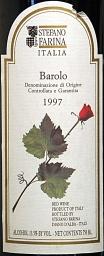
This evening I dipped into the cellar and pulled a 1997 Stefano Farina Barbaresco to have with dinner. The wine was magnificent, showing all kinds of complexity on the nose and a dollop of leather and dried cherry on the palate. A few observations…

1. Stefano Farina is a cooperative of growers, which underscores the point that in a great vintage, everyone has a chance at making great wine…

2. Older wine is a treasure worth savoring and current trends towards making wines that are “ready to drink” now should be reversed…

3. Nebbiolo is perhaps one of the most under-rated grapes on the planet.. After nearly fifteen years this wine was tight, with a teasing expression of the true complexity underneath… Who says Italians are always the loudest in the crowd?

(Originally posted on Facebook: September 3, 2011)

The Manhattan

Ah… Friday evening after one heck of a week (again)… A friend asked for a remembrance of one of the six classic cocktails (at least according to cocktail bon vivant David A. Embury), so here goes…

The Manhattan is a classic cocktail in that it conforms to a basic cocktail formula – base ingredient (spirit); modifying agent (vermouth); special flavoring (bitters). There are nearly an infinite number of variations including the use of different base spirits, different modifiers and different bitters, not to mention the fact that the rations between these ingredients can be shifted to change the overall character of the final cocktail.

Let’s start with the basic Manhattan:

2 oz. Bourbon

1 oz. Sweet Vermouth

3 dashes of Angostura Bitters

Stir in a cocktail mixing glass with ice cubes for 30 seconds, strain into a chilled cocktail glass and garnish with a twist.

The traditional Manhattan, or most likely the first incarnation would use Rye whiskey instead of Bourbon – using Rye calls for a slightly higher percentage of Sweet Vermouth if you want to take the edge off the often sour flavor of the Rye.

The Rob Roy is a variation made with Scotch whisky instead of American Whiskey.

The Dry Manhattan is made with dry vermouth instead of sweet vermouth and served with a twist. Dry Manhattans were thought to be popularized by Frank Sinatra and the Rat Pack, although other sources peg the classic Martini as their drink of choice.

The Perfect Manhattan is made with equal parts sweet and dry vermouth. The definition of a Perfect cocktail is any drink that uses an equal share of dry and sweet vermouth when one or the other is called for in the mix.

The Brandy Manhattan is made with brandy as the base spirit.

The Ruby Manhattan is made with port instead of vermouth as the modifying agent.

The Metropolitan is similar to a brandy Manhattan, but with a 3-to-1 ratio of cognac or brandy to vermouth instead of the basic 2-to-1 mix.

The Cuban Manhattan is a Perfect Manhattan with dark rum as its base spirit.

The Latin Manhattan is made with equal parts of white rum, sweet and dry vermouth, and a splash of Maraschino cherry juice, served up with a twist.

The Royal Manhattan is made with Crown Royal Canadian Whisky as the base spirit. Make sure to use the 2-to-1 ratio, otherwise the drink is off balance and too sweet.

The Tijuana Manhattan is made with an Anejo Tequila as the base spirit.

The Monte Carlo is made with Bénédictine instead of vermouth.

The Soul Manhattan is made with Absinthe instead of vermouth.

The Fourth Regiment is a classic (ca. 1889) cocktail that uses a 1/1 ratio of whiskey and vermouth, and uses three dashes of three different bitters – orange bitters, celery bitters, and Peychaud’s Bitters.

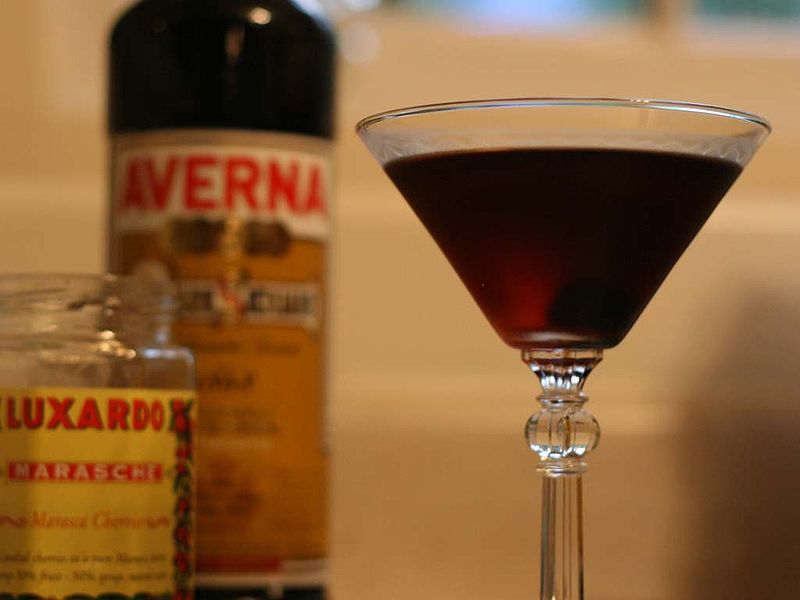
The Black Manhattan is a classic Manhattan that uses Averna in place of the sweet vermouth, giving it a richer, more complex flavor. Fans of Italian amari will love this cocktail.

Dave Embury’s Classic Manhattan is defined as follows:

5 parts American whiskey

1 part Italian (sweet) vermouth

1 dash of Angostura bitters

Stir with ice, strain into a cocktail glass and serve garnished with a maraschino cherry.

The Improved Manhattan adds two or three dashes of Absinthe to any of the above recipes.

Whew… Now I’m really thirsty…

(Originally posted on Facebook: September 9, 2011)

The Blackthorn Cocktail

If April is the cruelest month, according to Eliot, what are September and October? Shoulder season… With the end of summer, comes the inevitable slide into another New England winter, but I’m not giving in to darker spirits quite yet. However, the crisp daiquiris, gimlets and sidecars need a bit more weight… Welcome the Blackthorn Cocktail.

According to Ted Haigh (Vintage Spirits and Forgotten Cocktails), the Blackthorn Cocktail is a very old cocktail, stretching back into the nineteenth century. The Blackthorn is the name of the shrub from which the sloe berry originates. The sloe berry is a plum-like fruit that goes into making the various sickly-sweet sloe gin cocktails. Fortunately Haigh’s recipe, a version popular near the turn of the century (1900) does not employ sloe gin and yet the cocktail does preserve a plumy flavor.

Perfect for shoulder season, the cocktail is light enough to refresh the palate, with just enough weight and complexity to provide a nice back drop to the just-turning leaves outside.

The Blackthorn Cocktail

2oz. Gin (Old Tom preferred)

3/4oz. Dubbonet Rouge

3/4oz. Kirschwasser

Stir in a mixing glass with ice and strain into a cocktail glass. Garnish with a cocktail cherry and a lemon twist.

(Originally posted on Facebook: October 1, 2011)

Welcome to the Musings on the Vine blog!

After eight years hosting content at Musingsonthevine.com, it seemed like a good idea to get into blogging. The Musings site will continue to exist as a resource, with our database and archives of content remaining intact, but our blog here at WordPress will be a more real time delivery mechanism for hot wines, killer cocktails and just about anything else that may strike my fancy.

Sit back, pour yourself something tasty and enjoy the ride!

Paul