Gracie’s Providence – Star Chef Series – July 11, 2012

The STAR CHEF DINNER SERIES comes back to Gracie’s in July – Don’t miss what promises to be a remarkable event!

Wednesday, July 11th, 2012

Chef Maria Sinskey

6pm reception

7pm Chef’s tasting

$100.00 per guest plus tax and gratuity

Reservations required (graciesprovidence.com)

Complementary valet parking

Gracie’s welcomes the Sinskey family back to Providence! The award-winning husband and wife team return as part of our Star Chef Series for what is sure to be a memorable evening in July. Chef Maria Helm Sinskey will be collaborating with Gracie’s Chef Matthew Varga in a very seasonally-inspired menu showcasing some of the freshest local ingredients around.

The Savory Grape will be on hand teaming up with Robert Sinskey, vitner, of the family winery, as he talks to guests about the great wines made from vineyards of theirs in the Carneros and Stags Leap District of Napa, and Sonoma Valleys.

Cheers!


June 2012 Wine Tasting Event

We are pleased to continue our 2012 wine tasting season with a fun and exciting events in June…

June 16, 2012 – Summer Sippers @ 3:00pm

Cost: $50 per person

Location: Wrentham, Massachusetts

Summer is a time for easy drinking, high-value wines that require very little thought or demand even less contemplation. The wines of summer should be light and refreshing, pairing well with the usually light repasts or foods from the grill. At this event we will examine several wines, both white and red that are light, refreshing and represent good value.

Cheers!

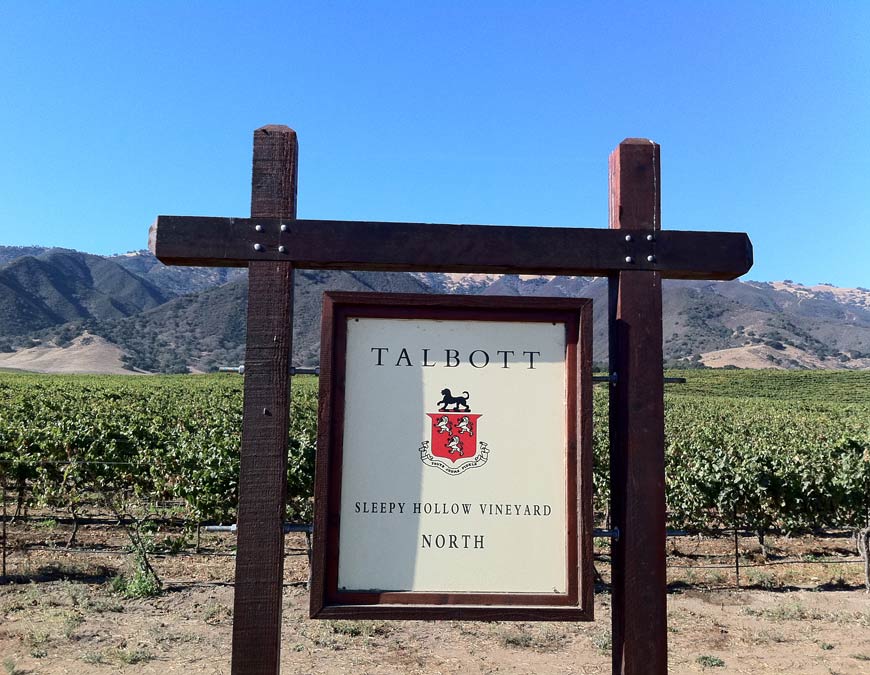
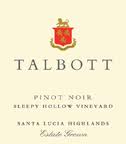
2009 Talbott Sleepy Hollow Vineyard Pinot Noir, Santa Lucia Highland, California

I’m picky about my Pinot Noir and folks who know me, know that I gravitate towards red Burgundy… That said, I do have a soft spot for Pinot Noir coming out of the Central Coast of California, especially those that strike a balance between the effusive fruitiness of West Coast Pinot Noir and the earthy, elegance of the Cote d’Or.

Talbott is one such producer. Started in 1982 by Robb Talbott, with a singular vision that, as stated on his web site… “It all began with my first taste of a great Burgundy. That experience profoundly shaped my palate, and as I grew older I knew that I wanted to create unique and exceptional Chardonnays and Pinot Noirs. Wines that took their inspiration from the traditions of Burgundy, but had their roots in California’s soils.”

Talbott established two important vineyards in Monterrey County: Diamond T Estate and Sleepy Hollow Vineyard. According to the web site, Sleepy Hollow Vineyard is “located in the stunning Santa Lucia Highlands, 13 miles south of Monterey Bay, this 565-acre hillside vineyard is divided into three separate vineyard parcels, Sleepy Hollow West, Sleepy Hollow South and Sleepy Hollow North. Both the West and South parcels are planted on Arroyo Seco gravelly loam soil, which allows excellent root penetration, enabling the vines to pick up subsoil minerals that increase flavor complexity. These sparse, well-drained soils also reduce yields, creating rich, concentrated flavors in the grapes. The vineyard’s predominately east-northeast exposure, combined with its proximity to the Pacific Ocean, contributes to a cool growing site with moderate vineyard temperatures. This results in a long growing season, giving the grapes the luxury of more hangtime to develop greater varietal character. Grapes from Sleepy Hollow West and South predominantly contribute to the Talbott Sleepy Hollow, Cuvée Carlotta and Logan Chardonnays, and the Talbott, Cuvée Sarah Case and Logan Pinot Noirs.”

“The Sleepy Hollow North block of Talbott’s Sleepy Hollow Vineyard in the Santa Lucia Highlands is home to the Talbott winery. This special 115-acre, contiguous vineyard block has predominantly Chualar gravelly loam soil that contains a large percentage of sand, gravel and granite-based rock. The unique composition of this well-drained soil allows for excellent root penetration. As with Sleepy Hollow Vineyard’s older blocks, growing conditions at Sleepy Hollow North result in low yields and excellent concentration of flavor components in the fruit. Relatively close proximity to the Pacific Ocean moderates temperatures, resulting in a long, mild growing season. The block’s mainly northeast exposure also contributes to cooler temperatures. Sleepy Hollow North is planted with newer clones of both Chardonnay and Pinot Noir. In 1989 and 1990, new Wente clones were planted on shy-bearing rootstock. The vines are on vertical trellising and receive minimal irrigation. In recent years, several acres of Pinot Noir vines were also planted on select rootstocks to elite Pommard and Dijon clones. Like Diamond T, Sleepy Hollow Vineyard is cultivated with a focus on environmentally conscious, sustainable farming practices.”

I had the 2009 Talbott at dinner recently and was quite impressed with its character and focus. So much so, that we picked up a case at a net price of $24.00 per bottle – quite the value, in my opinion.

My tasting note:

Ripe nose with vibrant red berry aromas and pretty floral hints. Medium-to-full-bodied with moderate acidity and supple tannin – well balanced. Fruity, elegant palate. Jammy with tar and roasted game notes. Long finish – smooth with lovely resolve. Drinking well now and should hold for another 3 to 5 years. Very Nice!

Cheers!

2012 WineMaker Magazine International Amateur Wine Contest

For the past several years, I have been asked to judge at the World’s largest amateur wine contest, sponsored by WineMaker Magazine (http://winemakermag.com/competition). The judging is held at the Equinox Resort and Spa in Manchester Center, VT (http://www.eqhttps://www.marriott.com/hotels/travel/rutlc-the-equinox-a-luxury-collection-golf-resort-and-spa-vermont/uinoxresort.com/), perhaps one of the most tranquil places on Earth and is a grueling three day affair. For the last few years, my wife has joined me in the judging, making this a “Team Musings” event…

The contest is quite popular with wines entered from all 50 states in the US, as well as 8 Canadian provinces and 8 other countries from around the globe. In all, 2012 boasted over 4,300 entrants in 50 categories. Our performance this year was excellent, with Team Musings turning in an impressive 681 wines judged in a little over 19 hours – that’s an average of one wine every 3 minutes – a brisk pace to say the least.

In general the wines were good-to-pleasant with a few outstanding and few really poor entries. The majority of wines are red vinifera blends and single varietals, many from kits, but many from cultivated grapes. The most unusual offerings this year were the Piña Colada wine and a wine made from the Southeast Asian Durian fruit. The Piña Colada wine tasted, as you might imagine, like pineapple and coconut. The wine was well made and because wine judging does not involve personal bias, scored well. The Durian wine, on the other hand was an unmitigated disaster. Durian is native to Brunei, Malaysia and Indonesia and is also known as the “King of Fruits.” Durian has a very particular odor, a unique taste and is covered by a hard husk. Having a disagreeable smell, compared to skunk spray or sewage, the fruit is forbidden in hotels and public transportation in Southeast Asia. Making a wine from this fruit begs the question of why? The nose was foul, and while the palate was acceptable, the persistent skunk smell made it impossible to drink. Brings to mind an old adage… Just because you can make wine out of something, doesn’t mean you should.

Overall, the experience is wonderful and our role as judges is to offer critical assessment to the entrants. While we are primarily sifting through the wines to find medalists, we are also responsible for offering encouragement to those hardy souls who took the time to make, package and ship, from often far-flung corners around the globe their creations. We take this role very seriously, for it is the enthusiasm and passion of the home winemaker and brewer that fuels a growing movement – a movement that has been a part of the US since its very beginnings in the early 17th century. I will make the same statement that I have made after each of these contests – home wine making is a ton of fun and doesn’t take much to turn out a drinkable bottle of wine. I encourage everyone to give it a try – there is nothing like popping the cork on your own bottle of wine and pouring it for friends to enjoy!

Cheers!

2009 Domaine Font Sarade Ventoux, France

The Ventoux AOC, previously known as the Côtes du Ventoux, is in the southeastern part of the Rhone Valley, on the slopes of mount Ventoux at the foot of the Vaucluse Mountains. The climate is Mediterranean with plenty of sunshine to ensure adequate ripeness of the grapes. The region has a long history of wine making, stretching back to the time of Roman occupation, around 30 AD. There are more than 1,300 vineyards in the region, producing a wide variety of grapes. The wines produced are fairly high-value, meant for early consumption.

The Ventoux from Domaine Font Sarade is a blend of 60% Syrah and 40% Grenache, grown on approximately 12 acres of vineyard owned by the winery. The estate also produces Vacqueryas and Côtes du Rhone wines, for which they are fairly well known. Their Ventoux is a charming wine, perfect for summer fare. At an average bottle price of $14.99 per bottle pre-discount this is a good value.

My tasting note:

Fleshy, fruity nose with black cherry, anise and dried herb hints. Medium-bodied with moderate acidity and supple tannin – good balance. Lush, dark fruit palate with tarry, rustic notes. Smooth. Moderate length – quaffable. Drinking well now – not for aging. Good value.

Cheers!

2009 Vincent Pouilly-Fuissé Marie Antoinette, France

Twenty-nine years ago, Pouilly-Fuissé was all the rage. I remember going to the then “hot spots” in Boston’s fine dining scene and being literally awash in the wine. The sad part of the memory is that Pouilly-Fuissé just wasn’t that good. It was a pretender to the throne of those rarified white Burgundies from the Cote d’Or, and the American fine wine palate was anything but fully evolved, so we really didn’t know any better.

Fortunately, times and trends change and serious producers perfect their craft, like J.J. Vincent. I know many of Vincent’s other wines and I am quite the fan, but I had not heard of the Marie Antoinette. From the Fredrick Wildman web site:

The J.J. Vincent Pouilly-Fuissé Cuvèe Marie Antoinette is a tribute to Jean Jacques Vincent’s mother; Marie Antoinette Vincent. The wine is sourced from several parcels including young vines from the Chateau Fuissé vineyards of Le Clos, Les Brules and Le Combettes as well as several non-domaine yet family owned parcels throughout the appellation.

Impressive pedigree and it shows – the wine is bright and expressive, with solid Burgundian terrior. A charming alternative to domestic Chardonnay, at an average retail price of $19.99 per bottle, the wine is quite a nice value.

My tasting note:

Lively nose with apple, vanilla and dried hay hints. Medium-bodied with moderate acidity – good balance. Lush palate with citrus, apricot and a judicious dash of oak. Moderate length – smooth with persistent vanilla on the aftertaste. Drinking now – not for aging.

Cheers!

2009 Badia a Coltibuono RS Chianti Classico, Italy

Thirty years ago producers in Chianti began a concerted effort to greatly improve the quality of their wines. The movement was anything but easy, largely due to “misguided” traditions that involved over cropping grapes to boost production and antiquated wine making techniques that did not promote quality. It is an ironic coincidence that the Italian word for the infamous straw-covered bottle is fiasco. Apropos, indeed.

The good news is that all the hard work is paying dividends and Chianti has rebuilt its reputation as a fine wine region.

Arguably, a lot of the hard work has been a combination of long-standing Chianti producers recognizing that change was necessary to survive and young, upstart Chianti producers bringing new insights and techniques into the mix. One long-standing producer that is at the forefront of the quality movement is Badia a Coltibuono, or The Abbey of the Good Harvest in Italian. Badia a Coltibuono dates back well over a thousand years:

Badia a Coltibuono is about one thousand years old but its prehistory takes us back to Estrucan times and beyond. As we know it today, Badia a Coltibuono (which means Abbey of the Good Harvest), dates from the middle of the eleventh century. In 1051 the monks of the Vallombrosan Order, a Tuscan reform of the Benedictines, founded the Abbey and also began planting the first vineyards in the Upper Chianti area. Over the centuries they extended their vast land holdings to include many thousands of acres and developed a flourishing wine production and commerce.

In 1810, when Tuscany was under Napoleonic rule, the monks were forced to leave Coltibuono and the monastery was secularized.

The estate was first sold by lottery and then in 1846, Coltibuono was bought by Guido Giuntini, a Florentine banker and great grandfather of Piero Stucchi-Prinetti, the present owner. Under the guidance of Piero Stucchi Prinetti, the estate grew and built a solid reputation in Italy and abroad through the high quality of its products.

Nowadays, his children Roberto, Emanuela and Paolo continue the activities embarked upon by their ancestors.

Badia a Coltibuono Web Site (www.coltibuono.com)

I have been a great fan of Badia a Coltibuono wines for a very long time, with the recent vintages of most of their different Chianti bottling showing stellar quality. One of particular note is the 2009 Chianti Classico Selezione RS, a high-value Chianti Classico that embodies the region with its bright red fruits and balanced acidity. At an average retail price of $14.99 per bottle, the wine is quite a nice value.

My tasting note:

Rustic, earthy nose with dried cherry, saddle leather and cedar hints. Medium-bodied with moderate acidity and moderate tannin – good balance. Sour cherry and red berry notes – persistent leather and cedar on the palate. Moderate length – smooth with a touch of floral on the aftertaste – violets and lavender. Drinking well now and should continue to improve for another 2 t 3 years in the bottle. Classic Chianti Classico and a very good value from a solid producer.

Cheers!

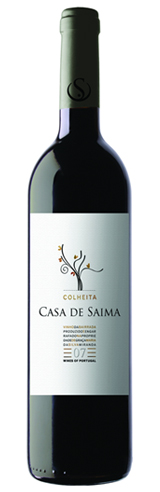
2009 Casa de Saima Colheita Tinto, Regional Beiras, Portugal

For most folks, Portugal is the home of one of the World’s most famous fortified dessert wines: Port.

But Portugal is home to hundreds of indigenous grape varieties that most wine drinkers have never heard of, most of which make really tasty wine, sweet and dry. How does Baga strike you? Don’t know it? Well you should…

Baga is a red grape grown primarily in the DOC zone of Bairrada along the Atlantic coast in the larger region of Beiras. The Atlantic Ocean serves to moderate the climate, which is ideal for grape cultivation. Baga tends to produce tannic, complex wines with fairly high acidity, not unlike traditional Barbera from Piedmont in Italy.

Casa de Saima, managed by Granca Miranda, maintains the fundamentalist tradition of treading by foot, fermenting in lagares, and aging the wine in 100 year old large casks, before an unfiltered bottling. The result is an approachable wine that has unmistakable, classic character. At an average bottle price of $9.99 per bottle pre-discount this is a significantly undervalued wine.

My tasting note:

Lush nose with black cherry, tar and floral hints. Medium-to-full-bodied with moderate acidity and firm, dry tannin – good balance. Nice core of dark fruit with plum, tobacco and vanilla notes. Moderate length – smooth – drinking well now and should improve with another 2 to 3 years in bottle. Great value!

Cheers!

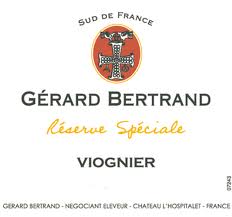
2010 Gerard Bertrand Réserve Spéciale Viognier, VDP d’Oc, France

I have been tasting and learning about wine for nearly 28 years – more than half my life… That’s a lot of time spent swirling, sniffing and sometimes, spitting and the one thing that has remained constant is change…

Case in point, the aforementioned wine is your garden variety Vin de Pays d’ Oc wine from France, a “country wine” from the most productive regional zone, the “Oc,” which covers most of southern France and is responsible for approximately 85% of VDP production. The VDP classification is a tier in the French Wine Quality hierarchy known as the AOC, or Appellation d’Origine Controlee and is just above Vin de Table and below AOC (technically just under a very rare VDQS tier). The classification was officially recognized in 1973 and has seen subsequent modifications in 1979, 2000 and 2009. The goal of the VDP class is to make it easier for global consumers to be able to understand French wine labels, which in theory increases the probability that your average wine consumer will buy the wine. For winemakers VDP means that the often very strict rules that are a part of the top tier classification of AOC are significantly eased, making it less costly to produce and market the wine. It’s all good, as far as I’m concerned, because most of the time, VDP wines are high-value, quaffable little numbers that have distinctive character with sub-$12 price tags.

As I was copying the information from the wine label for this review, lo and behold, I saw a new statement on the label: Indication Géographique Protegee, or IGP. Being the curious sort and a wine educator I began to dig and I found that in fact the change in VDP laws in 2009 included the new labeling, which corresponded to the registration of all VDP titles with the EU under their Protected Geographic Indication (PGI) designation. While meant to “replace” the Vin de Pays title on a wine label, the changes stipulate that wine makers can opt to use either or both designations on the label. So, just when you thought that European wine labeling was taking a turn towards clarity, guess again…

Remember what I said about the one constant in wine tasting over the last 28 years? Change.

At the end of the day, though, what matters is what is in the bottle and I can safely say that Gerard Bertrand has hit a solid home run with this lovely little Viognier and at an average retail price of $9.99 per bottle pre-discount, you can bet that this wine will find a comfortable spot in my Summer rotation. The screw cap closure means that I can hold it a while as well. Such a deal, no matter what the label says…

My tasting note:

Lively, floral nose with tropical fruit and honey hints – very pretty. Light-bodied with moderate acidity – clean – good balance. Soft palate, lightly fruity with papaya, honey and pear notes. Short, clean finish with a refreshing aftertaste. Drinking well now – not for aging. Superb value!

Cheers!

2009 Castello di Salle Sallis Castrum Montepulciano d’Abruzzo, Italy

Montepulciano d’Abruzzo is an Italian DOC located in the east central part of Italy, sandwiched between the regions of Lazio, Marche and the Adriatic Sea. With more than half of the region considered mountainous terrain, the hillside vineyards in Abruzzo benefit from a warm, sunny climate, which is moderated by cooling breezes from the sea. The results are ripe, mature grapes that produce an easy-drinking, food friendly red wine. The wine is made from the Montepulciano grape, with very small quantities of Sangiovese allowed in the blend (less than 15%). The wine is typically dark colored with a spicy, almost peppery note and is generally not meant for aging.

Castello di Salle is a well-known quality leader in the region and the Sallis Castrum is their less-expensive bottling. At an average retail price of $13.99 per bottle, the wine is quite a nice value, providing a quaffable potation with some very interesting character.

My tasting note:

Earthy, rustic nose with anise, black cherry and briarwood hints. Medium-bodied with moderate acidity and moderate tannin – good balance. Dark fruit core with sour cherry, floral and dried herb notes. Smooth, Moderate length with tar and allspice on the aftertaste. Drinking well and should hold for another 2 to 3 years in the bottle. Good value.

Cheers!