Category Archives: Wines

2011 Grifalco Aglianico del Vulture

02 Monday Jun 2014

Posted by musingsonthevine in Wines

≈ Leave a comment

I tend to root for the underdog… Maybe it was years of growing up with the Red Sox and the pre-Belichick Patriots that firmly ingrained this attitude… I follow a similar track with wine, supporting those lesser-known, underdog regions and grapes. Not too many years ago, Aglianico was certainly one of those grapes and Aglianico del Vulture in Basilicata was clearly a lesser-known region. Fast forward a few years and Aglianico is fast becoming the little darling of Italian wine.

The Aglianico grape is a dark-skinned, small berry grape that is found primarily in the southern hills of Italy. Aglianico is a grape that is native to Greece and was brought to Italy by colonizing Greeks before the time of Roman domination. The grape is late ripening, with harvests extending into October and November. Under the right conditions, Aglianico displays tremendous potential, even rivalling the exalted wines of Nebbiolo and Brunello. Those conditions include being planted in the high altitude vineyards on the slopes of the now dormant volcano, Mount Vulture. The volcanic soils, sunny exposures and strong diurnal patterns all combine to produce fruit that is well balanced with great depth of flavor and complexity. When yields are closely managed, the result is truly amazing wine.

vulture_in_basilicata-Map

When I look for Aglianico, I head straight for Aglianico del Vulture. There are other areas that recognize the power of the grape (Taurasi in Campania, for example), but the grape possesses magical qualities when grown on volcanic slopes. Aglianico del Vulture achieved DOC status in 1971 and in 2011 was finally awarded the coveted DOCG honor. It is the only DOCG in Basilicata, its larger parent region.

Grifalco is a producer of Aglianico del Vulture that is owned by a former Tuscan wine family, the Piccins. The Piccins decided that Basilicata has better potential for fine wine than Tuscany… That is saying a lot…

Grifalco

They produce three wines from the region: “Gricos,” “Grifalco,” and “Damaschito.” The Gricos is a 100% Aglianico produced from four different vineyards with an average vine age of 15 years. The wine is purposefully made to be more forward and drinkable younger. Production is limited to 2500 cases.  The Damaschito is a single vineyard bottling where the average vine age is 40 years old. Extended maceration and long term aging in Slavonian oak makes for an age-worthy, impressively flavored wine. Production is again limited to 2500 cases.

The Grifalco is considered their mid-tier wine with grapes sourced from four different vineyards with an average vine age of 30 years. Extended maceration and aging in a combination of stainless steel and medium-size oak barrels translates to a wine with good depth of flavor with moderate aging potential. Production is limited to 2500 cases.

I have not seen the Gricos or Damaschito around the Boston area, but the Grifalco is available and is a stunning example of Aglianico del Vulture, especially at an average bottle price of $15.99 pre-discount. With enough aging potential to warrant buying a case…

My tasting note:

Dark, intense nose with black cherry, cedar, mineral and spice hints. Medium-to-full-bodied with moderate acidity and firm, dry tannin. Well balanced. Black cherry and blackberry palate with vanilla, black pepper and eucalyptus notes. Very seductive. Long, smooth finish with layers of complexity evolving. Awesome example of Aglianico grown on volcanic soils. Drinking well and should improve with 3 to 5 years in bottle. Good value.

Cheers!

2012 Moulin de Gassac Guilhem, Pays d’Herault IGP

30 Friday May 2014

Posted by musingsonthevine in Wines

≈ Leave a comment

The back label of this wine calls it “the essence of Southern France.” Having never been to the Languedoc (yes, it’s on the list…), I can neither confirm, nor deny this assertion. That said, when I taste this wine, the images formed in my mind are of the rugged, stony vineyards of the region, bathed in beautiful sunshine… a la Peter Mayle’s A Year in Provence.

I have been all afire lately about the values one can claim on the Iberian Peninsula… and then, when you least expect it, a stunning little number like this wine shows up, again reinforcing my Euro-centric palate.

The history of viticulture in the Gassac valley claims to be rooted in the time of Charlemagne, around 780 A.D., presumably under the auspices of Saint Benedict of Aniane. Sounds reasonable from what I know of Gallic history. The Mas de Daumas Gassac label was establish in more modern times, around 1970 by Véronique and Aimé Guibert, who were smitten with the ruins of an old farmhouse beside the Herault and Gassac rivers. In the characteristically romantic way, vines were planted, noted winemakers (Professors Enjalbert and Peynaud) visited and advised, and over the course of several decades a string of impressive wines were produced. The Moulin de Gassac label, the second label of Mas de Daumas Gassac, is actually more of a “cooperative-based” wine, culling the grapes from over 7,000 individual parcels grown by over 800 vignerons. The label is a partnership that was designed to save many of the indigenous varietals slated for removal through the failed Brussels Subsidies, which were an attempt at enticing local grape growers to rip out less “glamorous” grapes to replant more “globally accepted” varietals. A noble mission, I must say…

Guilhem-Red-Moulin-de-Gassac

The Guilhem red is a splendid little wine made from 40% Syrah, 25% Grenache, 15% Carignan and 20% Mourvèdre, the “usual suspects” in most of the red wines from this region. Easy drinking, the wine is the perfect weight for summer quaffing with noticeable spice to make it an ideal partner with fare from the grill. At an average retail price of $9.99 per bottle before the discount, you can’t go wrong with putting a case of this in the cellar!

My tasting note:

Ripe, fruity nose with black cherry, allspice and wildflower hints. Medium-bodied with moderate-to-firm acidity and supple tannin – good balance. Youthful with a juicy, lively palate – sour cherry, dried herbs and floral notes. Moderate length with a smooth, simple finish. Some hint of spice and pepper shows on the aftertaste. Drinking, or should I say quaffing, well – not for aging. Although, the wine is closed via Stelvin, so I would expect the wine to remain fresh and lively for a few years to come (the web site says drink within 3 years). Great value.

Cheers!

2012 Salzl Seewinkelhof Zweigelt, Burgenland Austria

26 Wednesday Mar 2014

Posted by musingsonthevine in Wines

≈ Leave a comment

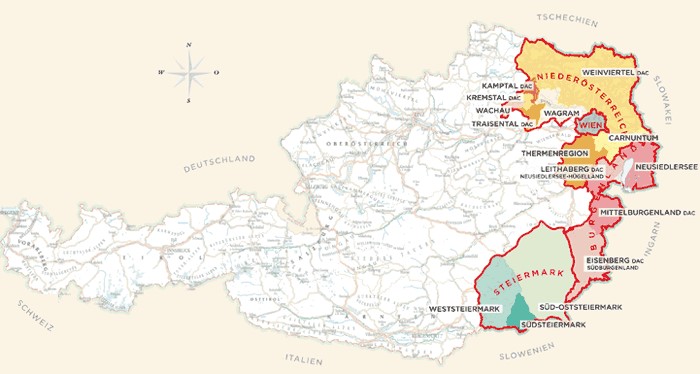
Bear with me folks, before I chat about the Salzl, I thought I would brain dump on Austrian wine history, regions and laws… If you must, then scroll to the bottom for my thoughts on the 2012 Salzl…

Austria – Wine Making History

Like the wines of Germany, the wines of Austria are frequently misunderstood by the general wine drinking populace. The confusion is further compounded by the fact that in 1985 the industry was plunged into turmoil by a national scandal that overnight virtually eliminated Austria’s export wine market. The scandal involved wine brokers adding di-ethylene glycol (antifreeze) to wines to improve body and sweetness. The “silver lining” to this disaster was the establishment of new, stricter rules governing the production, bottling and exportation of Austrian wines.

Archaeological evidence suggests that grape growing was present in Traisental about 4000 years ago. Evidence of more organized grape cultivation for wine production dates to around 700BC, not unlike most of Europe. In fact, bronze wine flagons of the Celtic La Tène culture dating to the 5th century BC have been found at Dürrnberg in Salzburg. Viticulture thrived under the Romans, once Probus (Roman Emperor 276–282) had overturned the ban on growing grapes north of the Alps. Both Grüner Veltliner and Welschriesling appear to have been grown around the Danube since Roman times.

The fall of the Roman Empire hurt viticulture, but the influence of Christianity in Europe post fall saw a reemergence of strengthening viticultural activity. Wine boomed during the early 16th Century, but was sporadically interrupted during the economic turmoil and warfare of the 17th and 18th Centuries. The 19th Century saw the onset of numerous biological factors, culminating in the near total destruction of most European vineyards at the hands of the phylloxera root louse. At first deemed a catastrophe, the infestation actually became helpful by allowing wine makers to replace vineyards of lesser-quality grapes with higher-quality, more desirable varietals.

Following World War I, Austria was the third largest producer of wine in the world. Most of the production was going to Germany as bulk wine for blending purposes. The 20th Century saw the industrialization of Austrian wine, as more focus was placed on producing bulk blending wines for Eastern European consumption. This focus on quantity over quality led to the eventual downfall of the industry, when in 1985 the “antifreeze” scandal broke. The scandal effectively collapsed the export markets for all Austrian wines and forced a complete overhaul of industry standards.

The Austrian Wine Marketing Board was created in 1986 as a response to the scandal, and Austria’s membership of the European Union has prompted further revisions of her wine laws, notably the new DAC system of geographical appellations launched in 2002.

Austria – Wine Regions

  • Niederösterreich:
    • Carnuntum, Donauland, Kamptal, Kremstal, Thermenregion, Traisental, Wachau, & Weinviertel
  • Burgenland:
    • Mittelburgenland, Neusiedlersee, Neusiedlersee-Hügelland, & Sudburgenland
  • Steiermark:
    • Südoststeiermark, Südsteiermark, Westststeiermark
  • Wien

austrianwinemap

Austria – Wine Laws

Three Quality Hierarchies

1) National Classification

  • Tafelwein – Table wine from more than one region in Austria
  • Landwein – Table wine from a single region in Austria
  • Qualitätswein – Fine wine from a single district within a region of Austria

         Kabinett: Light wines; medium-dry; 7-10% alcohol

  • Prädikatswein – Fine wine with additional notes of distinction

         Spatlese: “Late Harvest”; dry-to-sweet; 9-11% alcohol

          Auslese: “Select Picking”; dry-to-medium dry; 9-14% alcohol

          Beerenaulese (BA): “Berries Select Picking”; rich, sweet dessert wine

          Ausbruch: Sweet dessert wine made from grapes affected by noble rot.

          Eiswein: “Ice Wine”; BA-level intensity; frozen grapes

          Trockenbeerenauslese (TBA): “Dry Berries Select Picking”; noble rot; honey-like dessert wines

           Strohwein

2) Wachau Classification (Vinea Wachau Nobilis Districtus) – Three categories, all for dry wines:

  • Steinfeder (‘Stone feather’ – named after a grass, Stipa pinnata, that grows in the vineyards) – Light, quaffable wines
  • Federspiel (named after a falconry device) – Similar to Kabinett wines
  • Smaragd (named after an ’emerald’ lizard that lives in the vineyards) – Some of the best dry whites in Austria.

3) Controlled District of Austria (Districtus Austriae Controllatus) (DAC) – A new geographical appellation system equivalent to the French AOC or the Italian DOC. There are now 6 DACs:

  • Weinviertel DAC – (for Grüner Veltliner)
  • Mittelburgenland DAC – (for Blaufränkisch)
  • Traisental DAC – (for both Riesling and Grüner Veltliner)
  • Kremstal DAC – (for both Riesling and Grüner Veltliner)
  • Kamptal DAC – (for both Riesling and Grüner Veltliner)
  • Leithaberg DAC – (for Grüner Veltliner, Weißburgunder, Chardonnay, Neuburger and Blaufränkisch, beginning September 2010)

Austria – Grape Varieties

Whites: Reds
Gruner Vetliner (36% of all vineyards) Blauer Zweigelt
Müller-Thurgau (Riesling cross) Blaufränkisch
Welschriesling Blauer Portugieser
Weissburgunder (Pinot Blanc) Blauburgunder (Pinot Noir)
Chardonnay Blauer Zweigelt
Grauer Burgunder  

salzl_zweigelt-dac

The Salzl – My interest is always piqued when I see interesting red wines from Austria. This is especially the case when the varieties are out of the ordinary, like this Zweigelt.

Zweigelt is the eponymous creation of one Fritz Zweigelt, who, in 1922 developed the grape at the Federal Institute for Viticulture in Klosterneuburg, Austria. Zweigelt is a red grape that is a cross of St. Laurent and Blaufränkisch. It is the most widely-grown red grape variety in Austria, as well as having some presence in Canada’s vineyards on the Niagara Peninsula. Like most Austrian red grapes, the wines they yield are fruity, lightly tannic with nice crisp acidity.

Salzl is an older Austrian producer (circa 1840) located in the heart of Burgenland on a corner of Lake Neusiedl. The picturesque surroundings provide an ideal climate for grape growing, with red grapes especially benefitting from the moderating lakeside effects. The vineyards are located on an interesting mix of clay, slate and limestone soil, which imparts a strong mineral quality to the wines. Very traditional, but with a fresh, lively character, the Zweigelt is a real pleasant find. At $14.99/per bottle before the discount, the wine is a solid value.

And how many of you can say you’ve had Zweigelt before?

My tasting note:

Red berry nose with lilac and wet stone hints – very pretty. Medium-bodied with moderate acidity and moderate, well-integrated tannin – good balance. Sour cherry palate with red currant, dried herb and dried raspberry notes. Moderate length – crisp and clean with a bright finish. Drinking well now – not for aging. Bottled under Stelvin, so the freshness should be nicely preserved for a few years. Good value.

Cheers!

Beating a Dead Horse

05 Wednesday Mar 2014

Posted by musingsonthevine in Wines

≈ Leave a comment

I am going to apologize for beating a dead horse, but I cannot sit idly by when I come across a marvelous value. Such is the case with these two wines from the Iberian peninsula, aka Spain and Portugal. Both are an outrageous value ($7.99 per bottle price before any discount) and both deliver absolutely gulpable pleasure…

The first wine is from La Mancha in Spain and is a blend of Tempranillo (85%) and Syrah (15%). The 2012 Mundo de Yuntero is a terrific little wine from a medium-sized cooperative in La Mancha. The cooperative was originally founded in 1954 by 102 growers who needed a better way to market and sell their grapes. The vineyards of the cooperative are situated on calcareous soils along the banks of the Guiadana River, which creates a moderate mesoclimate, allowing for optimal growing conditions. Approximately 3,000 acres are under vine, managed today by over 700 members of the cooperative. A large portion of the vines are grown organically. The winery uses state-of-the-art technology, called the Ganymede system to produce their wines. For reds, the technology allows the grapes to be macerated more fully over a shorter period of time. The system also performs the maceration without pumps, thereby decreasing the exposure to oxygen, as well as decreasing the production of unwanted carbon dioxide. Extended maceration promotes better color extraction and preserves aromas. The ability to perform the maceration over a shorter duration limits the amount of tannin extracted. The result is a wine of great color, with ample fruit across the palate and without any astringency from increased tannin. The whole maceration process takes 5 to 6 days, compared to 12 to 14 days when using more traditional methods. Once finished, the young wines undergo malolactic fermentation and then are aged in a mix of oak barrels (French and American) of varying maturity for a short period of time.

mundo-del-yuntero-tempranillo-syrah-2012

2012 Mundo de Yuntero, La Mancha, Spain ($7.99/bottle)

Ripe, fruity nose with black cherry, cedar and peppery hints. Medium-bodied with moderate acidity and moderate, but well-integrated tannin – good balance. Youthful with a fresh, clean palate and blackberry, bramble and dried herbal notes. Gulpable. Moderate length with a smooth finish. Hints of allspice and black pepper show nicely on the aftertaste. Drinking well – and should improve for another 2 to 3 years in bottle. Great value.


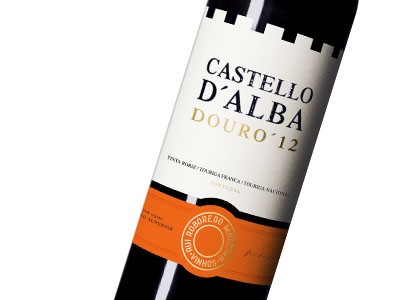
The second wine is from the Douro in Portugal and is a blend of four grapes: Tinta Barroca, Tinta Roriz, Touriga Franca and Touriga Nacional. The 2012 Castello d’Alba is a lovely young wine produced by one of Portugal’s hottest winemakers, Rui Roboredo Madeira. The label was established in 2000, with production in a facility in São João da Pesqueira. The grapes are harvested in the Upper Douro from vineyards planted on prehistoric schist soils. The climate of the Upper Douro is ideal for growing red grapes with dry, moderate weather and excellent diurnal patterns. The wine is aged in stainless steel for 8 months before bottling, emphasizing the expression of the fruit and the soil. Philosophically, Madeira is a purist, wanting to demonstrate the beauty and potential of the fruit from the Upper Douro. Hence the lack of oak in his young wines.

castellodalba

2012 Castello d’Alba, Douro, Portugal ($7.99/bottle)

Ripe, juicy nose with fresh cherry, tar and floral hints. Medium-bodied with moderate acidity and soft, supple tannin – good balance. Dark fruit core with blackberry, cherry and briar notes. Moderate length – smooth and easy drinking with a clean finish. Drinking well now – not for aging. Great value.

(By the way, both wines are available at The Wine & Cheese Cask in Somerville, MA… I advise getting there fast, since the Mundo de Yuntero is a Parker 90 point wine…)

Cheers!

2012 Marcel Lapierre Raisins Gaulois, Vin de France

27 Thursday Feb 2014

Posted by musingsonthevine in Wines

≈ Leave a comment

I recently picked up this fun little wine from my friends at the Wine & Cheese Cask in Somerville, MA… The wine was advertised as “nice, fruity fun, but with enough sappy concentration that it will match with anything.” The advertisement also offered a warning: “One bottle may disappear before dinner is over. It may disappear before dinner is prepared.” As you might expect, such words piqued my interest.

I’m glad to say that there is truth in advertising here… mostly. The wine is certainly fruity and fun and there is enough breadth across the palate to give the wine some legs. The acid level makes the wine a good partner with many cuisines, but the decided absence of tannin may cause the wine to flag in the face of truly prodigious dishes… a hearty, grilled steak for instance might cause this imp of a wine to flinch.

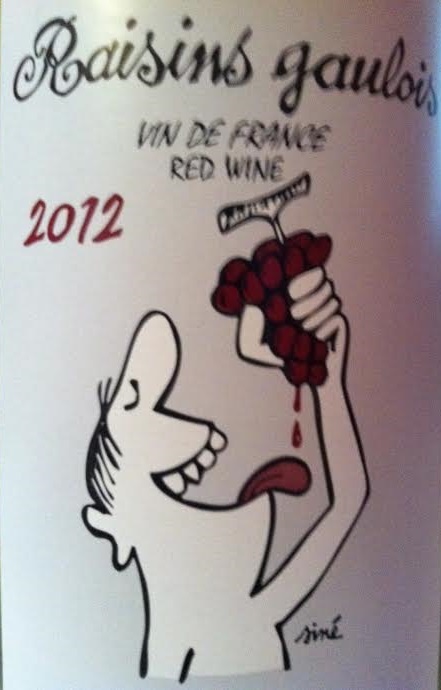
RaisinGaulois

The wine is also my first domestically acquired Vin de France. The story behind the wine goes like this. The producer, Marcel Lapierre owns a lot of property in Beaujolais, mostly in the Cru of Morgon. Actually, Lapierre is something of a celebrity in Morgon, earning a reputation for making some of the finest wines in the appellation. Both of his Morgon wines are from vines that average between 60 and 100 years of age and have dramatically low yields. The subject wine, however, is made from grapes harvested from much younger vines (average age less than 20 years) and the grapes are taken from plots within and without Morgon. Because Beaujolais lacks a Vin de Pays designation, the only thing a wine producer can do when using grapes from across AOC appellations is to designate the wine a Vin de France. Given the provenance of the wine, I’m just fine with the situation.

The wine is 100% Gamay, grown on the classic granitic soils of Beaujolais. While I did not detect much in the way of mineral or stone, the wine does have that unmistakable Gamay nose and palate that suggests ripe, fruity grape juice, just squeezed from the press. Good thing too, because a quote from Marcel on the Kermit Lynch website states emphatically: “Our ideal is to make wine from 100% grape juice.” Somehow I thought that was every winemaker’s ideal, but what do I know… Our price here in MA is around $12.99 per bottle pre-discount – a good value in my book.

My tasting note:

Ripe, fruity nose with sweet cherry and wildflower hints. Medium-bodied with moderate-to-firm acidity and supple tannin – good balance. Youthful with a juicy, lively palate. Extremely quaffable. Moderate length with a smooth, albeit simple finish. Some hint of spice and pepper showed vaguely on the aftertaste. Drinking, or should I say quaffing, well – not for aging. Although, the wine is closed via Stelvin, so I would expect the wine to remain fresh and lively for a few years to come. Good value.

Cheers!

2011 Domaine Le Garrigon Côtes du Rhone

19 Thursday Dec 2013

Posted by musingsonthevine in Wines

≈ Leave a comment

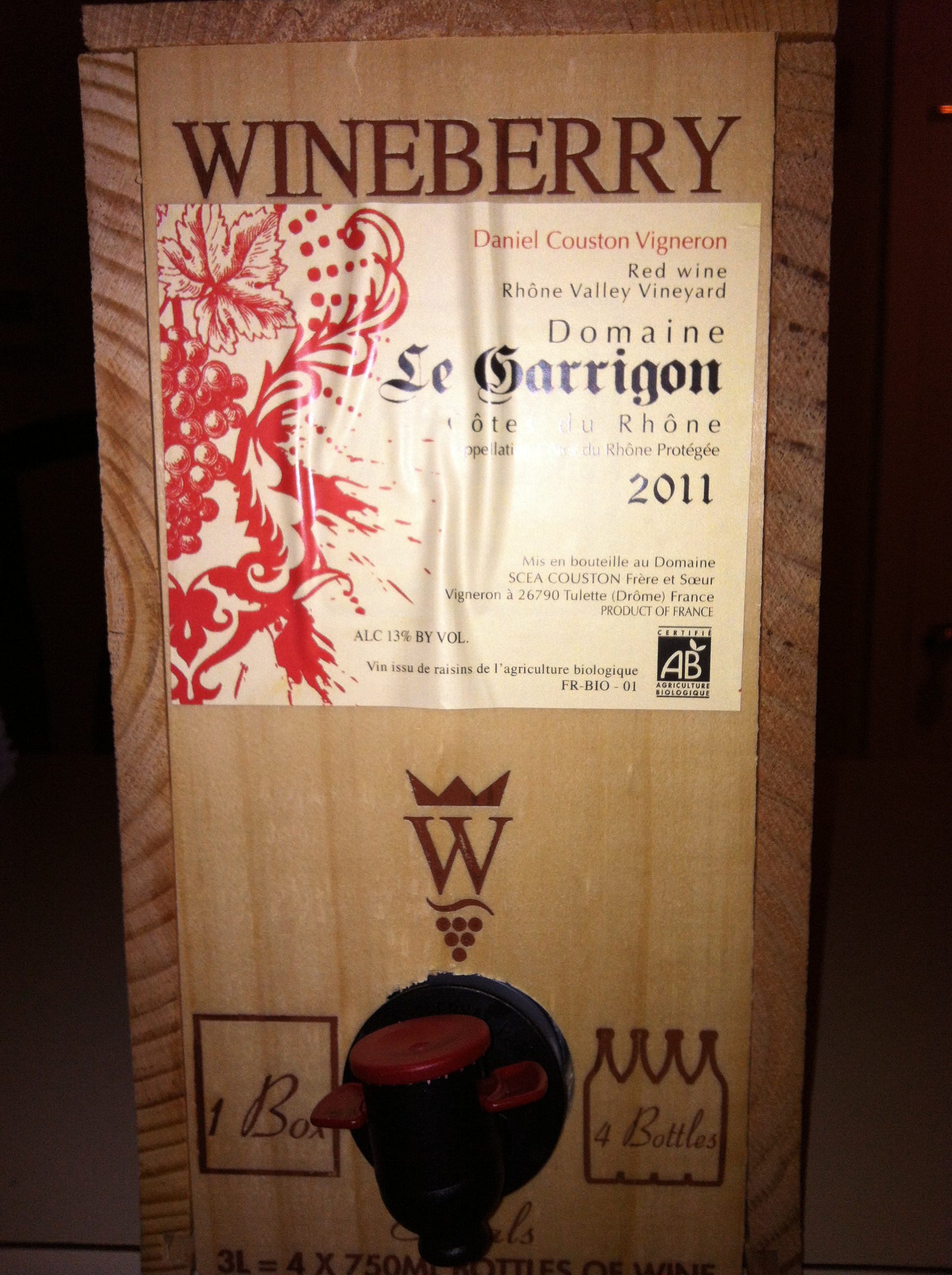
I have consistently said that “box wines” have their place. I have also consistently said that some “box wines” are far better than others. This last statement was never truer with a great little “box wine” I just found – the Domaine Le Garrigon Côtes du Rhone, marketed by Wineberry, which, according to their web site is “a premium importer and wholesaler of fine wines with offices in the United States, France and China.”

Domaine Le Garrigon is an entirely organic wine maker in Tulette, a quaint, ancient town situated at the southernmost part of the Départment of the Drôme. The town of Tulette is delimited to the north and the south by an area known as the “Enclave of the Popes”, which is part of the Départment of the Vaucluse. This is where Grenache, Syrah and Carignan thrive, producing eminently quaffable, sun-drenched wines.

The winery itself was founded in 1919 by the grandfather of current owner, Daniel Couston. Along with his sister, Marie-Francoise, the winery has developed a range of fruity, terrior-driven wines that are classic Rhône valley charmers. The property spreads over approximately 200 acres from Tulette to Visan and sits upon calcareous clay and calcareous silt subsoil, with plenty of the stony, pebbly topsoil that is the hallmark of the Rhône. They produce AOC Côtes du Rhône as well as Côtes du Rhône Villages wines. Since 1997 the winery has been using entirely organic practices throughout the vineyard and production facility. No chemicals, enzymes or other non-natural products are used on the property.

IMG_0532

The first thing that caught my eye was the packaging. The wine is sold in a wooden wine box, evoking the image of a miniaturized wine case box. Within the wooden box is a vacuum-sealed 3 liter bladder with a spigot for dispensing. Like most box wines, as you dispense the wine the bladder deflates behind the remaining wine to limit oxygenation and spoilage. I had the box on our counter for about nine days and the wine was as fresh on day nine as it was on day one.

The wine itself is a blend of 60% Grenache, 10% Syrah, 30% Carignan grapes, grown on vines with between 15 and 45 years of age. The soil is worked mechanically to avoid the use of weed killers and chemicals. Upon maturation, the grapes are harvested quickly and taken through a “traditional” wine making process. The grapes are de-stemmed and crushed and placed in cement tanks for three weeks where the must is pumped over daily. Fermentation is natural using only wild yeasts. When the fermentation is complete and the wine matures, after about 10 months, pneumatic presses move the wine to the wine box bladders. The wines do not see any time in oak, which only enhances the terrior.

At approximately $40 per box before any discount, you are basically buying a $10 CDR in an easy to use dispenser for every day pleasure. Factor in that the wine is an easy-drinking wine with nice Rhône character and I think you have a hit!

My tasting note:

Soft, fruity nose with cherry, red currant and lavender hints. Medium-bodied with moderate acidity and supple tannin – good balance. Cherry fruit palate with violets, tar and dried fruit notes. Moderate length – simple and smooth – highly quaffable. Drinking well now – not for aging. Very good value!

Cheers!

2010 Pierre Amadieu Grande Réserve Côtes du Rhone

04 Wednesday Dec 2013

Posted by musingsonthevine in Wines

≈ Leave a comment

I was quite pleased with the 2009 vintage in the Rhone, and frankly in most of Europe… The wines were universally lush, mouth-filling beauties with smooth, well-integrated tannins. Drink now, or in some cases, lay down for a little while to invoke more subtle flavors and aromas.

The 2010 vintage provides a great example of just how variable factors in grape growing and wine making can change the profile of wines, especially those from Europe. In the Rhone, the wines are denser, darker, more closed with much more structure, almost angular, seemingly edgier. My experience thus far is that with many of the wines, there is enough fruit in the core to allow for considerable aging. This bodes well for folks like me who like to buy several bottles, if not a case to stow away for more timely consumption.

pierre-amadieu-cotes-du-rhone-grande-reserve-rhone-france-10224854

I tasted a range of 2009 Pierre Amadieu wines at a trade tasting and was smitten with the Grande Réserve. The wine was massive with an incredibly rich palate and enough stuffing to allow it to evolve with sometime in the bottle. I was excited about the price point, about $18 per bottle before the discount so I asked one of my favorite wine shops to order me a case. Bad news initially… the 2009 may not be available… Fortunately for me, a case of the 2009 was found and brought in… or so I thought.

In the process of taking the wine from will call, the box broke open and two bottles crashed to the floor, breaking… Upon closer examination, it was revealed that the wine was actually the 2010, despite the box being labeled 2009. Decision time… do I take the 2010 pro-rated for breakage, or, roll the dice and hope that an actual case of 2009 would materialize. I opted for the former – take the 2010 and see how it fairs.

The 2010 vintage is very consistent with the overall vintage profile – more structure, denser mid-palate although closed with edgier acidity. Much better aging potential than the 2009. Overall, while I fell in love with the 2009, the 2010 is an erstwhile companion who will likely age more gracefully and evolve more beautifully with time.

My tasting note:

Earthy nose – minerally with cherry, tobacco and garrigue hints. Medium-bodied with moderate acidity and firm, dry tannin – Good balance. Bright cherry fruit on the palate with tart red berry and dried herb notes. Moderate length with a tight, well-structured finish and cedar and allspice on the aftertaste. Needs time – should improve with another 5 to 7 years in bottle. Good value.

Cheers!

Baron Philippe de Rothschild

14 Thursday Nov 2013

Posted by musingsonthevine in Wines

≈ 2 Comments

Baron Philippe de Rothschild was many things – a member of the Rothschild banking dynasty, a race car driver, playwright, poet and most of all – one of the world’s most famous wine makers. The owner of Mouton Rothschild, the only château to successfully challenge the famous Bordeaux Classification of 1855 and see their ranking move from 2nd growth to 1st growth in 1973, Baron Philippe was tireless in his pursuit of the things he loved. As a winemaker, Baron Philippe was savvy and knew the value of diversification. Like most château, he maintained a number of labels at various price points to ensure that his wines penetrated the market effectively. He also, like others in his family diversified overseas – co-founding Almaviva (with Concha y Toro) in Chile and Opus One (with Robert Mondavi) in Napa Valley. Baron Philippe was truly a renaissance man, a polymath who thankfully devoted much of his considerable wealth, passion and skill to wine making.

The 2011 vintage in Bordeaux is largely being billed as “challenging.” After stunning success in 2009 and 2010, the 2011 vintage is a bit of a correction to the market. Many wine makers were able to navigate the tricky vintage and produce some very nice wine. Because the vintage lacks the hype and universal quality of the two prior vintages, wine drinkers are likely to find some real bargains. One will need to choose wisely, because there will also likely be a fair number of misses as well.

One exercise I complete in almost every vintage is to buy a wine that I call my “bellwether” wine – Mouton Cadet. Mouton Cadet, a member of the Baron Philippe empire of wine, is the avowed value wine of the portfolio and is made in sufficient quantity and at a generally high-enough quality level to provide insight into overall quality of a particular vintage. I have done this every year since the 1985 vintage – 28 years and the Mouton Cadet has been dead on target with overall vintage reports every single year. So what does this mean for 2011 – The Mouton Cadet is showing quite nicely with enough structure to make its presence known, but fruitiness that belies its European origins. It reminded me actually of several previous Mouton Cadet, especially the 1985 vintage, which taught me my first lesson about a wine’s “dumb phase.” The 2011 has that same “drink me now” character… of course I will ensure that a few bottles get lost, for the sake of science and discovery…

While I was buying the Mouton Cadet, I noticed a new Chilean-Baron Philippe de Rothschild joint-venture – Anderra, so I thought I would give it a try. I am pleasantly surprised. While a little on the simple side, the Anderra possesses enough individuality to make it interesting.

Both the Mouton Cadet and the Anderra carry an average retail price of $11.99 per bottle in the Boston area, which, after discount is quite attractive for an everyday, quaffing wine.

My tasting note:

mouton_cadet_wt_MV

2011 Mouton Cadet, Bordeaux

Minerally nose with black cherry, currants, tobacco leaf and cedar hints. Medium-bodied with moderate acidity and firm, but supple tannins – Good balance. Dark fruit core with roasted game, wet stone and chocolate notes – Nicely structured. Moderate length – smooth finish – very approachable. Drinking well now – not for aging. Great value!

anderra-cabernet-l_785_detail

2012 Anderra, Carmenere, Valle Central, Chile

Ripe, jammy nose with blackberry, briar patch and eucalyptus hints – seductive aromas. Medium-bodied with moderate acidity and firm tannins – Good balance. Dark fruit core with raspberry, red berry and vanilla notes. Moderate length – smooth with dried fruit on the finish. Drinking well now – not for aging. Great value!

Cheers!

2009 Delaforce Touriga Nacional, Douro, Portugal

04 Monday Nov 2013

Posted by musingsonthevine in Wines

≈ Leave a comment

Most people probably know that Portugal’s most famous wine, Port is from the city of Oporto on the Atlantic outlet of the Douro River. Vintage Port is a supremely luxurious dessert wine with prodigious aging potential, made from several different indigenous varietals found along the Douro River valley. Principle among those varietals is Touriga Nacional, an inky-black grape with a thick skin and intense fruity flavors.

Not known by many wine consumers is that despite the renown of Vintage Port, more than half of the red wine produced in Oporto is in fact dry table wine, of which the best is made from Touriga Nacional. The growing trend is for well-known Port houses to expand their export operations to include their own dry table wines, sourced from the same Douro vineyards that furnish the fruit for their famous sweet Ports.

Delaforce has a long history in the Douro region. From their web site (http://www.delaforce.com/):

“Members of the Delaforce family, of Huguenot origin, can trace their history back over 400 years. Their involvement in the port business dates from 1834 when John Fleurriet Delaforce came to Oporto to set up the new firm of Martinez Gassiot on behalf of its partners. In 1868 his son George Henry Delaforce founded his own firm, the House of Delaforce. In the years that followed, Delaforce rapidly became established as one of the leading port wine companies developing its sales in Germany, France, England, Ireland, Russia and the Scandinavian countries, as well as in Portugal itself. Between 1894 and 1906 the company was distinguished with a warrant as supplier of port wine to the Portuguese Royal Household.”

Current ownership of the Delaforce brand, Real Companhia Velha, also known as Royal Oporto, has over 250 years of history and uninterrupted activity in the Port Wine Trade. RCV is a major vineyard owner in the Douro valley with approximately 550 hectares (1,400 acres). Delaforce, to capitalize on the growing trend of promoting the dry wines of the region along with their traditional Port offerings, is promoting two of RCV’s premium vineyards – Aciprestes and Cidrô. The two vineyards have been selected to provide the grapes for Delaforce’s new brand of dry Douro table wines, called The Delaforce Collection.

At a recent trade tasting I had the pleasure of tasting through this new brand of wines and was suitably impressed. The group of wines consists of one Alvarinho-based dry white wine and four Douro red wines. Each of the wines was selected for their individuality and unique style. Of the five wines, my favorite was the 2009 Delaforce Touriga Nacional. The wine is 100% Touriga Nacional sourced from both the Aciprestes and Cidrô vineyards. Production is limited to 36,000 bottles to ensure a high level of quality, which clearly comes though on the palate, while enabling the wine to sell at moderate prices.

At an average, pre-discount price of $20 per bottle, the wine is a respectable value with some moderate aging potential.

DLaForc.TourigNac.2009

My tasting note:

Lush, jammy nose with black cherry, vanilla and eucalyptus hints. Full-bodied with moderate acidity and supple, yet firm tannin – well balanced. Port-like with a deep dark core of fruit – cacao and tobacco leaf notes. Long finish – seductive with cedar and cherry on the aftertaste. Delicious. Drinking well now and should improve with 5 to 7 years in bottle. Strong value.

Cheers!

2011 Cono Sur Carmenere “Bicicleta,” Colchagua Valley, Chile

15 Sunday Sep 2013

Posted by musingsonthevine in Wines

≈ Leave a comment

I have been a fan of Chilean wines for many years… I often relate a funny story that happened way back in 1989 and cemented my admiration for Chile’s wonderful wines.

I was at a blind tasting that featured a collection of Cabernet Sauvignon from important regions around the world. Part of the exercise was to demonstrate that not just Bordeaux owned the bragging rights to producing fine Cabernet-based wines. The humorous part of the story revolves around the attendance at the tasting of a person who claimed that Bordeaux was “the definitive measuring stick by which all other Cabernets should be judged” and they went so far as to claim that they could” always pick the Bordeaux out of any line-up of Cabernets.” So the gauntlet was thrown down and I sat back to watch the fun unfold.

The group tasted through a nicely-varied flight of six Cabernet-based wines, of which two wines stood out on the list – a Château Montrose from Saint-Estephe and a Los Vascos from the Maipo Valley – primarily because one, the Montrose was a classified growth from Bordeaux and the Los Vascos was a fairly new, very inexpensive wine from a Chilean property owned by the premier Rothchild family. After ninety minutes, the panel was asked to pick their three favorites and, if so inclined offer their guesses as to which wines were which.

Our Francophile attendee who claimed preeminence in being able to identify the Bordeaux wine in such a mixed flight, proudly declared that their favorite was wine #6 and they were absolutely sure that the wine was in fact the Montrose. Much to their astonishment, they became quite hostile when wine #6 was revealed to be in fact the 1988 Los Vascos Cabernet Sauvignon – average bottle price at the time – $4.99 before the discount. I tried to assuage their bruised pride by pointing out the “French” heritage of the wine, given Rothchild’s involvement. Needless to say, that only further amplified their anger, such that they never returned to another tasting… I personally didn’t mind, I hate wine snobs.

Anyway, since that fateful day I have been an avid supporter of Chilean wines, which has not been easy. An acquaintance of mine who is fairly well-placed in the wine industry has always given an unkind moniker to Chilean wines – he calls them “Airline Wines,” presumably meaning that they are insipid, innocuous, but not unpleasant. It’s an unfair stereotype, but understandable given that most Chilean wines are inexpensive and many lack the strong characteristics of European wines.

But I have long said that there is a time and place for every wine. Heck, several years ago I wrote about the ten things that became true to me about wine appreciation over that year and one of my points was: sometimes it’s okay to drink Riunite…

Cono Sur (www.conosur.com) is a young winery in Chile, established in 1993 with a vision, as their website states:

“…of producing premium, expressive and innovative wines that convey the spirit of the New World. Our name refers to the company’s geographic position, representing wines proudly made in South America’s Southern Cone, on whose western edge lies Chile and its gifted wine valleys. Our logo also evokes a freehand drawing of the silhouette of South America.”

Among a number of significant milestones, Cono Sur prides itself on their devotion to sustainability – in 2007 they became the first winery in the world to obtain CarbonNeutral® delivery status for neutralizing their CO2emissions from their product shipments and in 2009 they created a Sustainable Development Area and started using lightweight bottles for Cono Sur and Isla Negra Wines.

I have been buying Cono Sur wines for a few years now – their Riesling from Bio-Bio is a refreshing, light-weight pleasure and their Cabernets are always fresh and approachable.

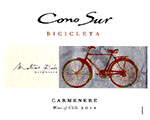
ConoSurBicycletaCarmenere

I recently picked up the 2011 Carmenere, a part of their “Bicicleta” line and at $7.99 per bottle before the discount, the wine is a tremendous value. The wine is all about fruit and drinkability and does not pretend to be anything that it’s not. Would my acquaintance call this Airline Wine? Probably, but remember, sometimes it’s okay to drink Riunite…

My tasting note:

Bright, fruity nose with fresh currants, cherry and floral hints – Lively. Medium-bodied with moderate acidity and supple, well-integrated tannin – good balance. Ripe, juicy palate with fresh cherry and red berry notes – seductive. Moderate length – smooth and simple finish. Quaffable and not for aging – All around outstanding value!

Cheers!

← Older posts
Newer posts →

Subscribe

  • Entries (RSS)
  • Comments (RSS)

Archives

  • June 2020
  • May 2020
  • April 2020
  • March 2020
  • February 2020
  • January 2020
  • December 2019
  • August 2019
  • February 2019
  • December 2018
  • November 2018
  • October 2018
  • September 2018
  • August 2018
  • July 2018
  • June 2018
  • May 2018
  • April 2018
  • March 2018
  • February 2018
  • January 2018
  • November 2017
  • August 2017
  • July 2017
  • June 2017
  • April 2017
  • March 2017
  • February 2017
  • January 2017
  • December 2015
  • October 2015
  • August 2015
  • July 2015
  • June 2015
  • December 2014
  • November 2014
  • August 2014
  • July 2014
  • June 2014
  • May 2014
  • April 2014
  • March 2014
  • February 2014
  • January 2014
  • December 2013
  • November 2013
  • October 2013
  • September 2013
  • August 2013
  • July 2013
  • June 2013
  • May 2013
  • April 2013
  • March 2013
  • February 2013
  • January 2013
  • December 2012
  • September 2012
  • August 2012
  • July 2012
  • June 2012
  • May 2012
  • April 2012
  • March 2012
  • February 2012
  • January 2012
  • December 2011
  • November 2011
  • October 2011

Categories

  • Cocktails
  • General
  • Restaurants
  • Spirits
  • Uncategorized
  • Wine Events
  • Wines

Meta

  • Create account
  • Log in

Blog at WordPress.com.

  • Subscribe Subscribed
    • blog.musingsonthevine.com
    • Join 36 other subscribers
    • Already have a WordPress.com account? Log in now.
    • blog.musingsonthevine.com
    • Subscribe Subscribed
    • Sign up
    • Log in
    • Report this content
    • View site in Reader
    • Manage subscriptions
    • Collapse this bar
 

Loading Comments...