Author Archives: musingsonthevine

Bittermilk

02 Wednesday Jul 2014

Posted by musingsonthevine in Cocktails

≈ Leave a comment

People who know me, understand me to be a purist. Nothing halfway about my pursuits. This posture brings about both joy, as well as disappointment. In the end you often realize that it’s the journey and not the destination that is important. Which is why I am constantly searching…

In a recent copy of Imbibe magazine I learned about a new line of pre-made cocktail mixers from an outfit called Bittermilk in Charleston, South Carolina. Like the author of the piece, I eschew most pre-made cocktail mixers, primarily because they are really bad and don’t make anything even close to the cocktail suggested on the bottle. I would rather pass on a cocktail, or struggle to find the right ingredients before using the usual dreck that constitutes pre-made cocktail mixers.

Imagine my joy when I read about Bittermilk and promptly ordered their three cocktail mixer compounds. According to the web site: “Bittermilk compounds are designed for the modern day cocktail enthusiast, to help mix up unique, quality cocktails following a simple ratio of Bittermilk to your choice of spirit. Each of our products use a bittering agent, a sweetener, and an acid to achieve a balanced cocktail. The labor is in the bottle.”

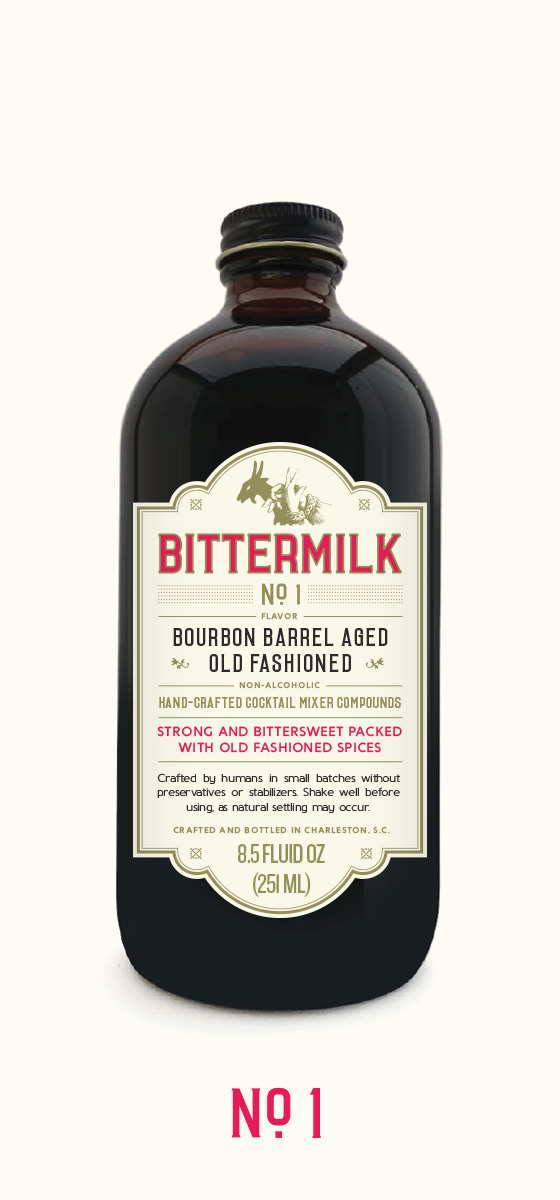
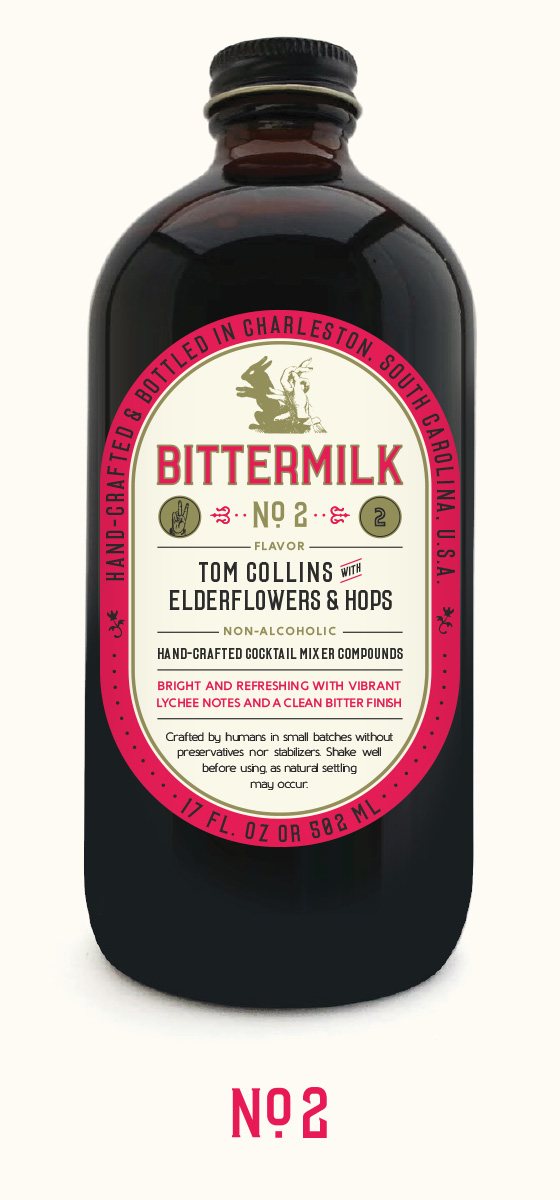
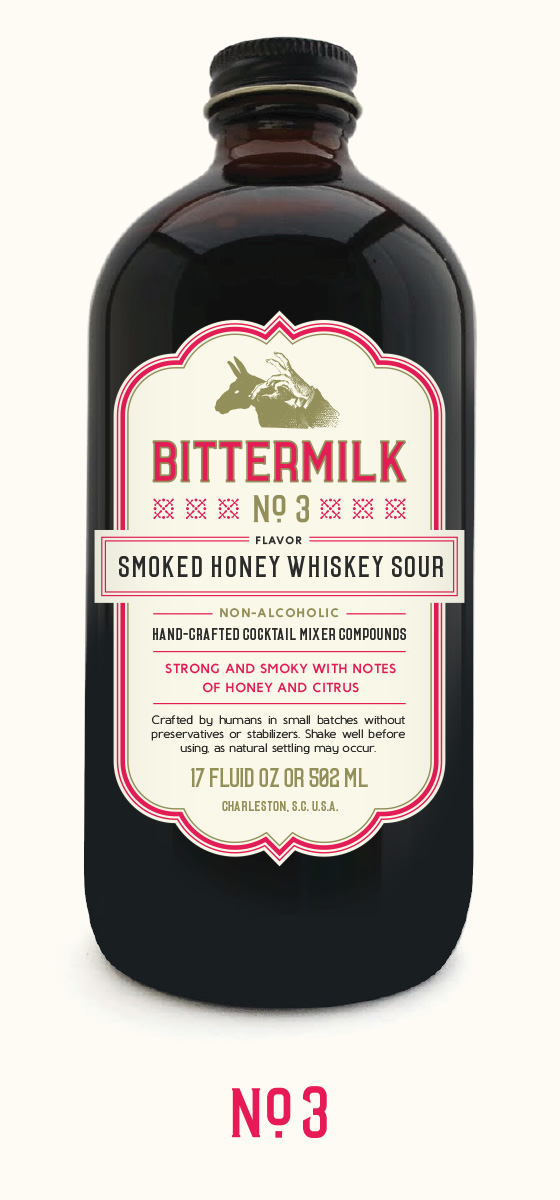
The three compounds currently available are:

BitterMilkN1

No. 1 – Bourbon Barrel Aged Old Fashioned

BitterMilkN2

No. 2 Tom Collins with Elderflower and Hops

BitterMilkN3

No. 3 Smoked Honey Whiskey Sour

After sampling them with my favorite spirits, I can justly say they are amazing. The Whiskey Sour is about the best I have ever had, bright, refreshing with near perfect balance. The Old Fashioned is lush with a lovely, nuanced vanilla character. The Tom Collins is light and floral with a crisp, bright finish. The other nice aspect to these compounds is that you basically pick your spirit, mix with the recommended proportion of compound, shake/stir/strain and you’re done. Nothing could be easier, nor more pleasing. The labor really is in the bottle.

While I did not look for them locally, you can order them from the web site: www.bittermilk.com. They run $15 per compound, plus shipping – not inexpensive, but for the quality and the ease of use, they are certainly worth the price.

So, if you too are a purist at heart and want to find a credible pre-made cocktail mixer, the search is (partially) over – Bittermilk Cocktail Mixer Compounds…

Cheers!

2011 Rosenblum Cellars Zinfandel, Contra Costa County California

01 Tuesday Jul 2014

Posted by musingsonthevine in Wines

≈ 1 Comment

Zinfandel is the “All American Grape,” despite having highly-probable European and Eastern-European ancestors. Zinfandel can also be thanked, or blamed, depending on where one’s tastes lie for the massive sea of sweet, lightly pink blush wines coming out of California in the 1980’s. I sit clearly on the “blame” side of the fence, but given the resurgence of red Zinfandel evolving since the 1990’s, I choose to forget these transgressions, the way one forgives folks for collecting Beanie Babies…

First, let’s talk of ancestry. For many years, ampelographers, or the botanists focused on the study and classification of grape vines, strongly believed that Zinfandel and Primitivo were related. Initially, the scientists believed that the grapes were clones of each other – the story being told that immigrating Italian wine makers brought Primitivo from their native Puglia in the southern heel of Italy. The wayward vines were planted in California around the time of the Gold Rush (1840’s) and thus was born Zinfandel. Makes for great marketing on the back label… As the practice of DNA analysis of grape varietals became more prevalent, the story began to change. Rather than Primitivo begetting Zinfandel, it appeared that the two grapes may be siblings. The analysis strongly suggested that the two grapes shared a parent – Crljenak from Croatia. Recently, the debate has reopened, with newly uncovered evidence suggesting that the two grapes, while genetically similar do not share the same parent – Crljenak, but instead their parent is actually another Croatian grape – Tribidrag… Isn’t genealogy fascinating? Just think six degrees of Kevin Bacon…

Next, let’s talk of history. Regardless of its ancestry, Zinfandel found its way to America and was planted on the west coast during the middle of the 19th Century. The grape is a hardy vine and it thrived in the dry, hot regions of Central and Northern California. Ten percent of all vineyards in this part of California are said to contain plantings of Zinfandel vines and it was the most planted varietal in California as the 20th Century dawned. Production soared during the run up to Prohibition, but like most grapes at that time, Zinfandel suffered mightily at the hands of our noble experiment. It actually wasn’t until the early 1970’s, when Bob Trinchero of Sutter Home Winery began experimenting with Zinfandel, creating a light, blush version that was slightly sweet, that Zinfandel reappeared on the wine landscape. And as they say, the rest is history.

Fortunately, the rebirth of Zinfandel did not damn it to a golden age of mediocrity. Plenty of winemakers realized the potential of the grape and began crafting red versions that underscored the intense fruit and spicy character of the varietal. One such producer is Rosenblum Cellars, founded in 1978 by Kent Rosenblum, the veritable “King of Zin,” located in Alameda, California. Rosenblum focuses solely on Zinfandel and actually, unlike many California wine makers, searches out small grape growers to source produce for their wines. They choose this approach, in lieu of practicing the “estate” model of cultivating their own vines, for several reasons: it provides a showcase for small, passionate producers from underappreciated regions; it underscores the differences between mountainside versus valley floor grown grapes; and it allows the nuance and power of many “old vine” vineyards to validate the credibility of Zinfandel as a world-class varietal.

Winemaking at Rosenblum is handled by John Kane, a 2001 graduate of Enology from Fresno state. Interestingly, when you talk to wine makers in California they describe the Fresno program as “learning about winemaking by getting your hands dirty.” Presumably, as the story goes, if you really want to learn to make wine “old school,” then you go to Fresno, as opposed to Davis, where the focus is more on classroom and science. I like old school…
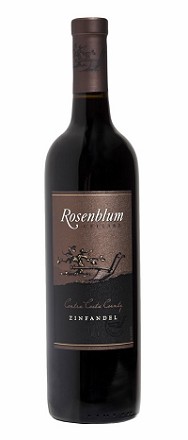
RosenblumCC

I featured the 2011 Rosenblum Contra Costa County in my Summer Sippers class this past June. It struck me as an ideal red wine for summer, possessing enough tannin to give it structure to stand up to hearty grill fair, but fruity enough to make it pleasant on a hot afternoon. The wine was also right-priced at around the pre-discount price of $14.99/bottle.

My tasting note:

Intense, jammy nose with black berry, dried fruit and exotic spice hints. Full-bodied with moderate acidity and moderate, firm tannin – well-balanced. Dark fruit core with loads of black cherry, black berry and tarry notes. Fruit forward but very nicely structured. Moderate length – smooth with many evolving layers of complexity – seductive and spicy – charming. Drinking well and should hold for another 2 – 3 years in bottle. Great value.

Cheers!

2012 Sant’Antonio Scaia Corvina IGT Veneto

27 Friday Jun 2014

Posted by musingsonthevine in Wines

≈ 2 Comments

Everyone always asks what my favorite wine is… Tough question to answer as someone who deeply appreciates so many wines, but I always pony up a few: Châteauneuf du Pape for one and Valpolicella Classico della Amarone for another… My love of both these wines borders on the unnatural, but if you know them at all, you understand. Each represents a magnificent, age-worthy wine with an interesting story and a bevy of unfamiliar grapes. They were, many years ago, value leaders that today, unfortunately have taken on more expensive habits. This last realization is why I patiently scan the horizon for opportunities. In CDP, the values are found in the lesser production of fabled CDP producers within the Côtes du Rhone appellation, or possibly in neighboring Gigondas or Vacqueyras. In VCdA, the values are found in Vino Ripasso, or better yet, the recently delimited Indicazioine Geografica Tipica Veneto wines.

Which brings me to my subject wine… Anyone who knows anything about VCdA knows that the principal grape in the blend is Corvina, which is the star of most red wines grown in the Veneto. Rondinella and Molinara are its usual companions, and for good reason. Corvina can be difficult, providing too much acid and not enough fruit, which can make for tart, anemic wines. This is a large reason why the Venetians have taken to allowing their largely Corvina-based Valpolicellas to age on the lees of their bigger, more impressive Amarone brothers… The intensity, complexity and depth imparted makes for a real game changer.

Producers in the Veneto tend to have diverse portfolios. This isn’t a detraction, but more an economic reality. The folks at Tenuta Sant’Antonio have a very diverse portfolio, ranging from award-winning Amarone to youthful Soave to soulful Grappa di Amarone. Of all their wines I have tried, and there are many, there isn’t a bad one in the lot. The nice thing about a diverse portfolio is that there are bound to be some real values. The Scaia Corvina may be the best wine value I have come across in the last 12 months.

scaia-corvina

The Scaia, produced from 100% Corvina harvested from vines with an average age of between 3 and 10 years, is a youthful powerhouse. The wine is fermented and aged in stainless steel, which preserves the freshness and lively spiciness of the grape. The naturally high acidity of the Corvina is tamed in this wine, instead being possessed of suppleness and smoothness. Closed under Stelvin, the wine should remain fresh and vibrant for many years, allowing for more complexity to evolve over time. And the best thing about this wine – the price… Sub $10 per bottle in most areas before the discount… That is an impressive feat given the quality, exuberance and potential of this wine!

My tasting note:

Bright lively nose with fresh cherry, black berry and black pepper hints. Medium-bodied with moderate acidity and supple, well-integrated tannin – well balanced. Dark fruit core with cherry, dark chocolate and spicy notes. Moderate length with a smooth, seductive finish and a spicy aftertaste. Drinking well now and should improve for the next 2 to 3 years in bottle. Superb value!

Cheers!

2013 Armas de Guerra Mencia Rosado, DO Bierzo, Spain

09 Monday Jun 2014

Posted by musingsonthevine in Wines

≈ Leave a comment

Yes, you knew that it would only be a matter of time and a ridiculously inexpensive, wonderful Spanish Rosado would show up in my blog… And you also knew that it would be a little bit different, from a grape and region with which you are probably less familiar.

Bierzo is a delimited wine producing area (Denominación de Origen) in the northwest province of Léon (Castile y Léon) Spain. The region is relatively small and contains a mix of both mountainous (Alto Bierzo) and lowland plains (Bajo Bierzo) geography. The name of the region is derived from the pre-Roman city of Bergidum and it is from the Romans that the area inherited its culture of viticulture. Grape growing and wine making continued to flourish, with the Cistercian monasteries exploiting the viticultural capabilities of the region during the Middle Ages. The region became very popular in Galician and Asturian markets, but the invasion of the phylloxera root louse destroyed the vineyards completely. Further economic issues caused many people to leave the area and it wasn’t until recent times and the advent of rootstock grafting that the region began a rebirth. The DO was granted in 1989 and since then, continuous growth has brought Bierzo back from extinction.

The climate and soil of Bierzo are particularly well suited to grape growing, which in turn leads to fine wine production. The climate is a mix of both Galician and Castilian climates, combining humidity and rainfall with a hot, dry climate. The grapes achieve peak ripeness quickly, allowing them to retain acidity, promoting good balance and structure. The soil is a mix of loess with fine quartz and slate throughout, possessing a high degree of natural acidity.

The grapes allowed in Bierzo are Mencia and Garnacha Tintorera for reds and Doña Blanca, Godello and Palomino for whites. Any other varieties can only be used in Crianza and Reserva wines up to 15%. Various styles of wine are produced in the region ranging from young White, Rosado and Red wines to Reserva wines. Wines considered Crianza must be aged a minimum of 6 months in oak, plus an additional 18 months in bottle, while Reserva wines must be aged a minimum of 12 months in oak, plus an additional 24 months in bottle.

armas_de_guerra_rosado_mencia_02

Armas de Guerra is part of the Vinos Guerra Empire, a large international export company that specializes not only in Galician wine, but also in anisette, brandy and a peculiar brand of Bierzo Coca Cola. Vinos Guerra recently joined the relatively young cooperative of Vinos del Bierzo. The cooperative was founded in 1963 and utilizing the best technology and equipment from France, undertook the mission of increasing the sales of Bierzo wines, which would directly contribute to the preservation of Bierzo’s ancient vineyards. The cooperative represents about 40% of total wine sales for the region and through continuous reinvestment, promotes quality improvements across all of its members.

The Armas de Guerra Mencia Rosado is a beautiful rosé wine made from 100% Mencia grapes harvested from 45 – 55 year old vines. The soil is primarily clay and slate with a relatively cool growing climate that promotes retention of the grape’s highly aromatic character. The wine sees no time in oak, so the purity of the varietal comes through loud and clear. At an average, pre-discount price of $9.99 per bottle, you cannot go wrong with this wine.

My tasting note:

Lively, red berry aromas with sweet floral and wet stone hints – very pretty. Medium-bodied with firm acidity – good balance. Soft, fruity palate with raspberry, strawberry and light citrus notes. Moderate length – clean and crisp – bright and refreshing – lovely. Drinking well – not for aging. Great value.

Cheers!

2011 Sterling Vintner’s Collection Meritage, Central Coast

07 Saturday Jun 2014

Posted by musingsonthevine in Wines

≈ Leave a comment

Sterling Vineyards has a long wine making history, for California standards, founded in 1964 by British international paper broker and Financial Times writer Peter Newton. Like many Europeans, Newton discovered that the climate and soil of America’s west coast had great potential for making fine wine, so he bought an established 50-acre parcel outside Calistoga. Through the end of the 1960’s, Sterling Vineyards continued to acquire property in the Napa and Sonoma area, eventually bottling California’s first vintage dated Merlot in 1969. The 1970’s marked a period of development and growth at Sterling, with the construction of their Italianate winery, complete with aerial tramway for visitors, as well as the continued acquisition of prime Napa property – the Rutherford and Diamond Mountain Ranch vineyards. Sterling’s growth sped up in the 1980’s and 1990’s, especially with the implementation of a six-phase plan to increase production efficiency and improve quality, all designed to meet the exploding demand for fine, west coast wines. The culmination of the program led to the launch of the Vinter’s Collection line of Sterling wines in 2000, representing over one million cases annually across nine varietals, sourced primarily from Central Coast, Monterey and Paso Robles vineyards. Further winery renovations, including an all new visitor center were completed in 2002 and a dedicated facility to produce the Sterling Reserve wine label was added in 2008.

Throughout all of its history, Sterling has tried to remain true to the founding philosophy of producing the best wine that California can offer at reasonable prices that your average wine lover can afford. The Central Coast Meritage that I tasted recently is a good example of this philosophy. Crafted from the five varietals allowed to produce red wine in Bordeaux, the Meritage is a pleasing example of easy drinking, Californian sunshine. A blend of 46% Cabernet Sauvignon, 42% Merlot, 6% Malbec, 4% Petit Verdot, and 2% Cabernet Franc, Sterling’s Meritage is a very ripe, almost plump version of its Gallic cousins. Loaded with fruit, the wine is the consummate expression of the west coast’s easy-drinking style. Don’t buy this wine expecting any of the common markers you find in Bordeaux, though, for while it shares the same grape varieties, their emergence from vineyards in California’s Central Coast is like a richly tanned, buff surfer emerging from the waves… wonderful in the moment, but probably not built for the long term.

IMG_0938

And that’s okay – I found my bottle locally for $8.99 (Marked down from $14.99), which is a great price for a BBQ-friendly wine. OBTW – The Sterling website indicates that the wine is SOLD OUT through their channels, so scoop it up fast, if you’re so inclined.

My tasting note:

Lively, jammy nose with fresh cherry, red berry and explosive floral hints. Medium-bodied with moderate acidity and soft, supple tannin – good balance. Dark fruit core with loads of black cherry, blackberry jam and tarry, chocolate notes – very juicy. Moderate length with a smooth, simple, infinitely quaffable finish. Drinking well – not for aging… at all. Great value, at the marked down price, less so at its full retail price.

Cheers!

2013 Couly Dutheil René Couly Rosé, Chinon

05 Thursday Jun 2014

Posted by musingsonthevine in Wines

≈ 5 Comments

In the right place, at the right time, Cabernet Franc can be magical. And, in the Loire, in 2013, as a rosé, this Cabernet Franc is superb. As summer approaches, my attention has turned towards the bounty of dry, light rosé wines that only a few years ago were non-existent in most wine shops. Mention pink wine to one of my classes five years ago and the only comment made was something about the aberration that was White Zinfandel.

Let’s fast forward, shall we. Past the aisles of sweet, cloying White Zin that litter the jug wine department of most wine shops… Right into the veritable birthplace of real rosé wines, Southern France. Okay, but this review is about a Loire Valley region called Chinon… yes, true, but nothing would be pink in France were it not for the masters of pink wine, the vignerons of Provence… Now that we’ve paid credit where credit is due, let’s focus on the subject at hand.

Chinon is a well-known wine making region in the central Loire Valley along the Vienne River. Known primarily for its Cabernet Franc-based red wines, Chinon is very similar to the region of Bourgueil, only lighter in character. A similar trait is the predominant limestone overtones, derived largely from the limestone soils that dominate the area. Because I have a natural affinity for the unusual, I was drawn to this rosé Chinon.

couly-dutheil-chinon-rene-couly-rose-loire-france

Couly Dutheil was established in 1921 by Baptiste Dutheil, and was subsequently developed by René Couly (who married Madeleine Dutheil). The winery has remained a family-owned affair with third and fourth generation Coulys in control. The family sources grapes from 130 hectares (316 acres) of vineyard land in Chinon, of which, 90 (218 acres) hectares are directly owned by the family. Most of their production stays in France, with only about 15% (15,000 cases) making it to the export market. Given that most of their production is red wine, this rosé is fairly rare, but it is definitely worth seeking out.

Based on the fact that their wines are shipped primarily to the better restaurants in France, finding the René Couly Rosé locally was a real treat and at an average bottle price of $14.99 pre-discount, represents a real value.

My tasting note:

Fresh, fruity nose with strawberry, rose petal and slate hints. Medium-bodied with firm acidity – well balanced. Soft, seductive palate with lovely red berry and floral notes. Moderate length – smooth with a crisp, clean finish. Drinking well now – not for aging… Perfect for summer quaffing! Good value.

Cheers!

2013 Le Fraghe Rodòn, Bardolino Chiaretto

03 Tuesday Jun 2014

Posted by musingsonthevine in Wines

≈ Leave a comment

I have less than spectacular memories of Bardolino… Unfortunately, these memories are a result of receiving one too many wooden gift boxes of Bolla Wines around the Christmas holiday season… All the more reason, when I find a Bardolino that is NOT Bolla, nor is a wooden box, I pounce at the chance to have the wine redeem itself.

Bardolino is a region in the Veneto that produces medium-bodied red wines from Corvina, Rondinella and Molinara grapes – the grapes that go into Valpolicella. Yes, that same region that brings you Vino di Ripasso and Amarone wines… need I say too much more?

In addition to red wines, producers in the region make Bardolino Chiaretto, a beautiful rosé wine from those same grapes. The wines are reminiscent of those lovely rosés from the south of France and are truly captivating. Given that it is that time of year when rosé wines become de rigueur, this wine is especially relevant.

bchia13_art800

Le Fraghe, helmed by Matilde Poggi, is a classic producer in Cavaion Veronese. The property has been producing grapes for many decades, but most were sold off to other winemakers, until 1984, when Matilde produced the first vintage from estate-owned grapes. Matilde produces a number of wines (several Bardolinos, a Garganega and a Cabernet Blend), all of which are a true expression of her passion for the land of her ancestors. The Bardolino Chiaretto, Rodòn, is truly a masterpiece. Composed of a blend of Corvina and Rondinella grapes from relatively young vines (12 years old), the wine sees a light maceration to extract enough color to impart a beautiful pink-salmon hue. The cool fermentation temperature aids in the retention of the delicate, floral and red berry aromas, while preserving the crisp, bracing acidity. This wine is pure summer in a bottle…

Based on the quality of this offering, I will definitely seek out Matilde’s other wines. The Rodòn is a great wine with a value-conscious average bottle price of $13.99 pre-discount.

My tasting note:

Bright, lively nose with raspberry, strawberry, fresh cherry and floral hints. Light-to-medium-bodied with firm acidity – well balanced. Light, red berry palate with sweet Bing cherry notes – lovely. Moderate length – smooth with a crisp finish – infinitely quaffable! Drinking well now – not for aging. Good value.

Cheers!

2011 Grifalco Aglianico del Vulture

02 Monday Jun 2014

Posted by musingsonthevine in Wines

≈ Leave a comment

I tend to root for the underdog… Maybe it was years of growing up with the Red Sox and the pre-Belichick Patriots that firmly ingrained this attitude… I follow a similar track with wine, supporting those lesser-known, underdog regions and grapes. Not too many years ago, Aglianico was certainly one of those grapes and Aglianico del Vulture in Basilicata was clearly a lesser-known region. Fast forward a few years and Aglianico is fast becoming the little darling of Italian wine.

The Aglianico grape is a dark-skinned, small berry grape that is found primarily in the southern hills of Italy. Aglianico is a grape that is native to Greece and was brought to Italy by colonizing Greeks before the time of Roman domination. The grape is late ripening, with harvests extending into October and November. Under the right conditions, Aglianico displays tremendous potential, even rivalling the exalted wines of Nebbiolo and Brunello. Those conditions include being planted in the high altitude vineyards on the slopes of the now dormant volcano, Mount Vulture. The volcanic soils, sunny exposures and strong diurnal patterns all combine to produce fruit that is well balanced with great depth of flavor and complexity. When yields are closely managed, the result is truly amazing wine.

vulture_in_basilicata-Map

When I look for Aglianico, I head straight for Aglianico del Vulture. There are other areas that recognize the power of the grape (Taurasi in Campania, for example), but the grape possesses magical qualities when grown on volcanic slopes. Aglianico del Vulture achieved DOC status in 1971 and in 2011 was finally awarded the coveted DOCG honor. It is the only DOCG in Basilicata, its larger parent region.

Grifalco is a producer of Aglianico del Vulture that is owned by a former Tuscan wine family, the Piccins. The Piccins decided that Basilicata has better potential for fine wine than Tuscany… That is saying a lot…

Grifalco

They produce three wines from the region: “Gricos,” “Grifalco,” and “Damaschito.” The Gricos is a 100% Aglianico produced from four different vineyards with an average vine age of 15 years. The wine is purposefully made to be more forward and drinkable younger. Production is limited to 2500 cases.  The Damaschito is a single vineyard bottling where the average vine age is 40 years old. Extended maceration and long term aging in Slavonian oak makes for an age-worthy, impressively flavored wine. Production is again limited to 2500 cases.

The Grifalco is considered their mid-tier wine with grapes sourced from four different vineyards with an average vine age of 30 years. Extended maceration and aging in a combination of stainless steel and medium-size oak barrels translates to a wine with good depth of flavor with moderate aging potential. Production is limited to 2500 cases.

I have not seen the Gricos or Damaschito around the Boston area, but the Grifalco is available and is a stunning example of Aglianico del Vulture, especially at an average bottle price of $15.99 pre-discount. With enough aging potential to warrant buying a case…

My tasting note:

Dark, intense nose with black cherry, cedar, mineral and spice hints. Medium-to-full-bodied with moderate acidity and firm, dry tannin. Well balanced. Black cherry and blackberry palate with vanilla, black pepper and eucalyptus notes. Very seductive. Long, smooth finish with layers of complexity evolving. Awesome example of Aglianico grown on volcanic soils. Drinking well and should improve with 3 to 5 years in bottle. Good value.

Cheers!

2012 Moulin de Gassac Guilhem, Pays d’Herault IGP

30 Friday May 2014

Posted by musingsonthevine in Wines

≈ Leave a comment

The back label of this wine calls it “the essence of Southern France.” Having never been to the Languedoc (yes, it’s on the list…), I can neither confirm, nor deny this assertion. That said, when I taste this wine, the images formed in my mind are of the rugged, stony vineyards of the region, bathed in beautiful sunshine… a la Peter Mayle’s A Year in Provence.

I have been all afire lately about the values one can claim on the Iberian Peninsula… and then, when you least expect it, a stunning little number like this wine shows up, again reinforcing my Euro-centric palate.

The history of viticulture in the Gassac valley claims to be rooted in the time of Charlemagne, around 780 A.D., presumably under the auspices of Saint Benedict of Aniane. Sounds reasonable from what I know of Gallic history. The Mas de Daumas Gassac label was establish in more modern times, around 1970 by Véronique and Aimé Guibert, who were smitten with the ruins of an old farmhouse beside the Herault and Gassac rivers. In the characteristically romantic way, vines were planted, noted winemakers (Professors Enjalbert and Peynaud) visited and advised, and over the course of several decades a string of impressive wines were produced. The Moulin de Gassac label, the second label of Mas de Daumas Gassac, is actually more of a “cooperative-based” wine, culling the grapes from over 7,000 individual parcels grown by over 800 vignerons. The label is a partnership that was designed to save many of the indigenous varietals slated for removal through the failed Brussels Subsidies, which were an attempt at enticing local grape growers to rip out less “glamorous” grapes to replant more “globally accepted” varietals. A noble mission, I must say…

Guilhem-Red-Moulin-de-Gassac

The Guilhem red is a splendid little wine made from 40% Syrah, 25% Grenache, 15% Carignan and 20% Mourvèdre, the “usual suspects” in most of the red wines from this region. Easy drinking, the wine is the perfect weight for summer quaffing with noticeable spice to make it an ideal partner with fare from the grill. At an average retail price of $9.99 per bottle before the discount, you can’t go wrong with putting a case of this in the cellar!

My tasting note:

Ripe, fruity nose with black cherry, allspice and wildflower hints. Medium-bodied with moderate-to-firm acidity and supple tannin – good balance. Youthful with a juicy, lively palate – sour cherry, dried herbs and floral notes. Moderate length with a smooth, simple finish. Some hint of spice and pepper shows on the aftertaste. Drinking, or should I say quaffing, well – not for aging. Although, the wine is closed via Stelvin, so I would expect the wine to remain fresh and lively for a few years to come (the web site says drink within 3 years). Great value.

Cheers!

Provo Liquors in Norfolk, MA

19 Monday May 2014

Posted by musingsonthevine in Spirits

≈ Leave a comment

As a follow-up to my posting about our recent Scotch Whisky tasting, I thought I should let people in on a little local shop who seems to have an endless selection of whisk(e)y.

When we first moved to this neck of the woods, I made the rounds of all the local wine and spirit shops. I found a handful that I really liked and unfortunately, many that I felt were just not up to snuff. That was 15 years ago. I have since visited a few of the new shops that have opened, as well as a few of the original shops. My visits usually turn out to be one of two types – either very brief or fairly lengthy, the latter being a sign of good things to come.

Well, recently I stopped back at Provo Liquors in Norfolk, MA and ended up spending the better part of an hour chatting with the amiable and ever helpful owner, Bruno Formato. Hot off of my Scotch Whisky tasting, I was in search of a few special bottles and happily Bruno had them in stock. One he did not, but he thought he would be getting it soon.

I had to compliment Bruno because his selection and assortment of whisk(e)y was nothing short of amazing. The only other store that I’ve been in recently that has a more exhaustive selection is Julio’s in Westboro. Provo is less than 10 minutes from my house. Julio’s is about 35 minutes… You know where I will run to first the next time I am in search of some arcane whisk(e)y.

Bruno and I also chatted about our very consistent philosophy about wine making and we found ourselves agreeing on the high value of most European wines, especially those from Spain and Portugal. We’re both Italians that grew up with wine on the table at almost every meal. For us, wine is not an adjunct to the meal, it is essential part of the meal, like another food. We agreed that the new term being coined in the industry, “cocktail wines,” is an unfortunate reflection of how most Americans view wine.

Bruno also graciously shared a plate of his home made prosciutto – wow, was it delicious! Just the right amount of salt with a nice subtle, yet complex flavor profile.

So, I urge you, if you are in the area, or want to make the trip, to drop by Provo Liquor on Dedham Street in Norfolk, MA. Make sure you tell Bruno that I sent you over!

And, for other great places to shop check out my web site at: http://www.musingsonthevine.com/tips_shop.shtml

Cheers!

← Older posts
Newer posts →

Subscribe

  • Entries (RSS)
  • Comments (RSS)

Archives

  • June 2020
  • May 2020
  • April 2020
  • March 2020
  • February 2020
  • January 2020
  • December 2019
  • August 2019
  • February 2019
  • December 2018
  • November 2018
  • October 2018
  • September 2018
  • August 2018
  • July 2018
  • June 2018
  • May 2018
  • April 2018
  • March 2018
  • February 2018
  • January 2018
  • November 2017
  • August 2017
  • July 2017
  • June 2017
  • April 2017
  • March 2017
  • February 2017
  • January 2017
  • December 2015
  • October 2015
  • August 2015
  • July 2015
  • June 2015
  • December 2014
  • November 2014
  • August 2014
  • July 2014
  • June 2014
  • May 2014
  • April 2014
  • March 2014
  • February 2014
  • January 2014
  • December 2013
  • November 2013
  • October 2013
  • September 2013
  • August 2013
  • July 2013
  • June 2013
  • May 2013
  • April 2013
  • March 2013
  • February 2013
  • January 2013
  • December 2012
  • September 2012
  • August 2012
  • July 2012
  • June 2012
  • May 2012
  • April 2012
  • March 2012
  • February 2012
  • January 2012
  • December 2011
  • November 2011
  • October 2011

Categories

  • Cocktails
  • General
  • Restaurants
  • Spirits
  • Uncategorized
  • Wine Events
  • Wines

Meta

  • Create account
  • Log in

Blog at WordPress.com.

  • Subscribe Subscribed
    • blog.musingsonthevine.com
    • Join 36 other subscribers
    • Already have a WordPress.com account? Log in now.
    • blog.musingsonthevine.com
    • Subscribe Subscribed
    • Sign up
    • Log in
    • Report this content
    • View site in Reader
    • Manage subscriptions
    • Collapse this bar
 

Loading Comments...